 Theme · 6 sites
The underground world
Cities, galleries and chambers cut straight into the rock, across several continents.
Why so much effort to disappear underground — refuge, cult, or something else?
A theme gathers cases that overlap — it asks the question, it asserts no cause. Each site keeps its status and its sources.
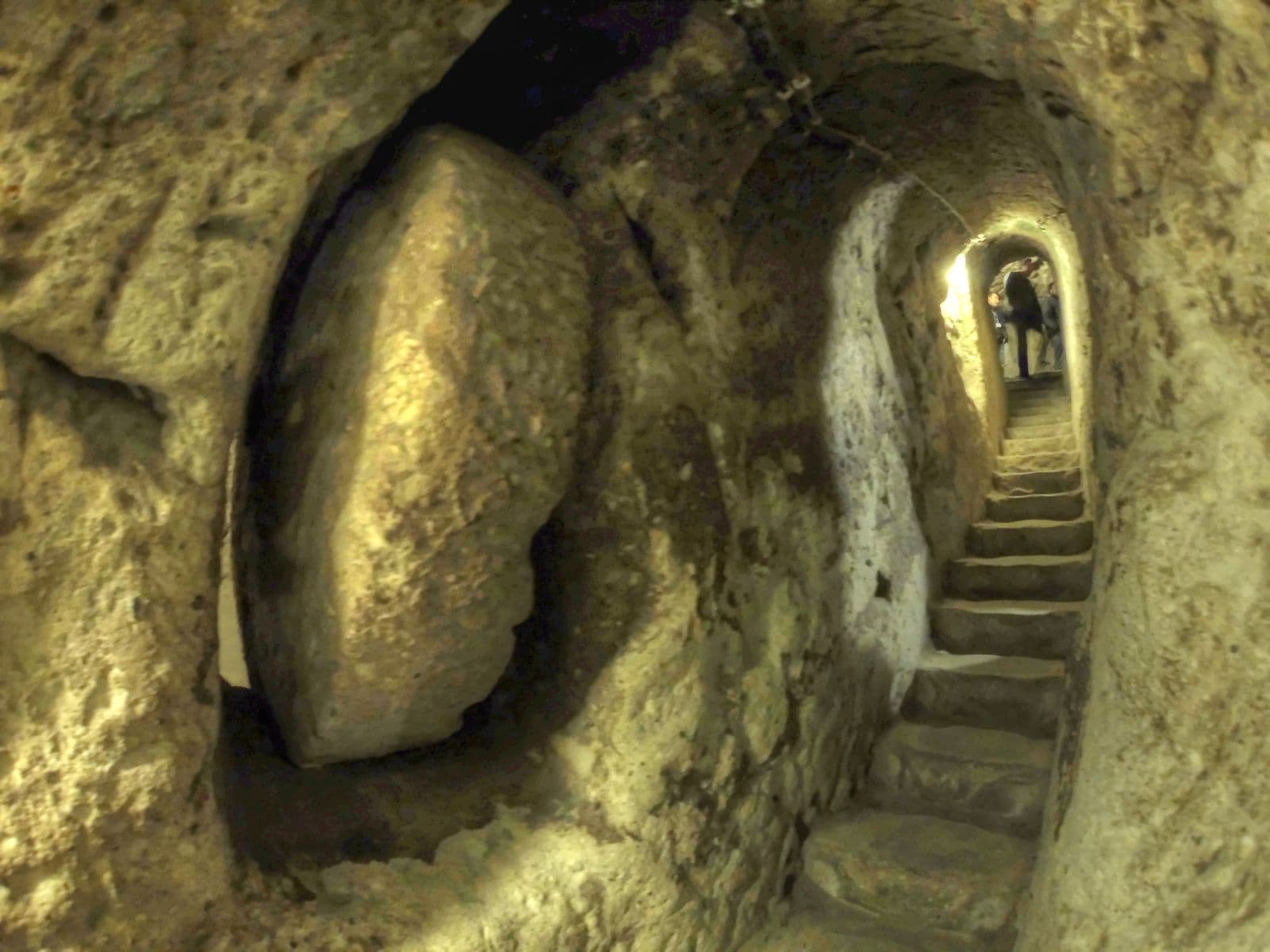
DebatedDerinkuyu
A city carved beneath Cappadocia, able to shelter up to 20,000 people according to a volumetric estimate, with wells, stables and millstone doors.
 No accepted answer
Longyou Caves (龙游石窟)
In 1992, farmers pump the water out of a pond in the Quzhou region (Zhejiang) — and discover beneath their feet 24 underground chambers over 30 meters high, with immaculate parallel striations, of which no Chinese historical chronicle makes any mention. No one knows who dug them, or why.
 Debated
Ħal Saflieni Hypogeum
10 meters beneath Paola, 3 levels of galleries hand-carved into the limestone. Seven thousand dead, red-ochre paintings — and a chamber where a baritone voice makes the whole hypogeum resonate at 70–114 Hz.
 Debated
Chincana Tunnels (beneath Cusco)
Long dismissed as legend, tunnels beneath Cusco have been confirmed by ground-penetrating radar: a passage of about 1,750 m is thought to link Sacsayhuamán to the Temple of the Sun (Coricancha).
 No accepted answer
Naupa Iglesia (Ñaupa Huaca)
A cave in the Sacred Valley of the Incas. Inside, a large trapezoidal niche in black andesite and a row of double niches with precise frames. No excavation has been published. The finish of the carving has made the site famous on YouTube — and nearly invisible in the academic literature.
 No accepted answer
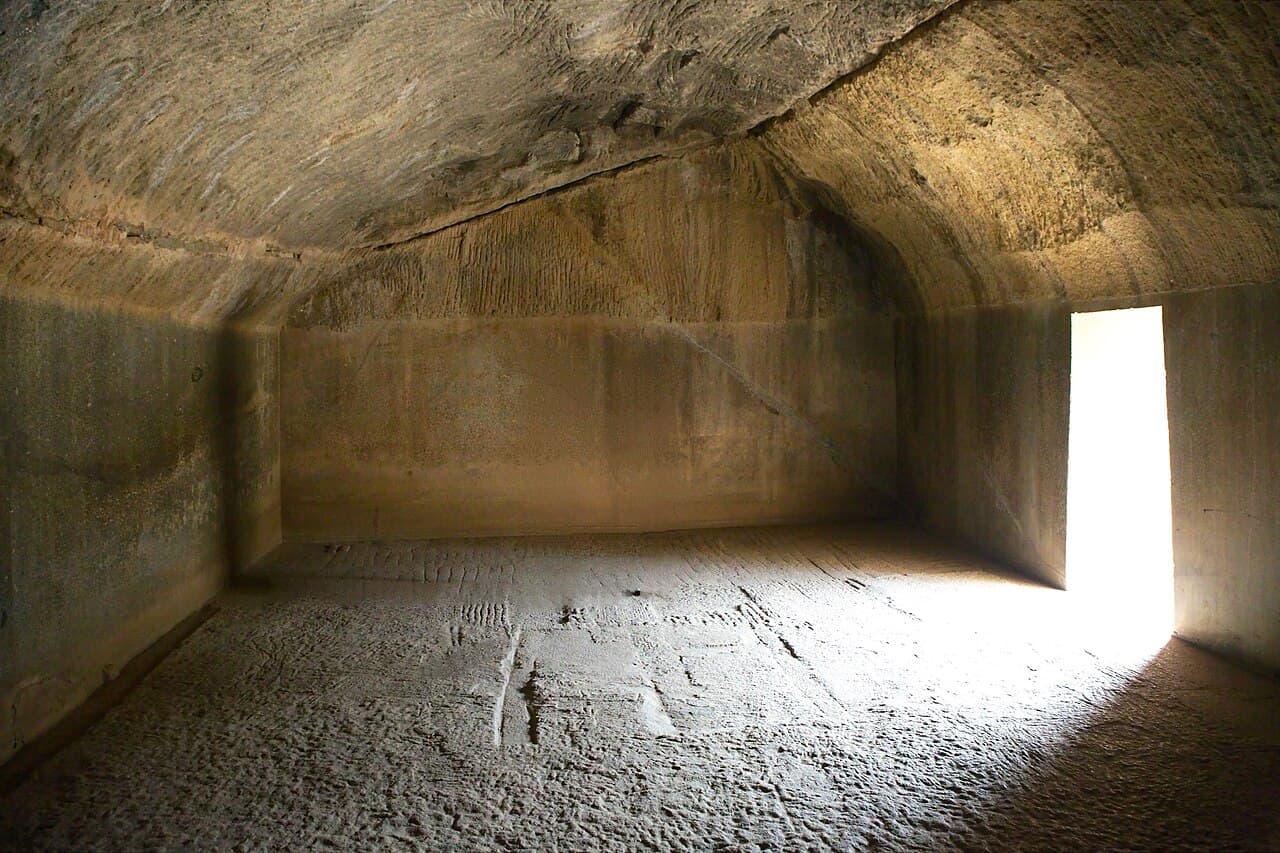
Barabar Caves
Chambers carved into granite, polished like a mirror, whose walls throw back a prolonged echo at low frequencies. What were they for?