
Longyou Caves (龙游石窟)
In 1992, farmers pump the water out of a pond in the Quzhou region (Zhejiang) — and discover beneath their feet 24 underground chambers over 30 meters high, with immaculate parallel striations, of which no Chinese historical chronicle makes any mention. No one knows who dug them, or why.
- Location
- China · Asia & Pacific
- Civilisation
- Unknown (probable Han context, not proven)
- Period
- Unknown — estimated around the Han period (206 BC–23 AD) from potsherds found in context; no radiometric dating published in English
- Technique
- Cretaceous argillaceous siltstone, hand-hollowed, parallel striations in bands of ~60 cm at ~60° to the axis
- Studies
- ~15 publications (geotechnics, underground engineering)
no explanation commands consensus to date. A revisable snapshot of the state of research, never a judgement.
→ Show on the mapThe elements of the site
Where the site is
29.035° N, 118.899° E · satellite view
What science says
Peer-reviewed confirmed geology: Cretaceous argillaceous siltstone, high mechanical strength, responsible for structural stability over an estimated ~2,000 years. Li et al. (Tunnelling and Underground Space Technology, 2009, DOI 10.1016/j.tust.2008.08.003) describe 24 caves, sloped roofs (~45°), ceilings parallel to the bedding planes — a structure naturally exploiting planes of weakness.
Striations: regular bands ~60 cm wide, marks at ~60° to the cave's axis, consistent across all walls and ceilings. Yue et al. (Frontiers of Architecture and Civil Engineering in China, 2010, DOI 10.1007/s11709-010-0018-1) propose that these marks are consistent with a hand tool (V-shaped chisel), with no evidence of machinery. Li et al. (CRC Press, 2015, DOI 10.1201/b19169-20) measure the weathering rates of the striations to establish a lower bound for age — not an absolute date.
- Debated among researchersreal support, not settled
Dating: no peer-reviewed English-language publication with radiometric dating (C14, OSL, U/Th) has been found. The 'about 2,000 years / Han' estimate rests on ceramic sherds in indirect archaeological context — with no published chain of evidence. Li et al. (2009) put forward this working hypothesis without validating it instrumentally.
Excavated volume estimated at ~1,000,000 m³: a figure circulating in the technical literature (Li et al. 2009) but not measured archaeologically in the strict sense. To be used with the qualifier 'estimated'.
Absence of any mention in the Chinese historical annals: confirmed by all academic sources consulted. Neither the Shiji, nor the Hanshu, nor the local Quzhou chronicles list these caves. This fact itself is documented peer-reviewed (Li et al. 2009, Yue et al. 2010).
What remains unexplained
Related to
Studies & sources
Keep exploring
 Debated
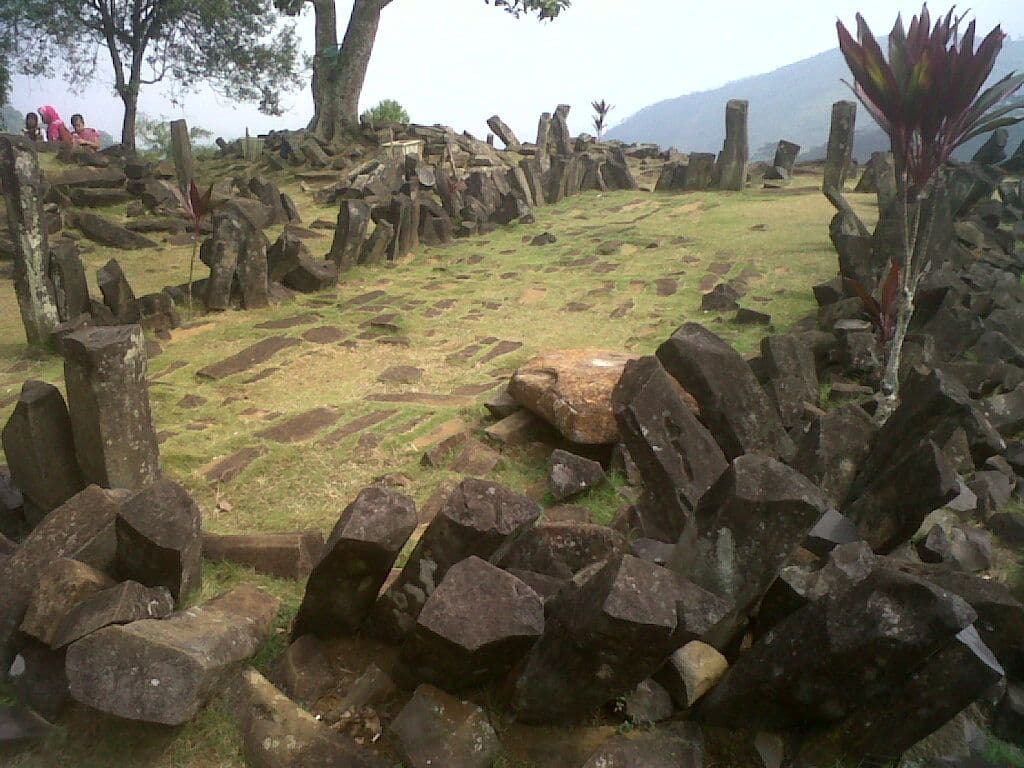
Gunung Padang
A "pyramid" beneath the hill? Layers dated as far back as −27,000 years… then the study was retracted in March 2024.
 Debated
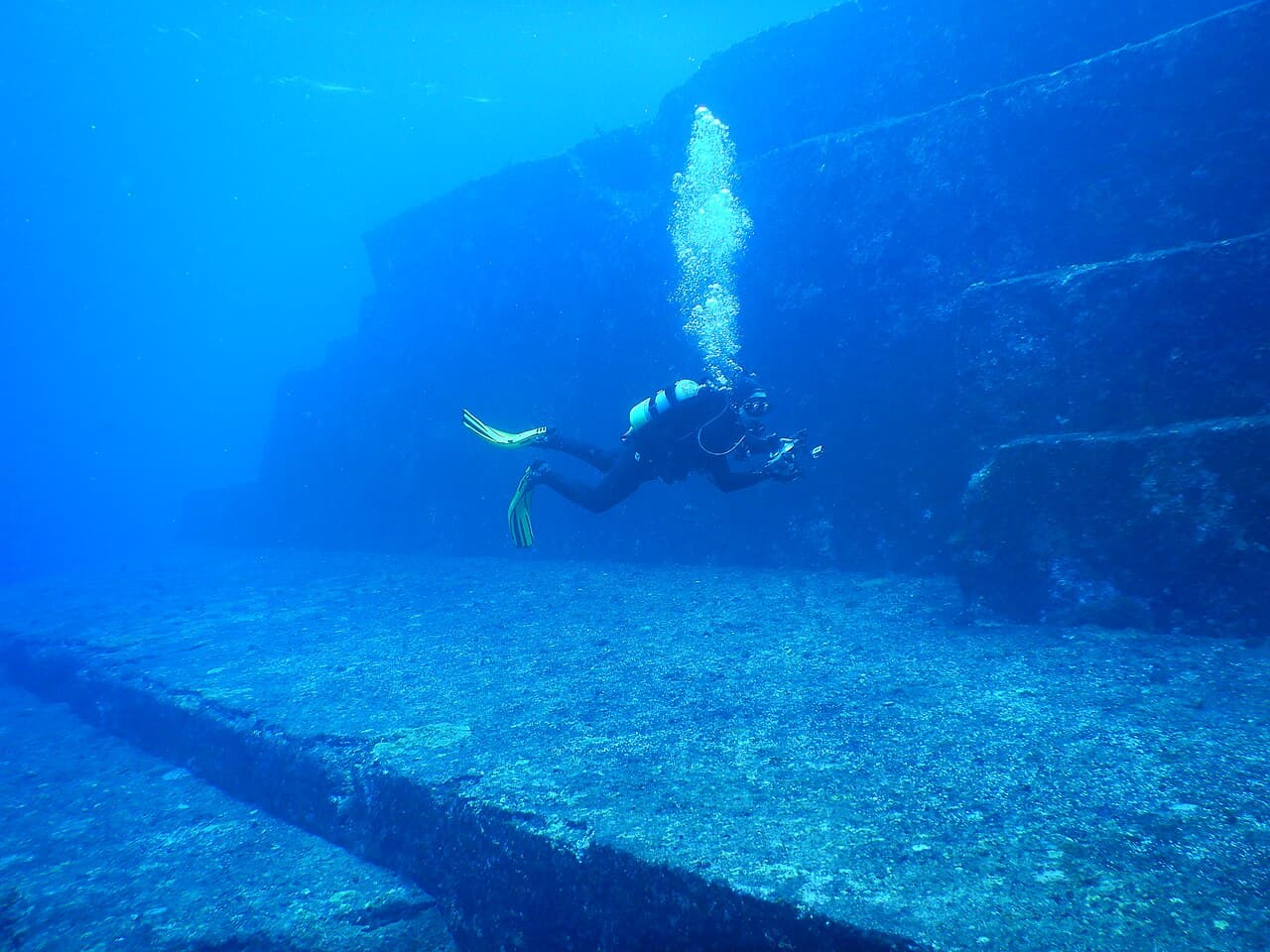
Yonaguni Monument
Terraces, right angles, "staircases" 25 meters deep. The geological consensus sees naturally fractured sandstone — an academic minority argues for a sunken city.
 Debated
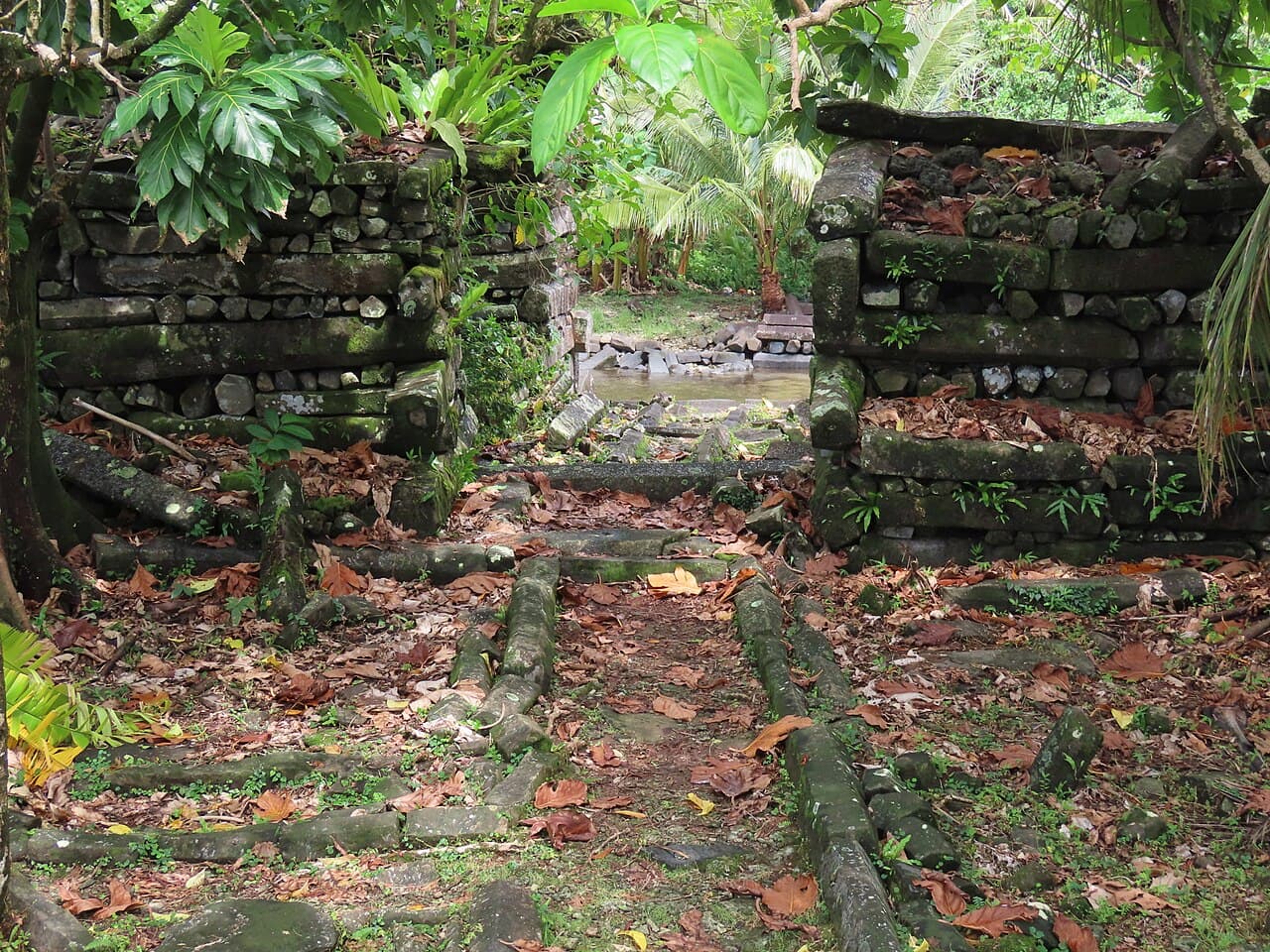
Nan Madol
A basalt Venice set on a Pacific lagoon: 92 to 93 artificial islets, columns weighing 5 to 50 tonnes.