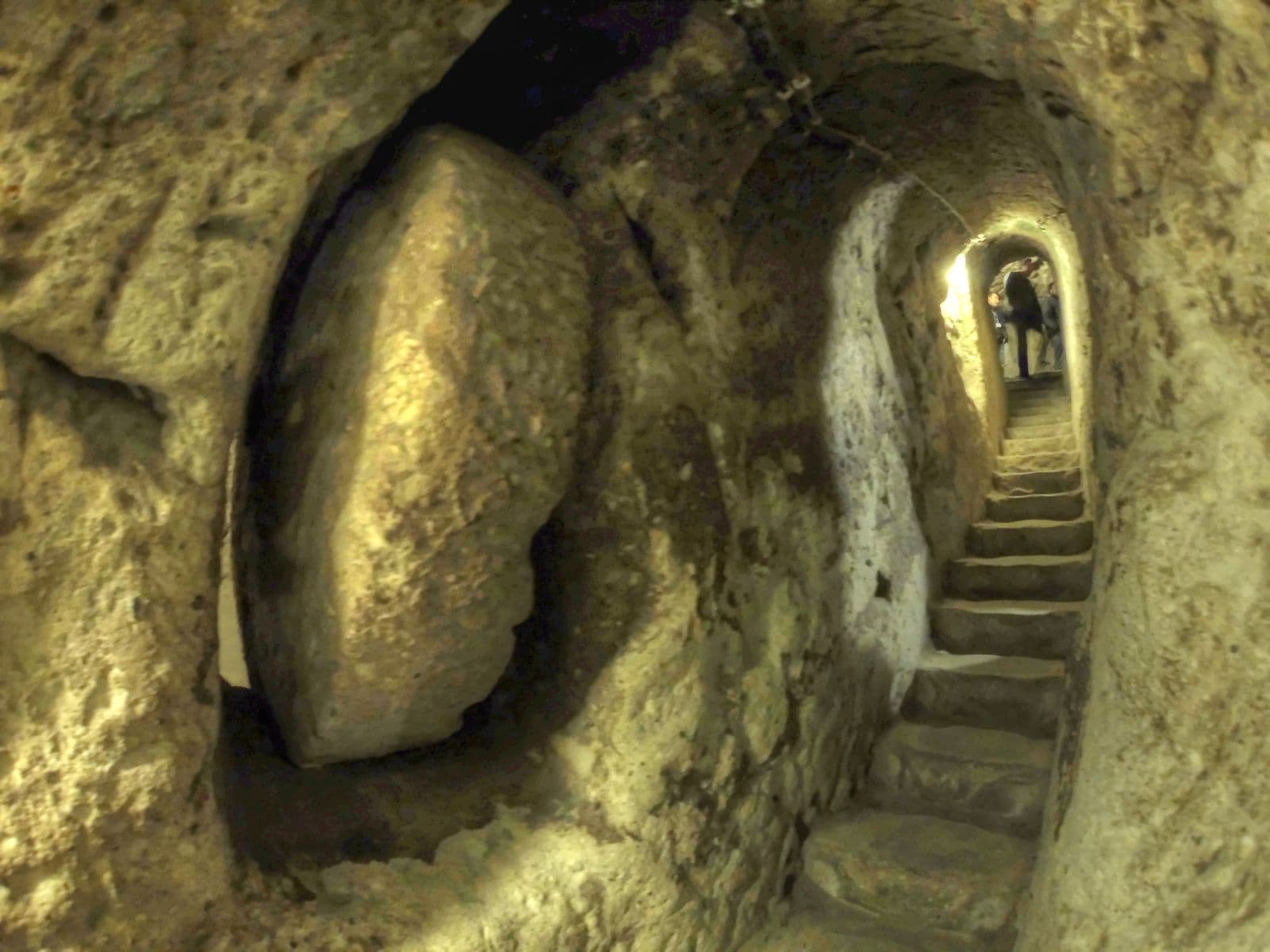
Derinkuyu
A city carved beneath Cappadocia, able to shelter up to 20,000 people according to a volumetric estimate, with wells, stables and millstone doors.
- Location
- Turkey · Near East
- Civilisation
- Phrygians? Hittites? Debated
- Period
- initial excavation date unknown
- Technique
- Underground city, 18 levels, ~85 m
- Studies
real support, not settled. A revisable snapshot of the state of research, never a judgement.
→ Show on the mapThe elements of the site
Where the site is
38.370° N, 34.730° E · satellite view
What science says
Volcanic tuff can be dug with simple tools; ventilation through vertical shafts is well understood.
Use as a refuge during the Byzantine and medieval periods is documented by texts and artifacts.
Dozens of other underground cities exist in Cappadocia — this is a regional phenomenon.
The central ventilation shaft reaches 55 meters in depth (section ~3 × 2.8 m); the level openings are intentionally offset to maximize airflow — a deliberate engineering design.
What remains unexplained
Parallels
Two underground worlds, precisely carved, on two continents.
Proposed — to be examinedRelated to
Studies & sources
Show 10 more sourcesCollapse sources
Keep exploring
 Debated
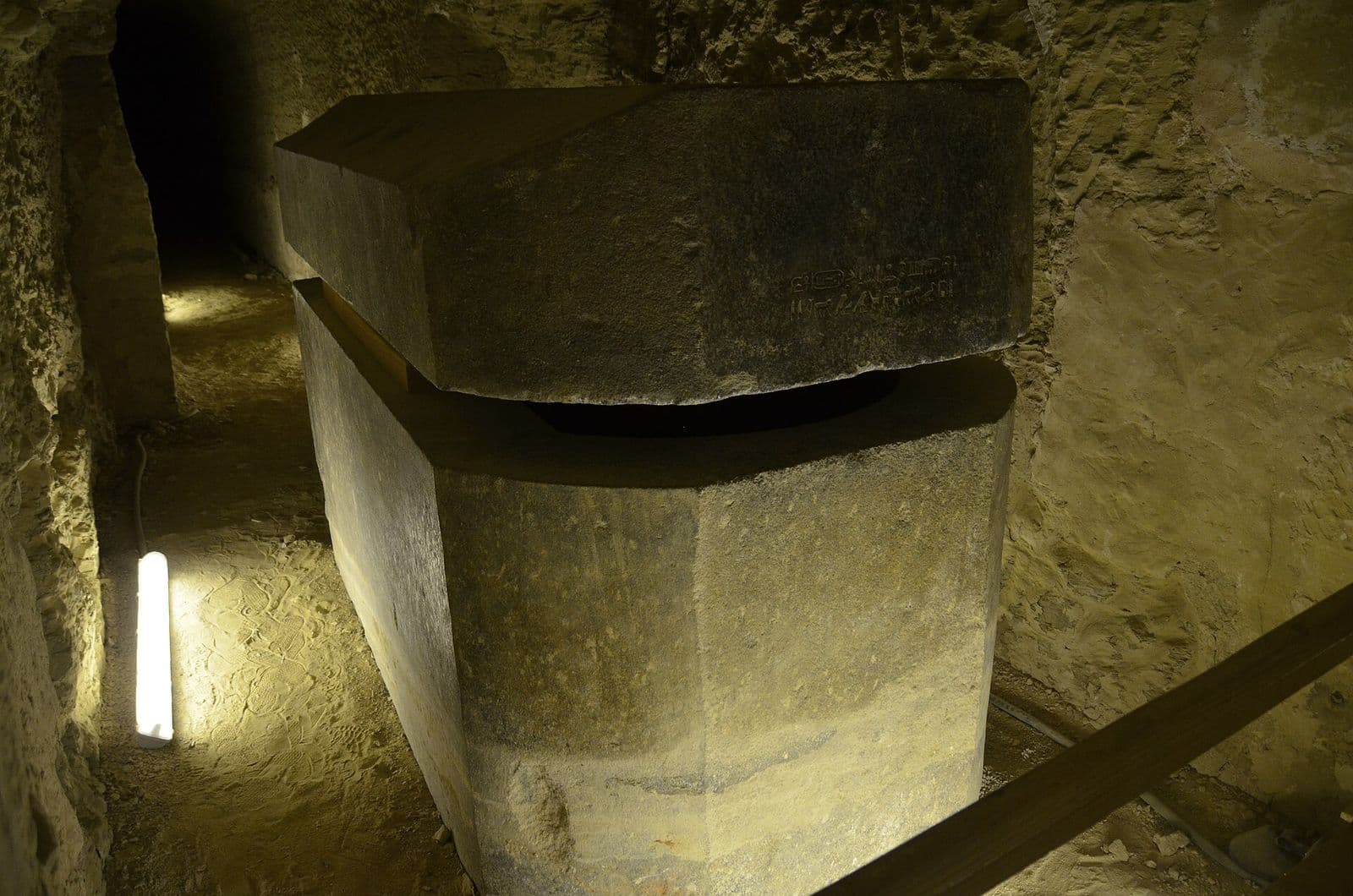
Serapeum of Saqqara
Twenty-four black granite sarcophagi, 60 to 80 tons, lowered into underground galleries carved out for the sacred Apis bulls.
 No accepted answer
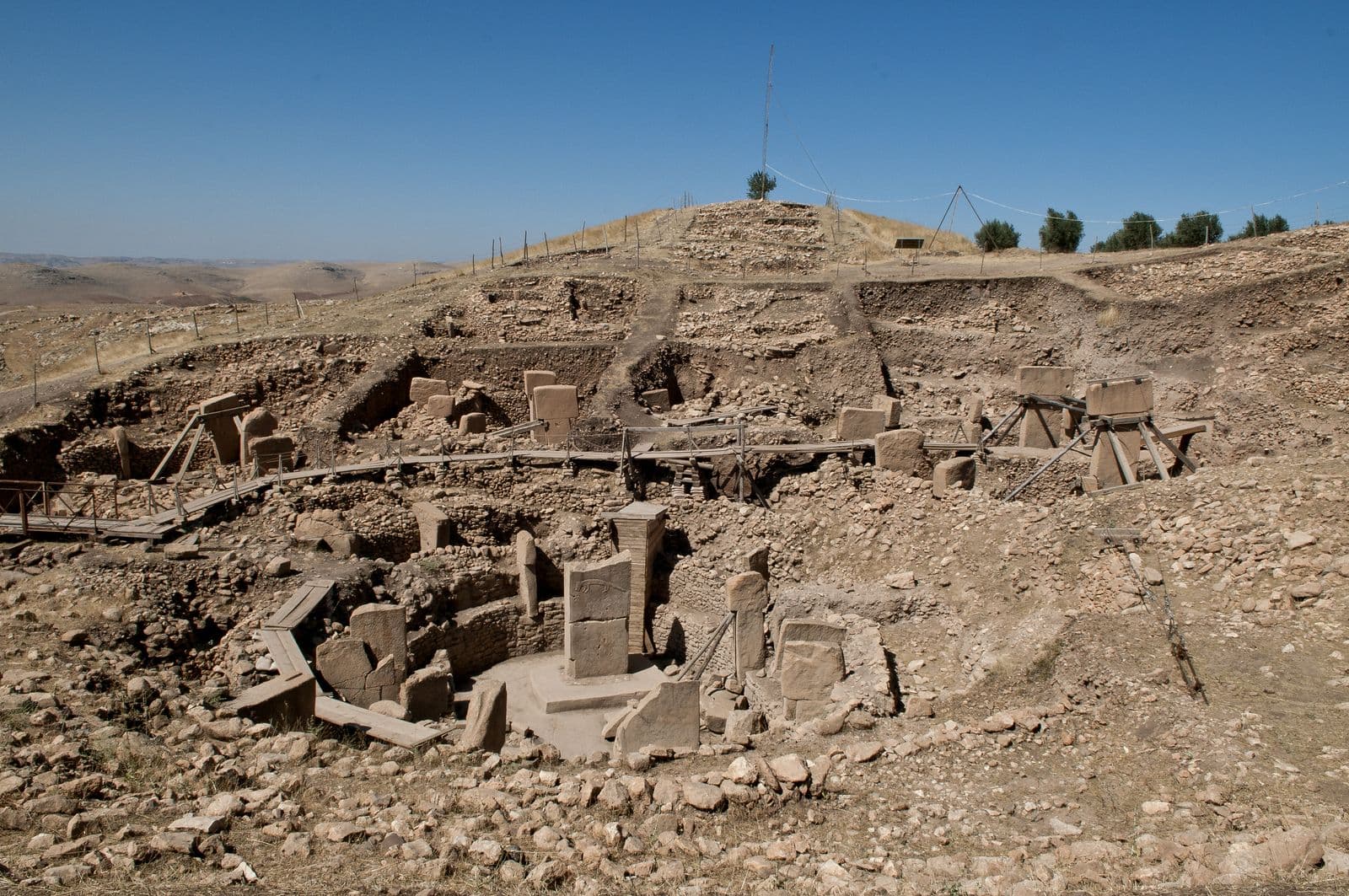
Göbekli Tepe
A monumental complex built by hunter-gatherers, 6,000 years before the pyramids. Then buried — deliberately or by time, the debate is open.
 No accepted answer
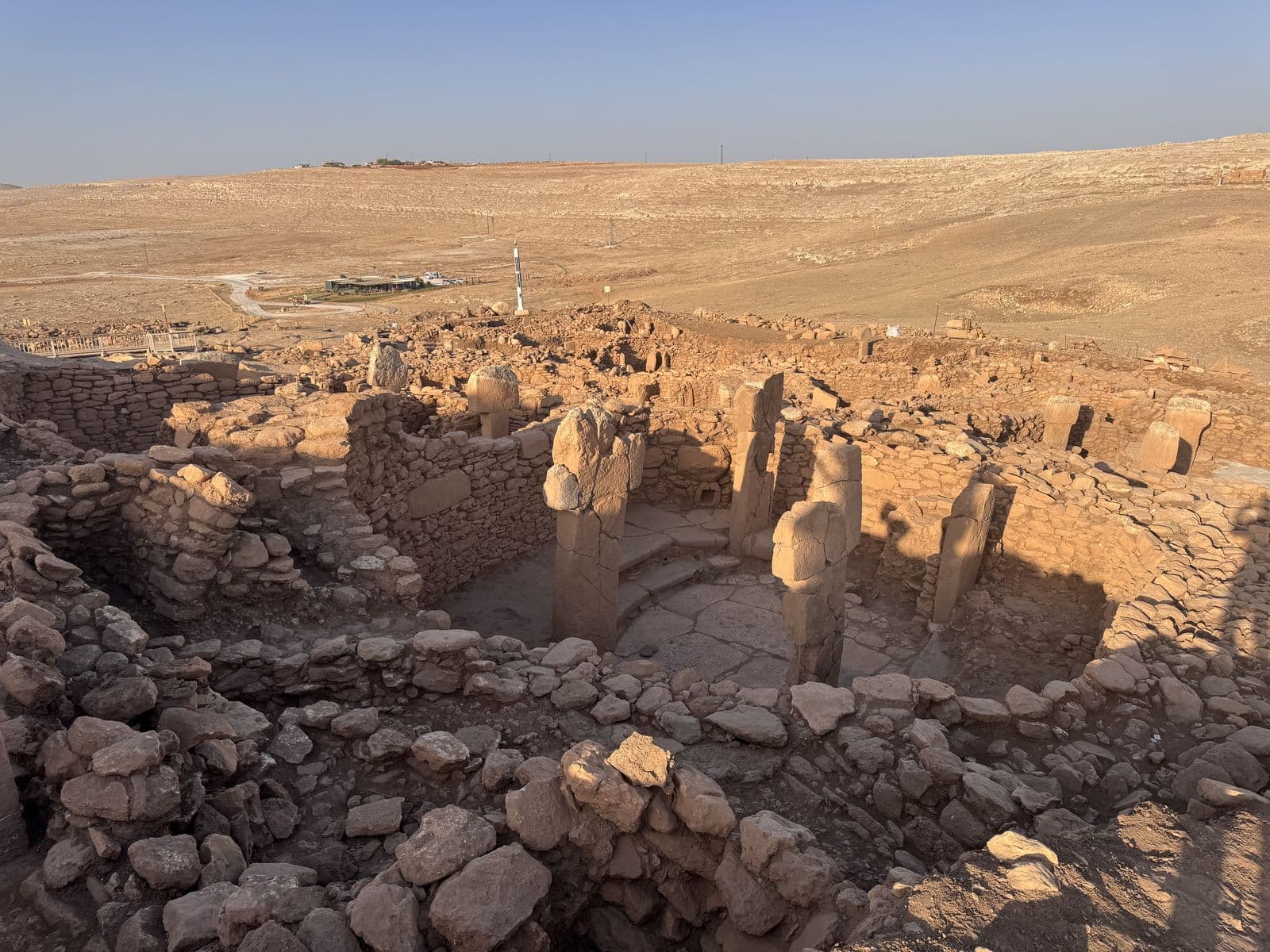
Karahan Tepe
The "brother" of Göbekli Tepe, perhaps even older. Only seriously excavated since 2019.