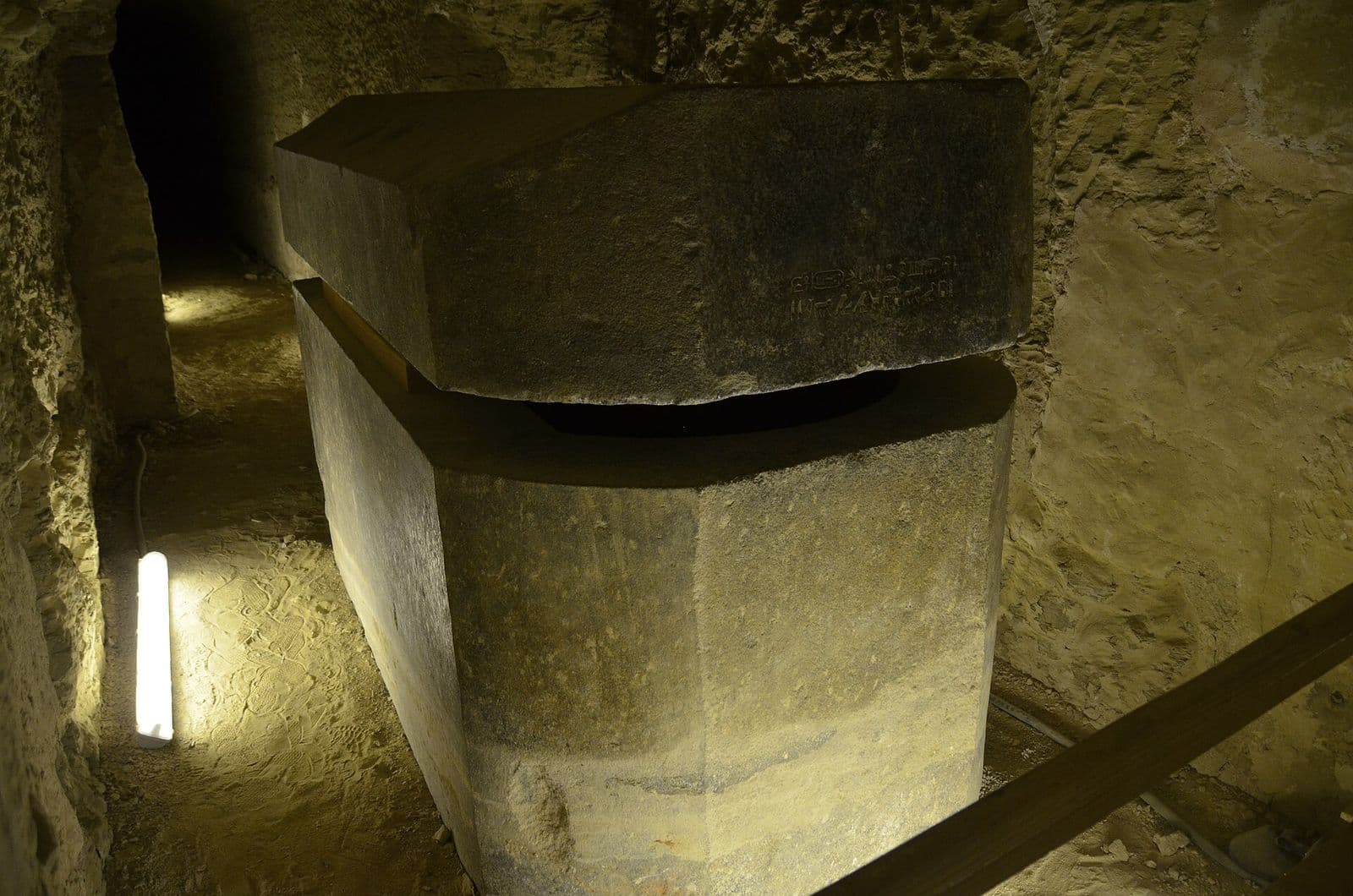
Serapeum of Saqqara
Twenty-four black granite sarcophagi, 60 to 80 tons, lowered into underground galleries carved out for the sacred Apis bulls.
- Location
- Egypt · Near East
- Civilisation
- Egypt, New Kingdom → Ptolemaic
- Period
- −1400 → −100
- Technique
- Granite sarcophagi, 70 t, polished
- Studies
real support, not settled. A revisable snapshot of the state of research, never a judgement.
→ Show on the mapThe elements of the site
Where the site is
29.870° N, 31.210° E · satellite view
What science says
The cult of the Apis bull is documented by stelae, inscriptions and funerary rites (Apis Papyrus: 70 days of embalming). In the great granite galleries, only 3 to 4 sarcophagi out of 24 bear inscriptions — direct textual documentation there is therefore limited.
Egyptian granite techniques (tubular drilling in copper with abrasive sand, emery polishing) are attested by experimental archaeology (Stocks 2003; Gorelick & Gwinnett 1983).
The construction project spans more than a millennium: earliest isolated burials under Amenhotep III (~1390 BC), the Lesser Vaults under Ramesses II/Khaemwaset (~1250 BC), the Greater Vaults under Psamtik I (664 BC) and Ptolemaic extensions.
A stele from the Ptolemaic era (Ptolemy II, c. 247 BC) documents 28 days of work to lower a sarcophagus and its lid — proof that the logistics, however heavy, were planned and recorded.
What remains unexplained
Parallels
Two underground worlds, precisely carved, on two continents.
Proposed — to be examinedRelated to
Studies & sources
Show 9 more sourcesCollapse sources
Keep exploring
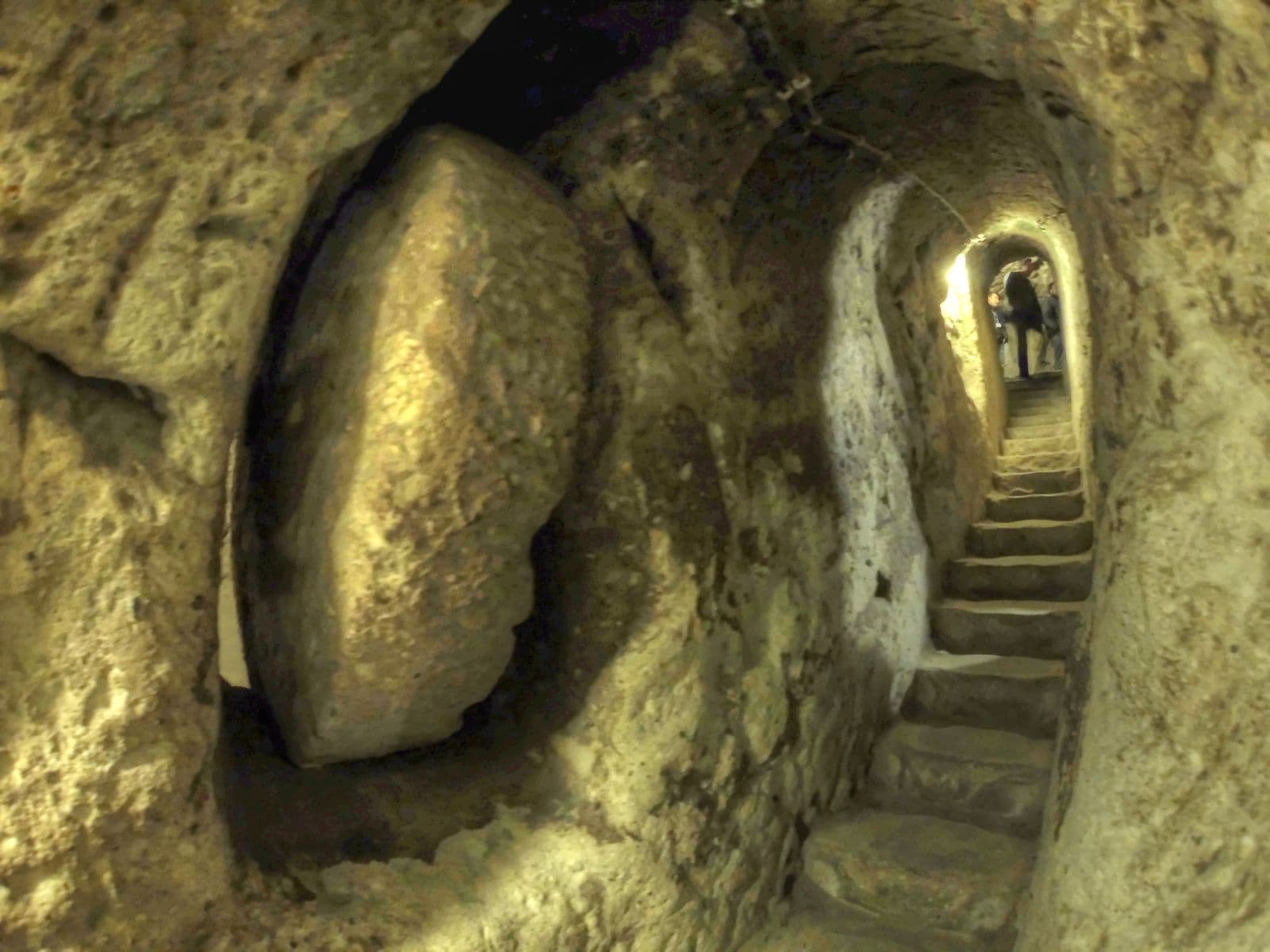 Debated
Derinkuyu
A city carved beneath Cappadocia, able to shelter up to 20,000 people according to a volumetric estimate, with wells, stables and millstone doors.
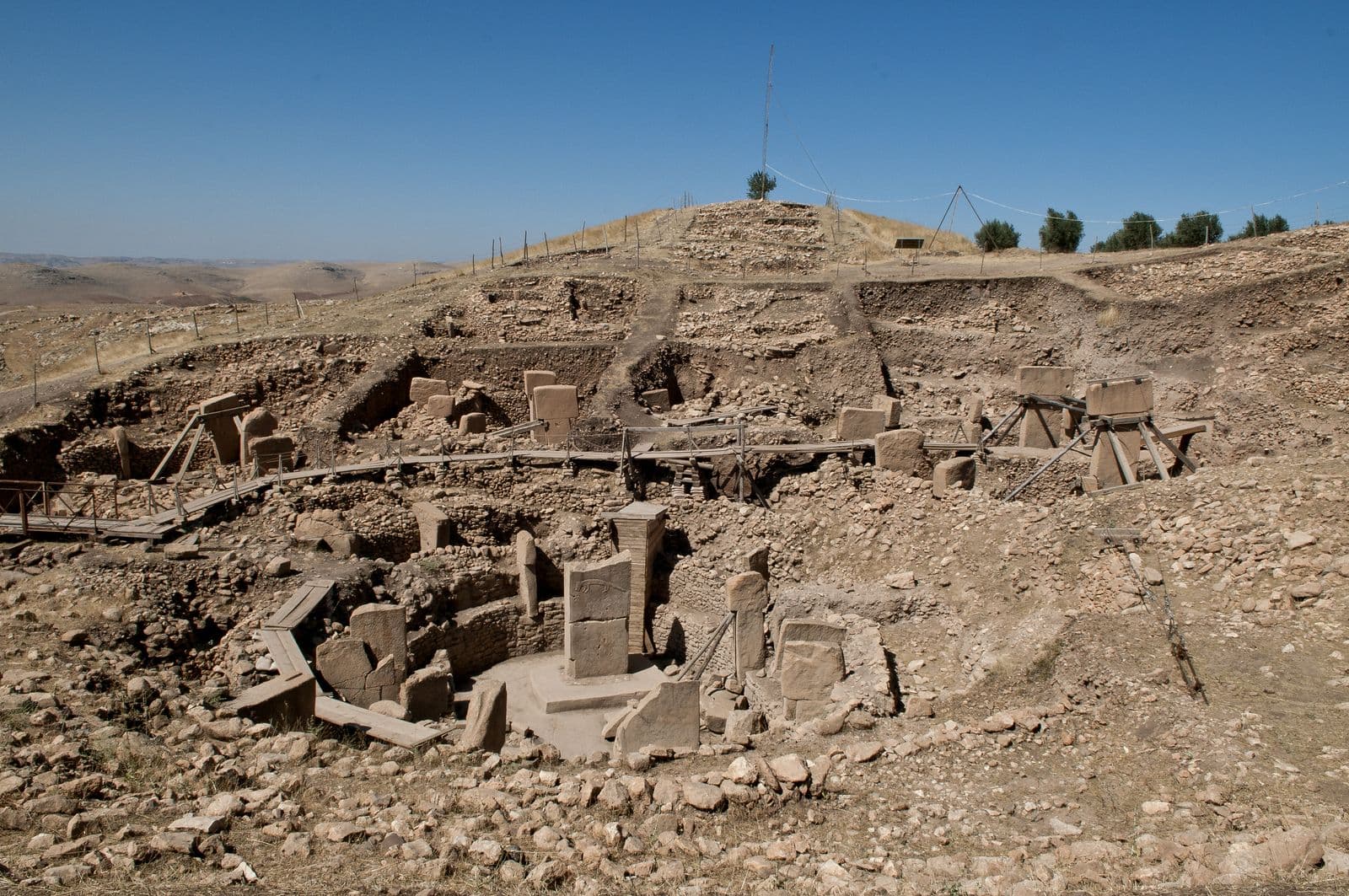 No accepted answer
Göbekli Tepe
A monumental complex built by hunter-gatherers, 6,000 years before the pyramids. Then buried — deliberately or by time, the debate is open.
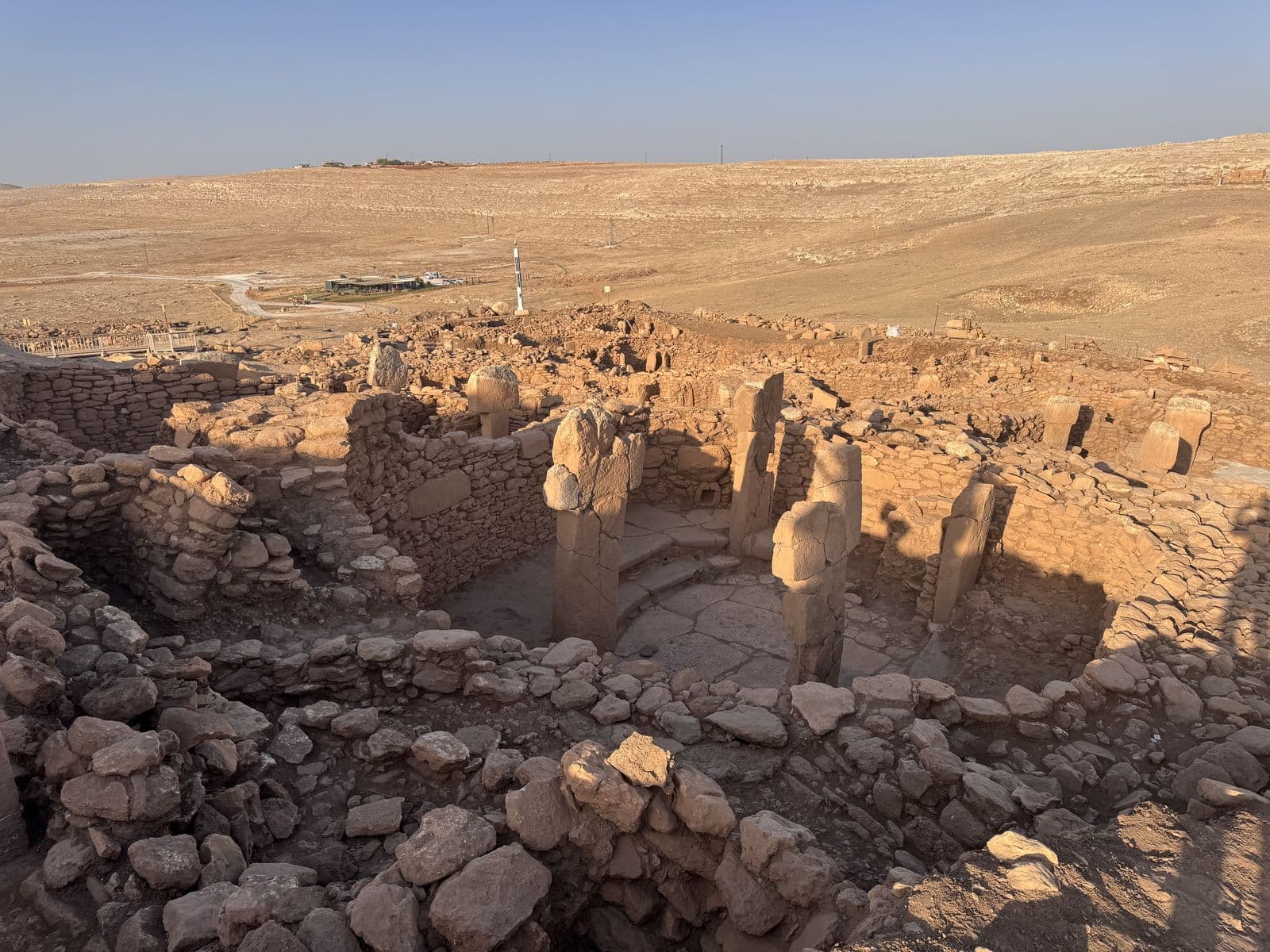 No accepted answer
Karahan Tepe
The "brother" of Göbekli Tepe, perhaps even older. Only seriously excavated since 2019.