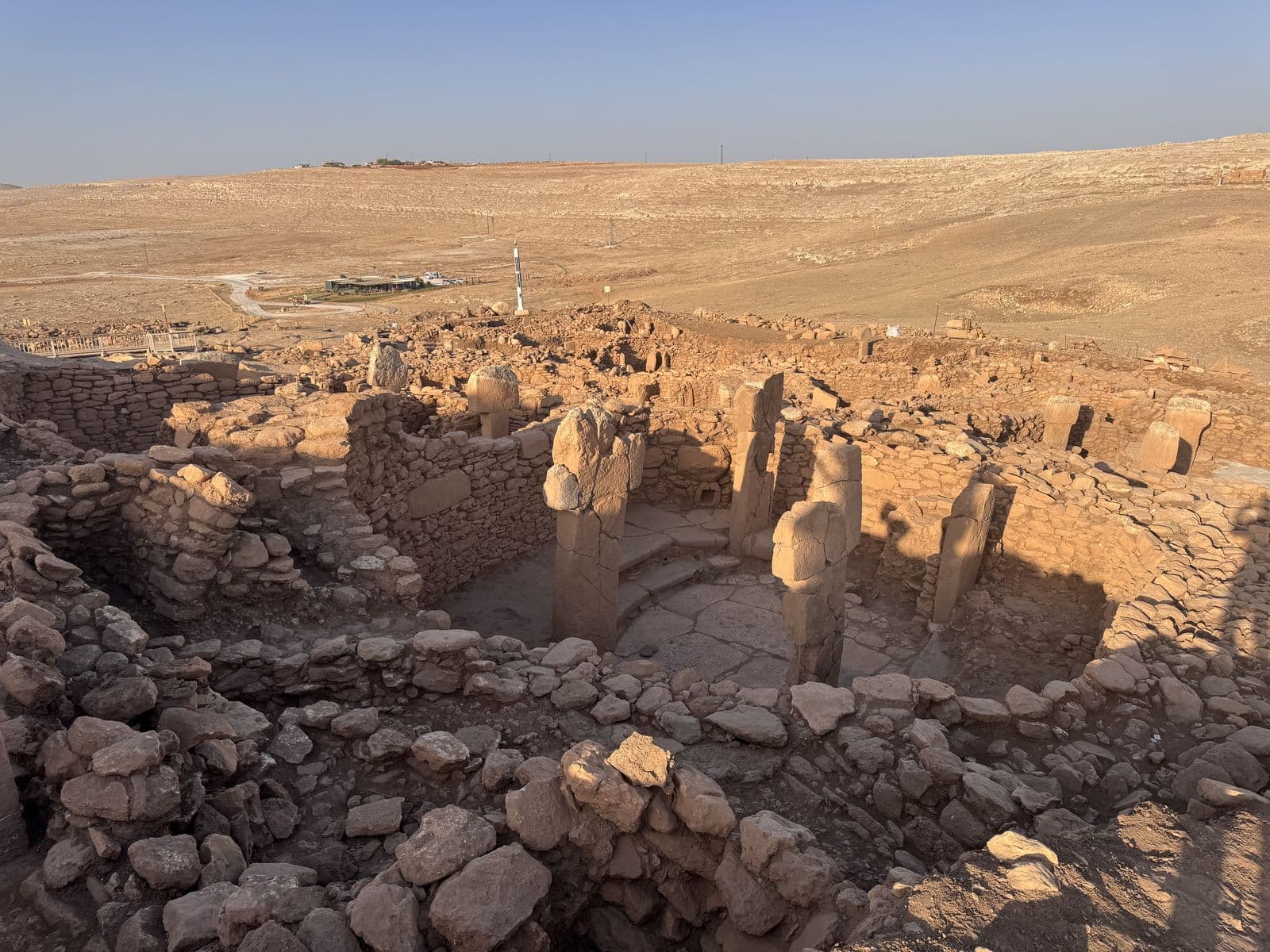
Karahan Tepe
The "brother" of Göbekli Tepe, perhaps even older. Only seriously excavated since 2019.
- Location
- Turkey · Near East
- Civilisation
- Hunter-gatherers (PPNA)
- Period
- ~−9400
- Technique
- Pillars carved from the bedrock
- Studies
no explanation commands consensus to date. A revisable snapshot of the state of research, never a judgement.
→ Show on the mapThe elements of the site
Where the site is
37.090° N, 39.300° E · satellite view
What science says
Same cultural horizon as Göbekli Tepe (Taş Tepeler); consistent C14 dates.
Pillars carved directly into the bedrock — the quarry and the monument are one and the same.
The Taş Tepeler program (launched in 2021 by the Turkish Ministry of Culture) documents 12 PPNA sites in the Şanlıurfa region, bringing together more than 220 archaeologists from 36 institutions.
In 2023, a 2.3 m anthropomorphic statue was uncovered: a seated nude man holding his phallus, with carved ribs and a V-shaped necklace. An exceptional level of naturalism for the PPNA.
What remains unexplained
Parallels
Same grammar of T-shaped pillars, 35 km apart — linked by stone alone.
Parallel acceptedRelated to
Studies & sources
Show 11 more sourcesCollapse sources
Keep exploring
 No accepted answer
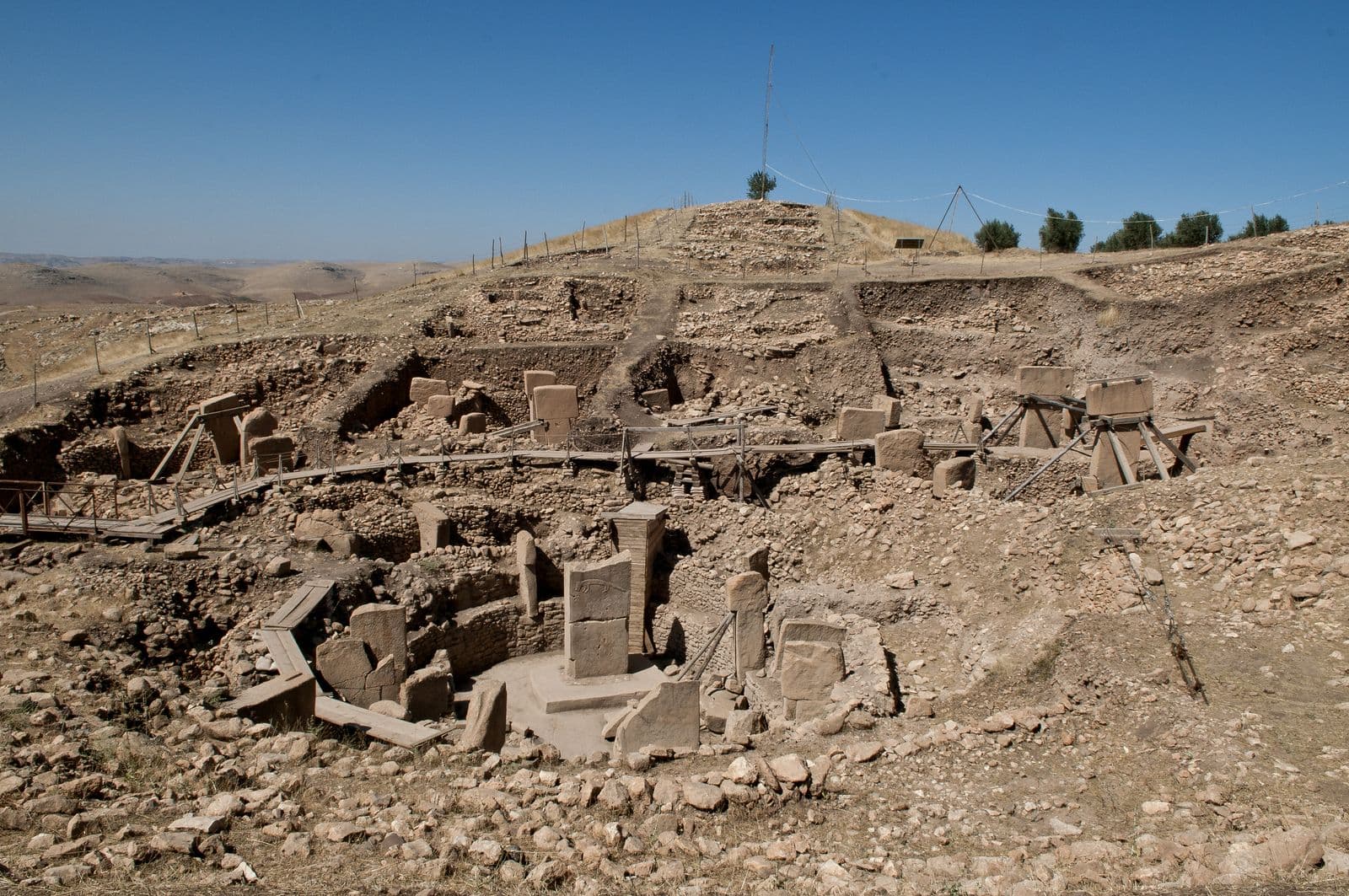
Göbekli Tepe
A monumental complex built by hunter-gatherers, 6,000 years before the pyramids. Then buried — deliberately or by time, the debate is open.
 Debated
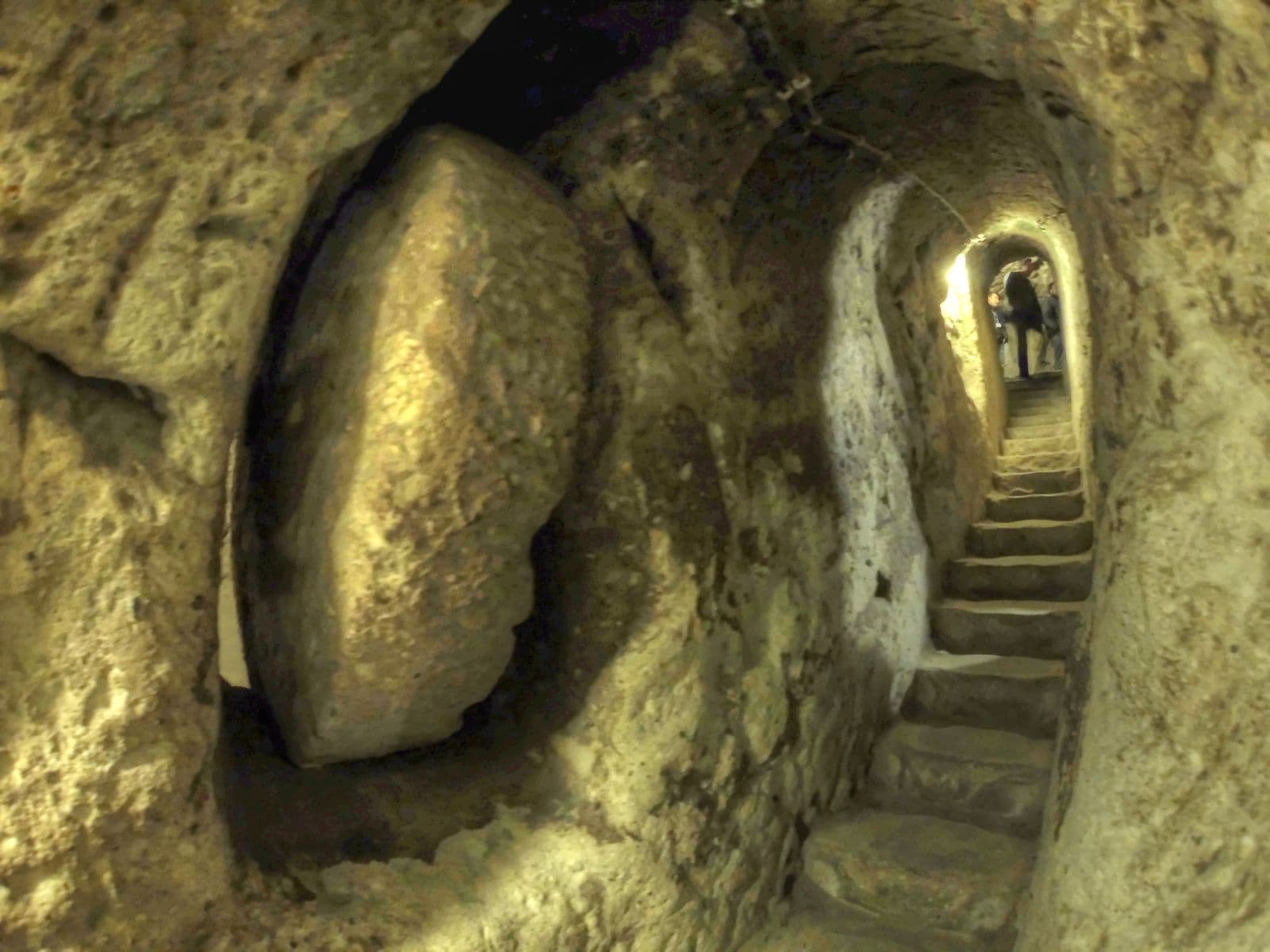
Derinkuyu
A city carved beneath Cappadocia, able to shelter up to 20,000 people according to a volumetric estimate, with wells, stables and millstone doors.
 Debated
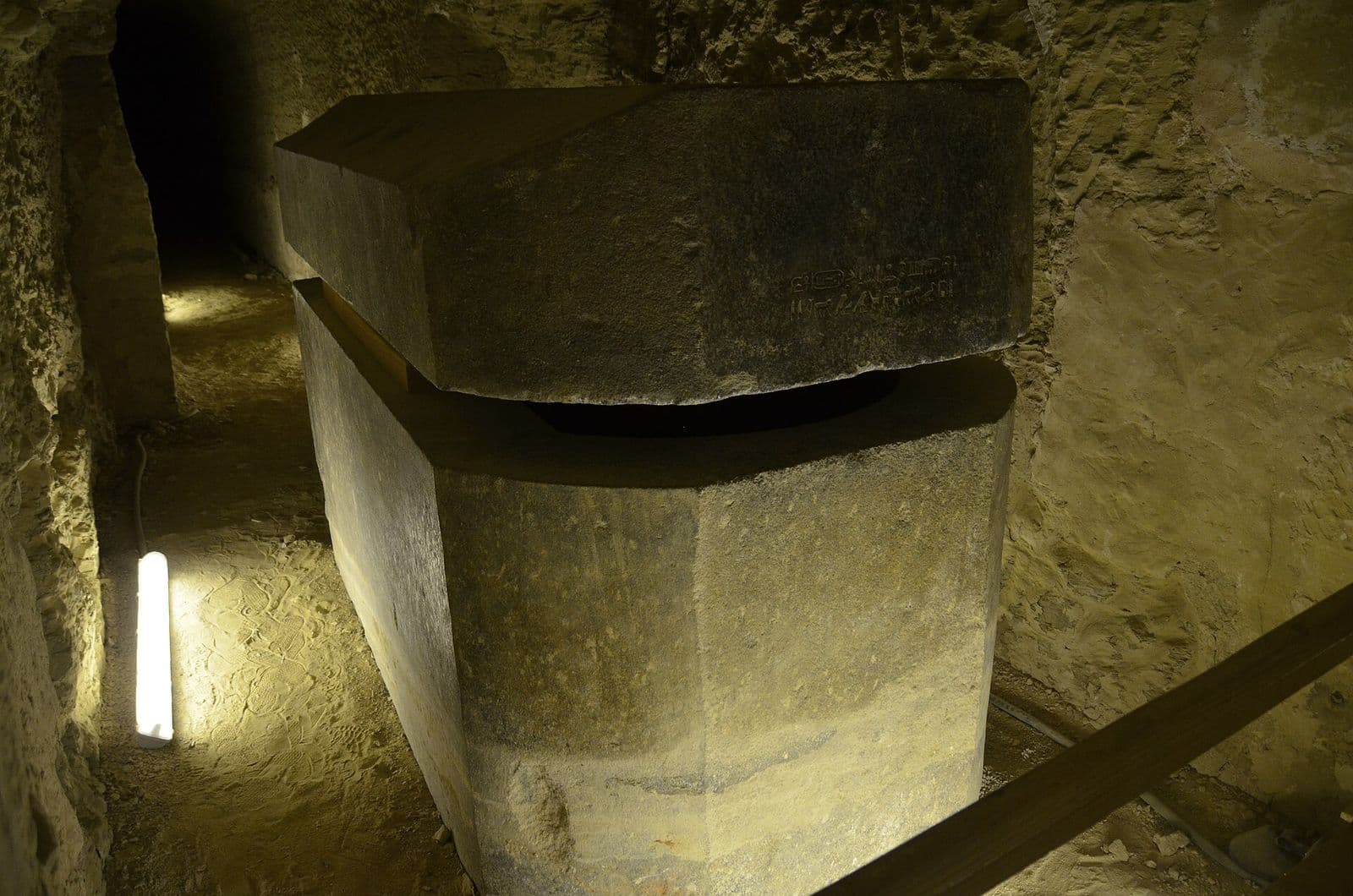
Serapeum of Saqqara
Twenty-four black granite sarcophagi, 60 to 80 tons, lowered into underground galleries carved out for the sacred Apis bulls.