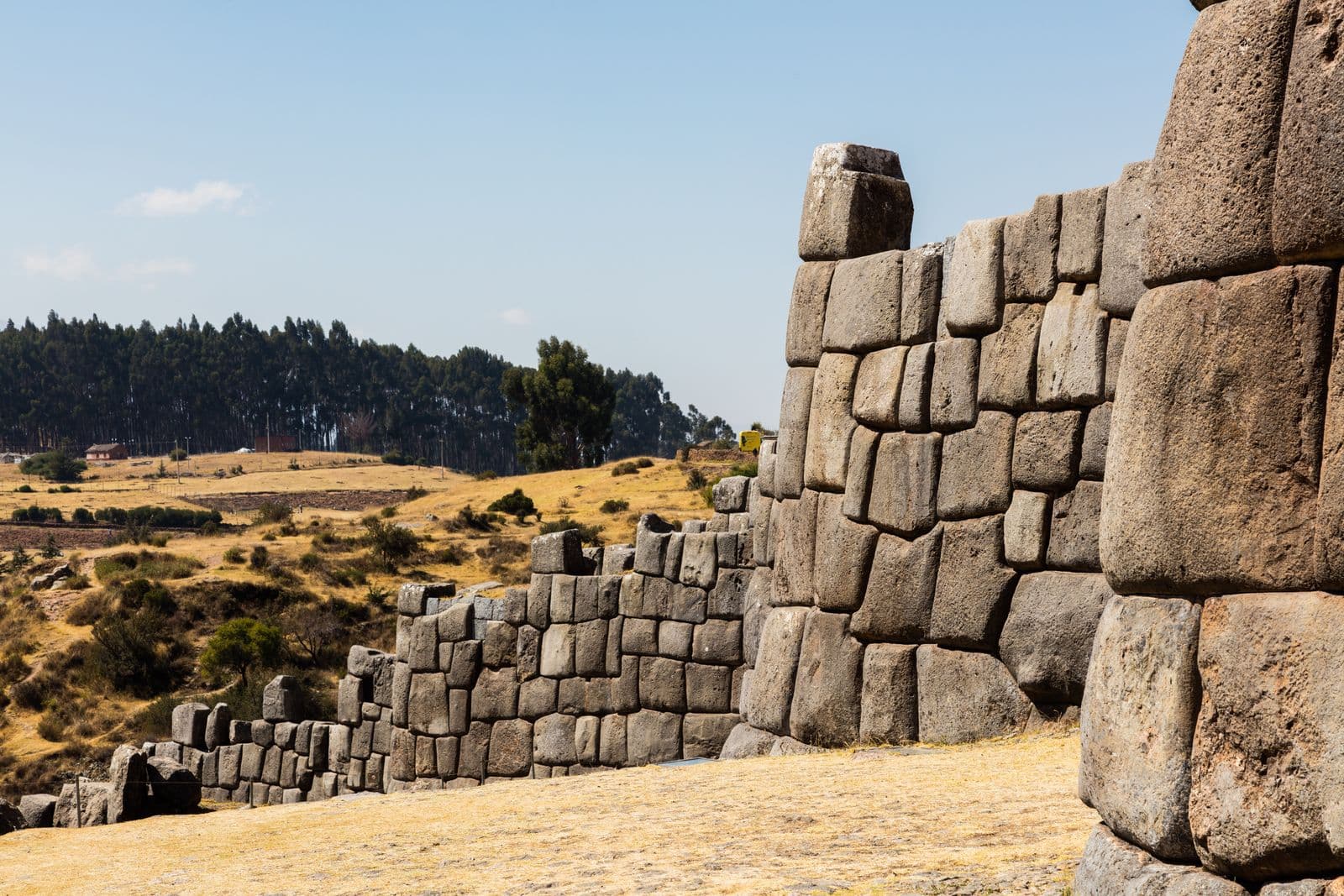
Sacsayhuamán
Blocks of 100+ tons, joints fitted to the millimeter, without mortar or iron. How?
- Location
- Peru · Americas
- Civilisation
- Inca (attribution debated)
- Period
- ~1450 AD
- Technique
- Cyclopean polygonal masonry
- Studies
- ~60 publications
no explanation commands consensus to date. A revisable snapshot of the state of research, never a judgement.
→ Show on the mapThe elements of the site
Where the site is
13.510° S, 71.980° W · satellite view
What science says
Spanish chronicles (Cieza de León, 1553) describe an Inca construction project: ~20,000 workers, ramps, ropes.
The quarries are identified: foundation limestone at ~1–3 km, andesite for the cyclopean walls at Rumiqolqa (~35 km); abandoned blocks still mark the tracks.
J.-P. Protzen's experiments (1985): hammering with stone hammerstones reproduces the concave joints.
The polygonal masonry is earthquake-resistant: during earthquakes, the blocks "dance" and then settle back into place.
The Rumiqolqa quarry (~35 km SE of Cusco) yielded blocks mid-carving bearing the same tool marks as those at Sacsayhuamán, confirming the geochemical origin of the andesites by XRF (Ogburn 2004). The quarry remains partly in use today.
Inca masonry is a distinct indigenous development separate from Tiwanaku: Protzen & Nair (JSAH 1997) demonstrated by direct comparison of carving techniques that the two traditions are fundamentally different — no direct transmission is attested.
What remains unexplained
Parallels
500 km and eight centuries apart, the same obsession with the perfect joint.
Proposed — to be examinedCyclopean masonry without mortar — a correlation of form, contexts with no known link.
Proposed — to be examinedEchoes across time
Polygonal joints dissipate seismic energy. The principle is tested on shake tables and inspires contemporary research.
Interlocking masonry trials · civil engineering reviews
Related to
Studies & sources
Show 14 more sourcesCollapse sources
Keep exploring
 No accepted answer
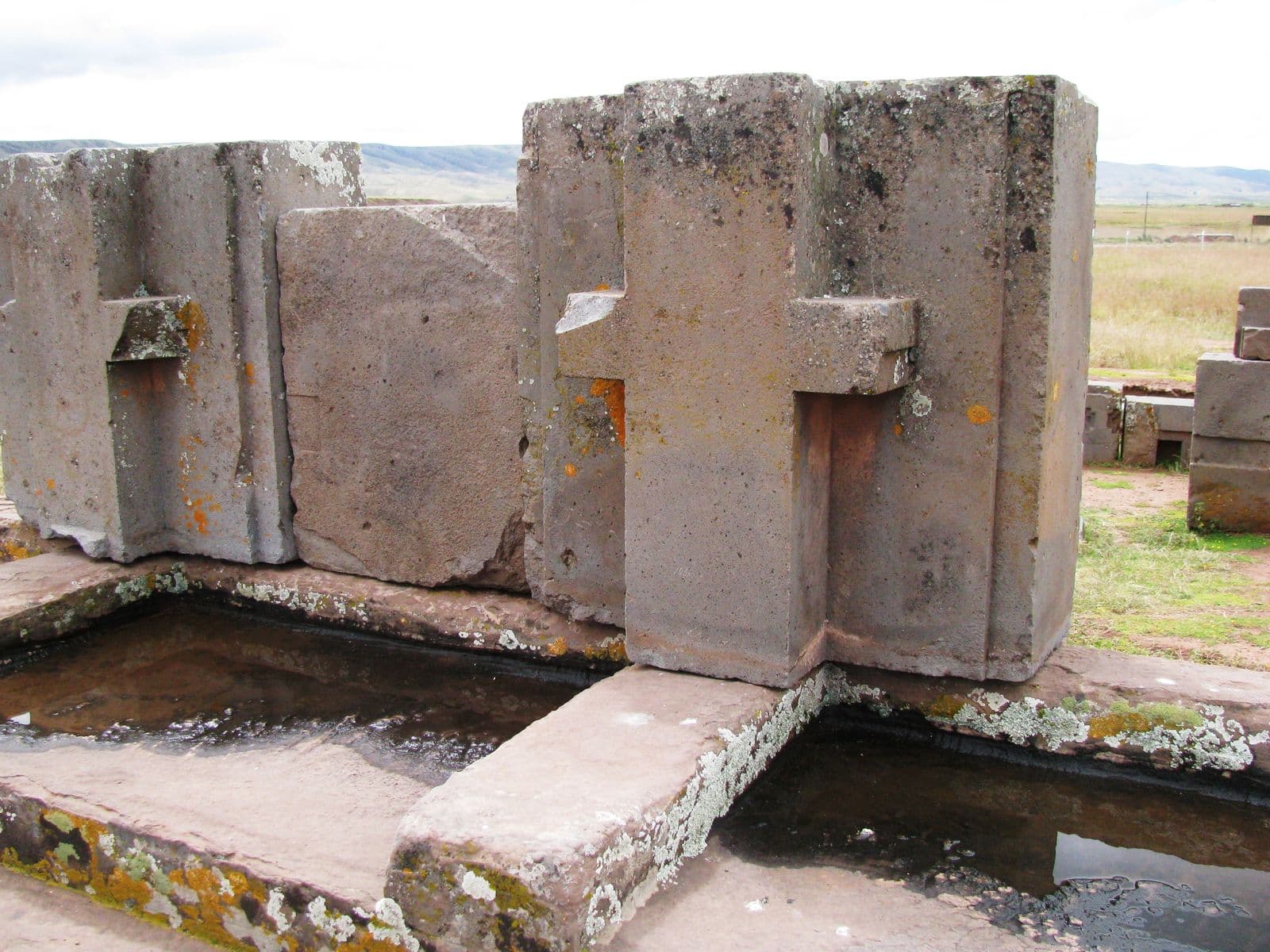
Pumapunku
Andesite H-blocks cut and standardized with remarkable precision — without iron tools, using hard-stone pounders and abrasives. The method is documented, the scale remains astonishing.
 No accepted answer
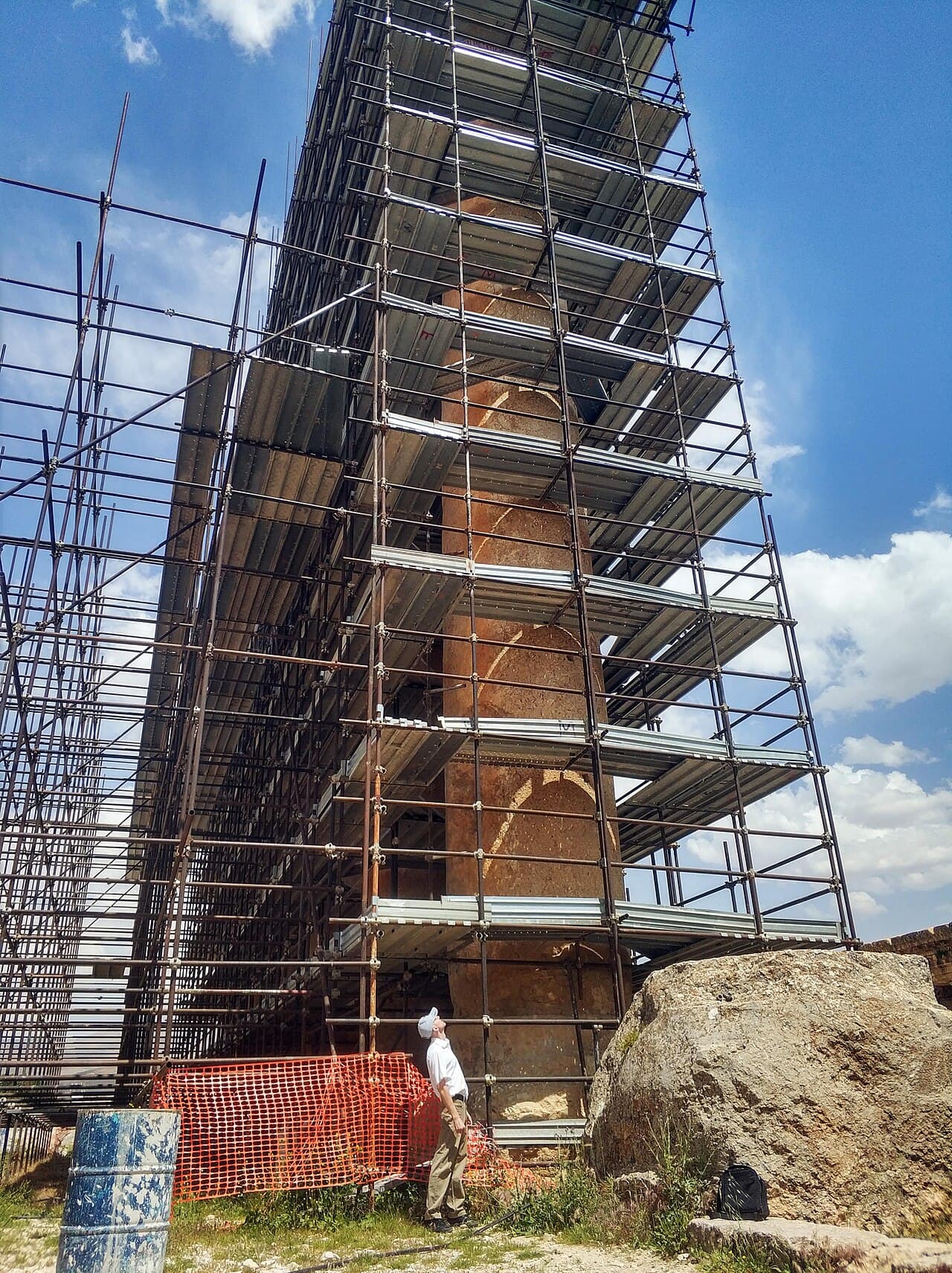
Baalbek
The trilithon: three 800-tonne blocks in a wall. In the quarry, the "Stone of the Pregnant Woman" weighs 1,000.
 Debated
Sayhuite Stone (Saywite)
A granite block 4 meters long covered with 200 relief figures: terraces, canals, pumas, frogs, monkeys. A hydraulic model of the Inca empire? No one really knows yet.