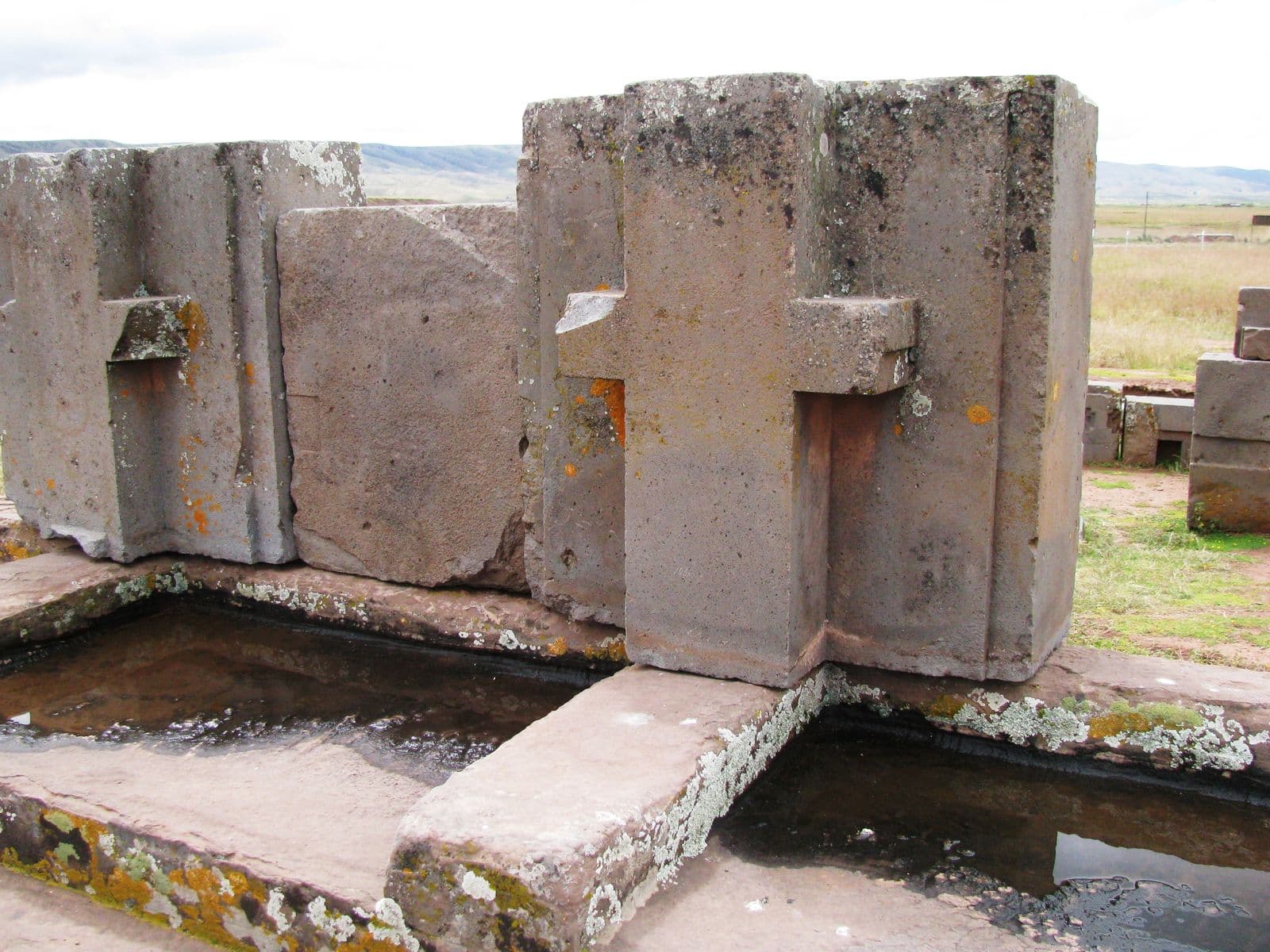
Pumapunku
Andesite H-blocks cut and standardized with remarkable precision — without iron tools, using hard-stone pounders and abrasives. The method is documented, the scale remains astonishing.
- Location
- Bolivia · Americas
- Civilisation
- Tiwanaku
- Period
- ~536–600 AD
- Technique
- Carved andesite, H-shaped blocks
- Studies
no explanation commands consensus to date. A revisable snapshot of the state of research, never a judgement.
→ Show on the mapThe elements of the site
Where the site is
16.560° S, 68.680° W · satellite view
What science says
C14 dating on the oldest fill layer: construction begun after 536–600 AD, Tiwanaku culture. (Yaeger & Vranich, 2013)
The "H-blocks" follow a common template — a modular standardization, documented by photogrammetry.
Quarries identified by petrography: red sandstone at ~10 km (blocks of 85–131 t for the Plataforma Lítica), andesite at ~90 km on the Copacabana peninsula, crossed by reed raft over Lake Titicaca.
2002 experiment (University of Pennsylvania / Penn Museum): transport of a 9 t andesite block by totora reed raft (1.8 million reeds, 12 t, 15 m) across Lake Titicaca — demonstrating the feasibility of the lake route from the Copacabana peninsula.
Experimental carving by Stella Nair (Protzen & Nair 2013): reproduction of the andesite reliefs with hard stone tools (quartzite, obsidian, jasper, Mohs 6.5–7) and abrasives — refutes the hypothesis of modern or extraterrestrial machining. Protzen achieves flat surfaces to ±1 mm with quartzite abraders.
The abandoned *piedras cansadas* (tired stones) still mark the coast of the Copacabana peninsula and the Taraco peninsula — direct archaeological evidence of an organized lake transport system.
A prepared roadbed (successive layers of soil, gravel, clay) discovered under one of the Plataforma Lítica blocks: the builders prepared the surface to reduce friction during dragging. Lifting method at the scale of the 131 t blocks not demonstrated experimentally — an open question.
What remains unexplained
Parallels
500 km and eight centuries apart, the same obsession with the perfect joint.
Proposed — to be examinedRelated to
Studies & sources
Show 13 more sourcesCollapse sources
Keep exploring
 No accepted answer
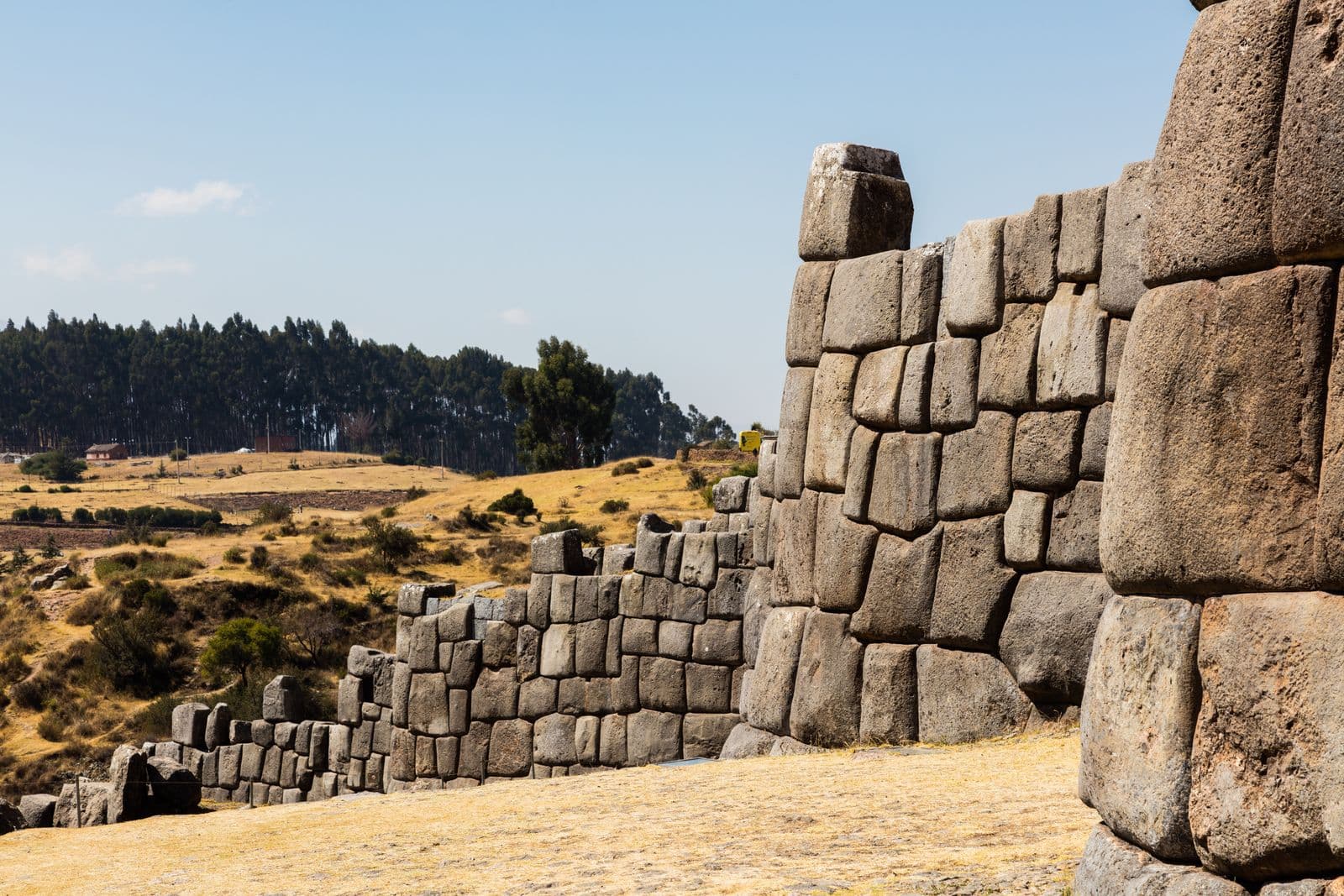
Sacsayhuamán
Blocks of 100+ tons, joints fitted to the millimeter, without mortar or iron. How?
 Refuted
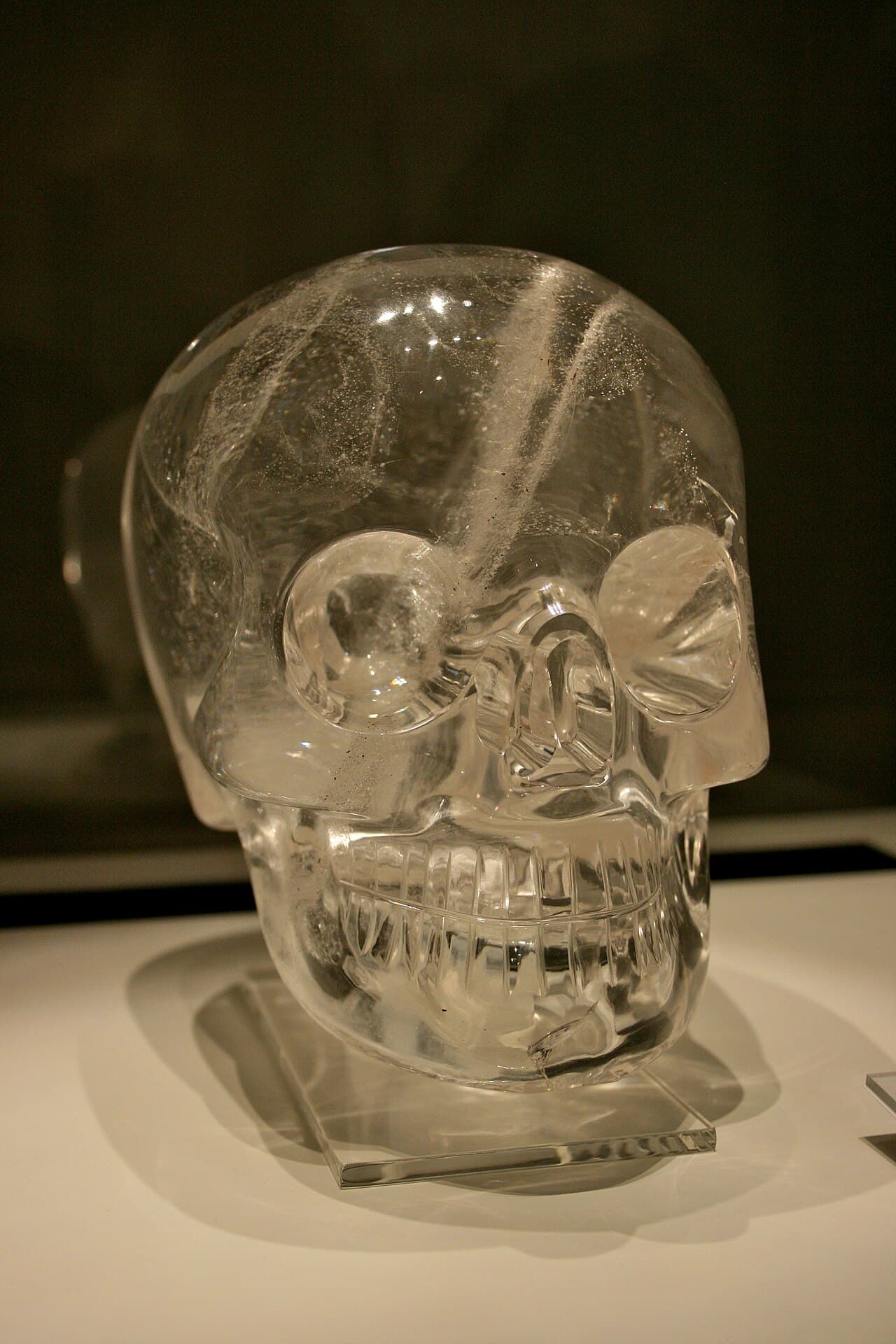
Crystal skulls
The world's most famous "pre-Columbian relics" came out of 19th–20th century workshops.
 Refuted
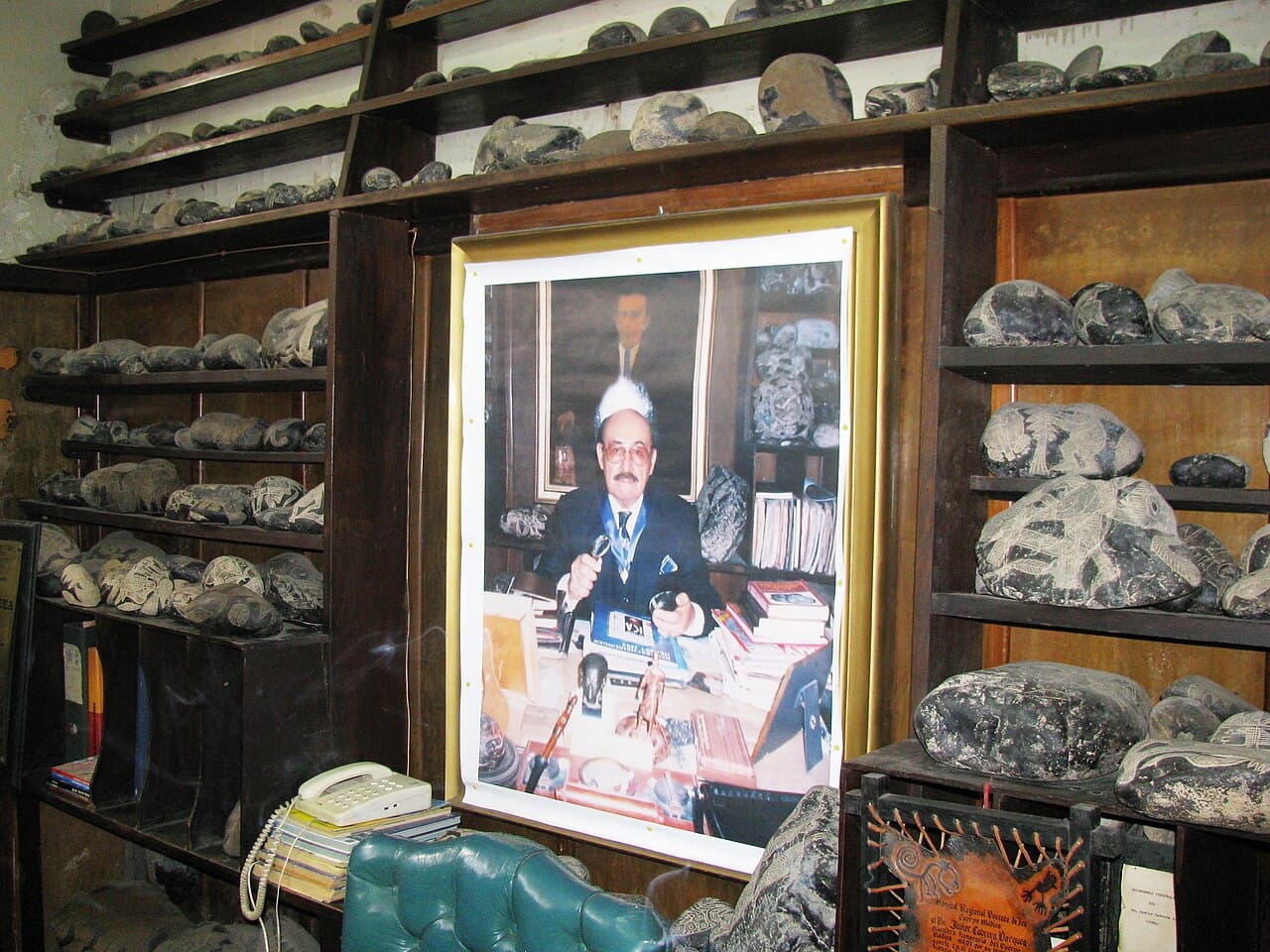
Ica stones
Dinosaurs engraved alongside humans? The engraver demonstrated his technique — dental drill and shoe polish.