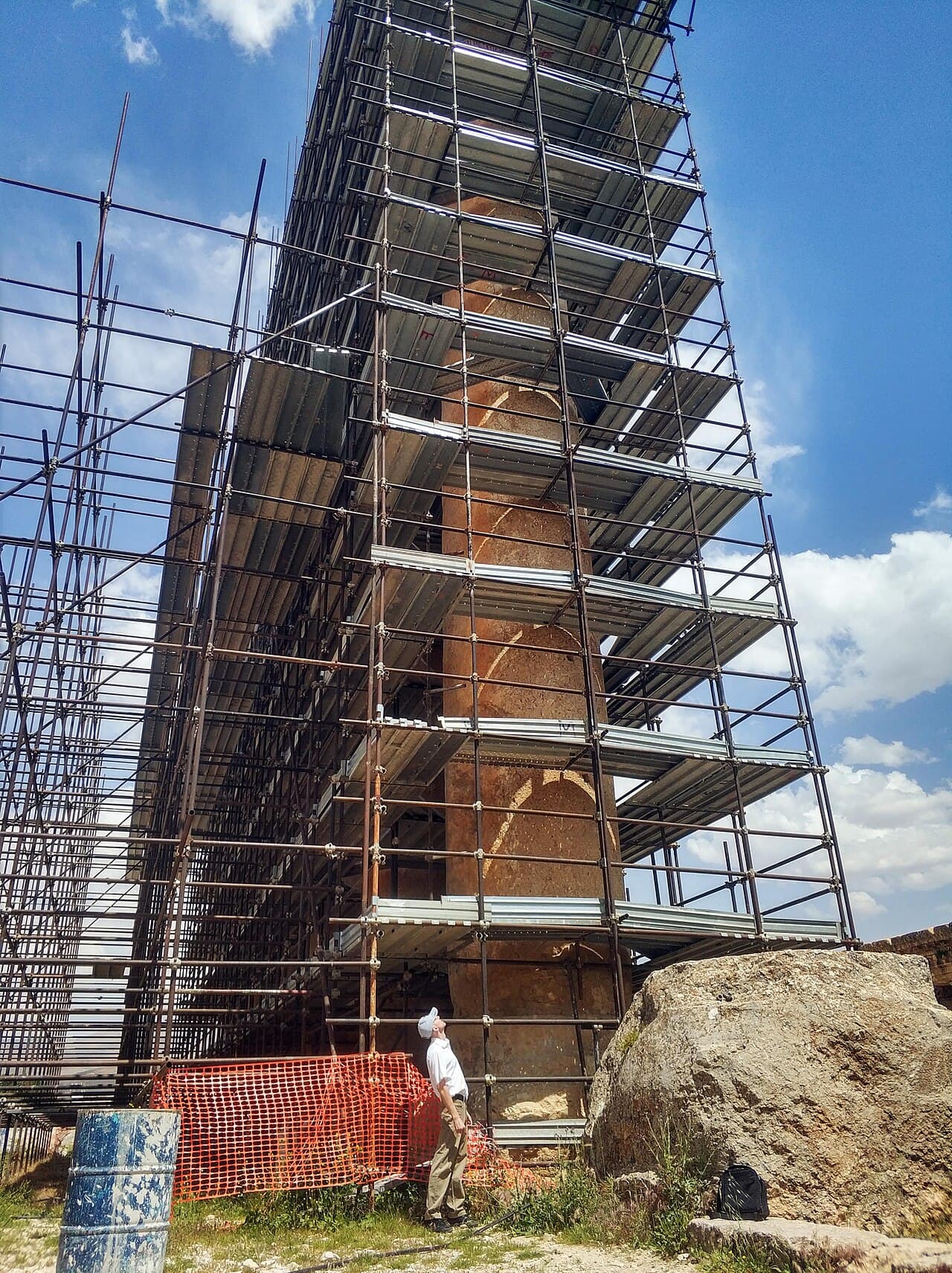
Baalbek
The trilithon: three 800-tonne blocks in a wall. In the quarry, the "Stone of the Pregnant Woman" weighs 1,000.
- Location
- Lebanon · Near East
- Civilisation
- Rome (podium debated)
- Period
- temple: 1st c. AD
- Technique
- Trilithon: 3 blocks of ~800 t
- Studies
no explanation commands consensus to date. A revisable snapshot of the state of research, never a judgement.
→ Show on the mapThe elements of the site
Where the site is
34.010° N, 36.200° E · satellite view
What science says
The Temple of Jupiter is a documented Roman construction project of the 1st century AD.
A block of about 1,500–1,650 t (the 'Forgotten Stone', uncovered in 2014 by the German mission) remained in the quarry: the Romans knew when to give up — a sign of a rational construction project.
The Romans commonly lifted loads on the order of 100 t (columns, architraves) with gin poles and capstans; beyond that, blocks were slid and rolled rather than lifted.
Three distinct stones remain in the quarry, in ascending order of mass: the Stone of the Pregnant Woman (Hajar al-Hibla, ~1,000 t), the Stone of the South (Hajar el-Guble, ~1,242 t, rediscovered in the 1990s), the Forgotten Stone (~1,500–1,650 t, discovered by the DAI in summer 2014). They are NOT part of the Trilithon.
The initial phase of Podium I (structure beneath the columns) shows Herodian characteristics (~15 BC) according to Kropp & Lohmann (Levant 43, 2011): masonry with drafted margins and header/stretcher alternation identical to the Temple Mount in Jerusalem. The Trilithon itself remains attributed to the imperial Roman phase.
Adam (Syria 54, 1977) calculates that a block of 557 t could have been transported by 512 men using rollers and capstans. The documented maximum capacity for Roman vertical lifting (towers + multi-machine capstans) is about 100 t (Adam, La construction romaine, 1984; Vitruvius, De Architectura X.2).
What remains unexplained
Parallels
Cyclopean masonry without mortar — a correlation of form, contexts with no known link.
Proposed — to be examinedRelated to
Studies & sources
Show 11 more sourcesCollapse sources
Keep exploring
 No accepted answer
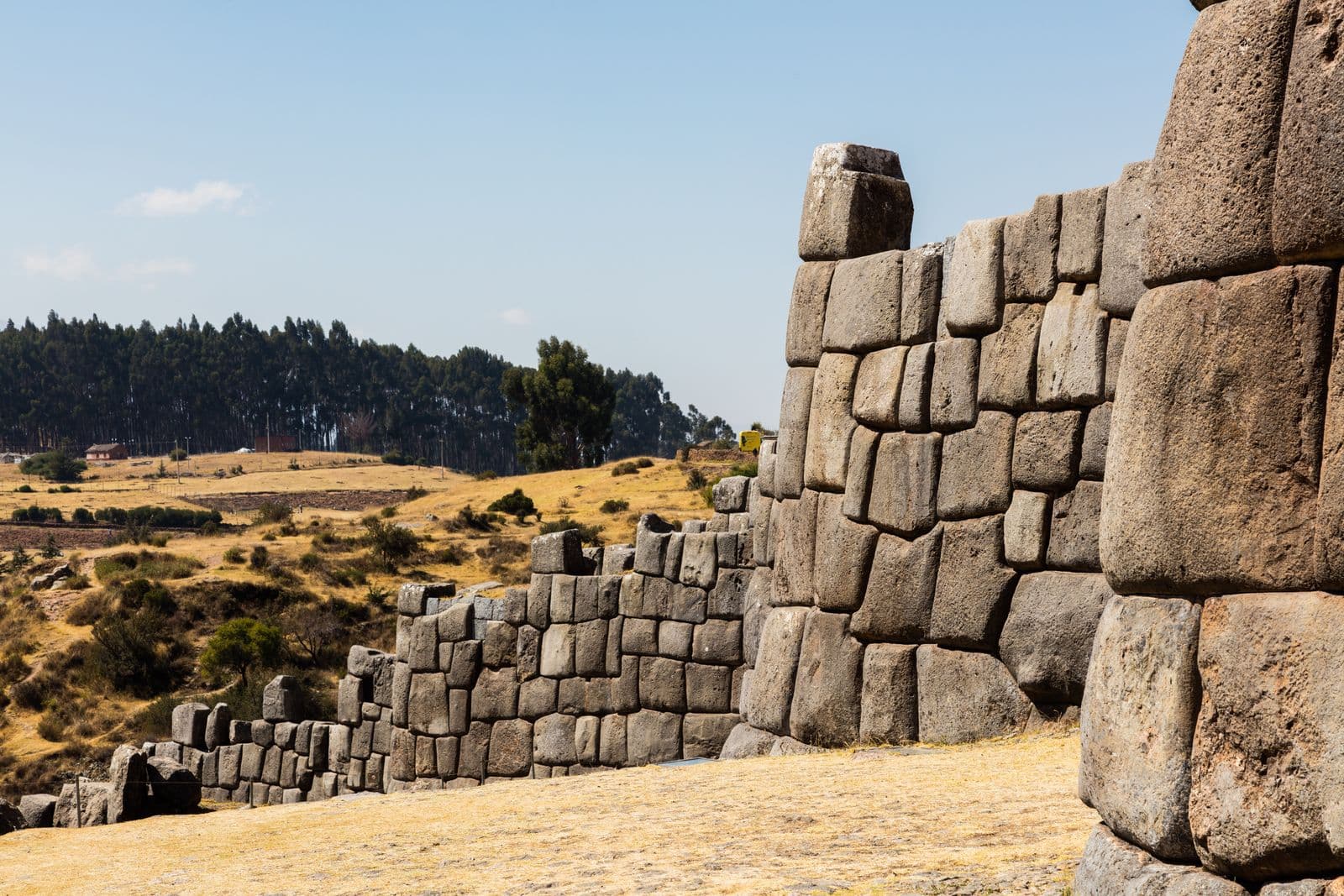
Sacsayhuamán
Blocks of 100+ tons, joints fitted to the millimeter, without mortar or iron. How?
 No accepted answer
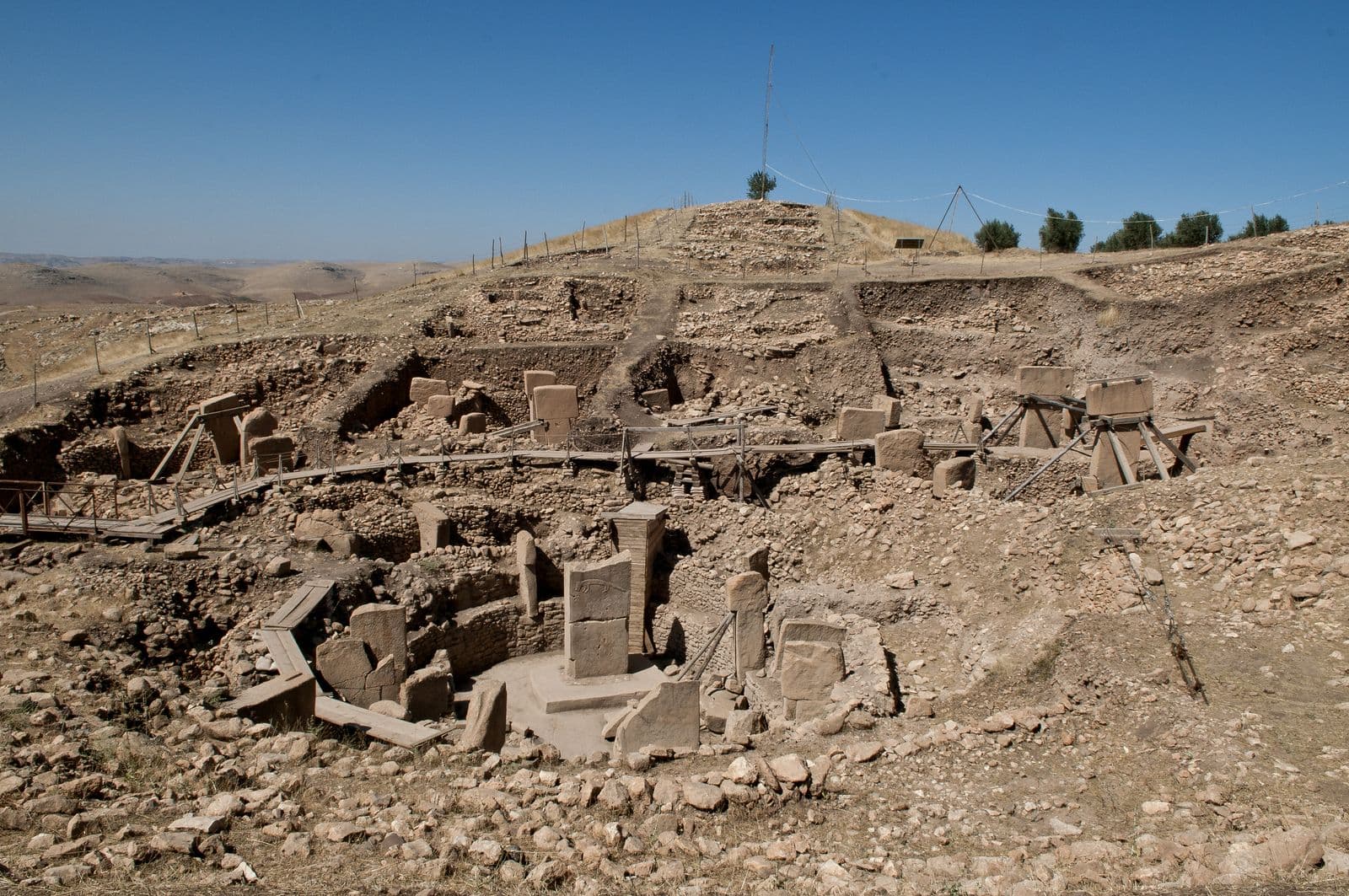
Göbekli Tepe
A monumental complex built by hunter-gatherers, 6,000 years before the pyramids. Then buried — deliberately or by time, the debate is open.
 No accepted answer
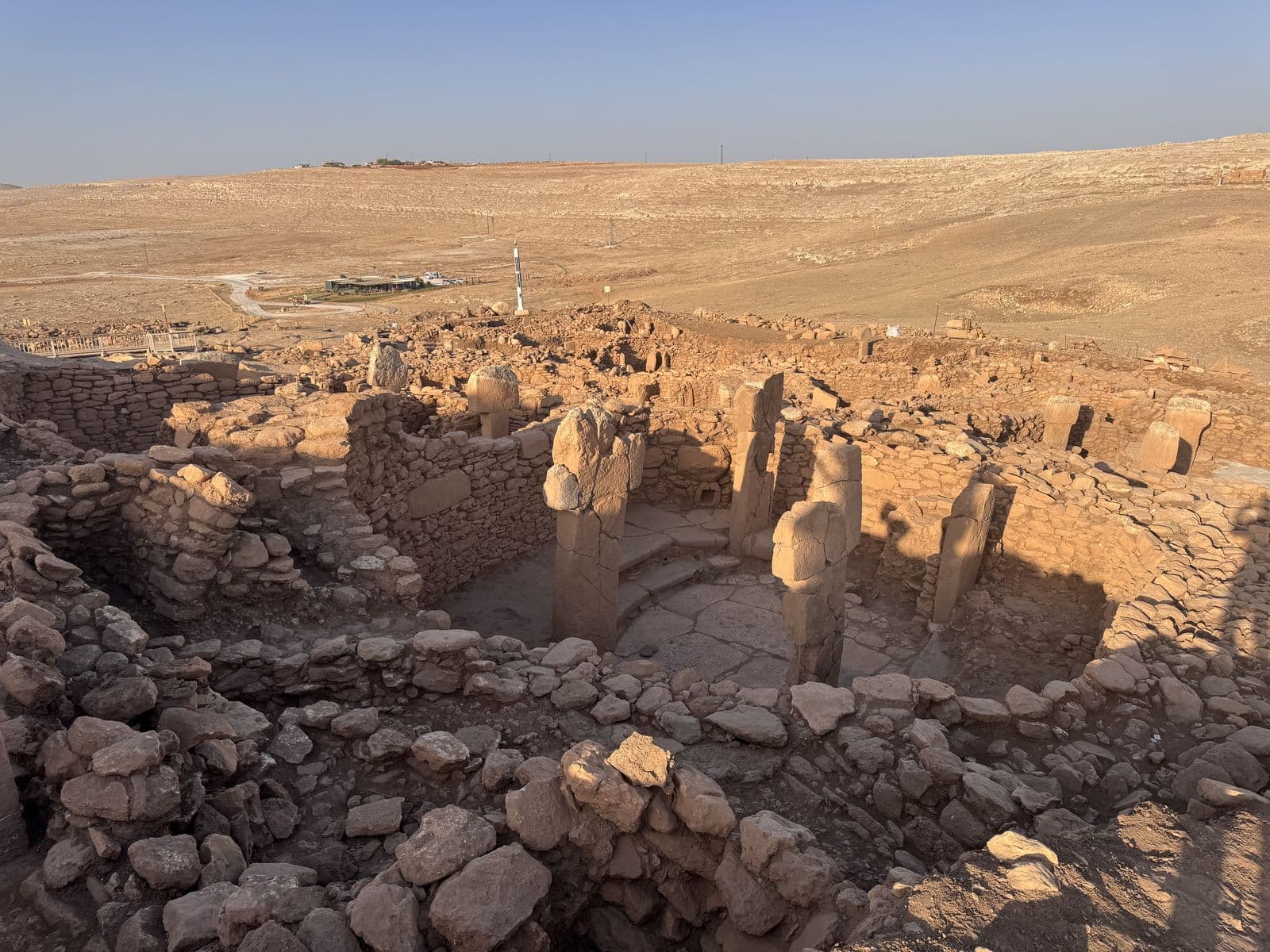
Karahan Tepe
The "brother" of Göbekli Tepe, perhaps even older. Only seriously excavated since 2019.