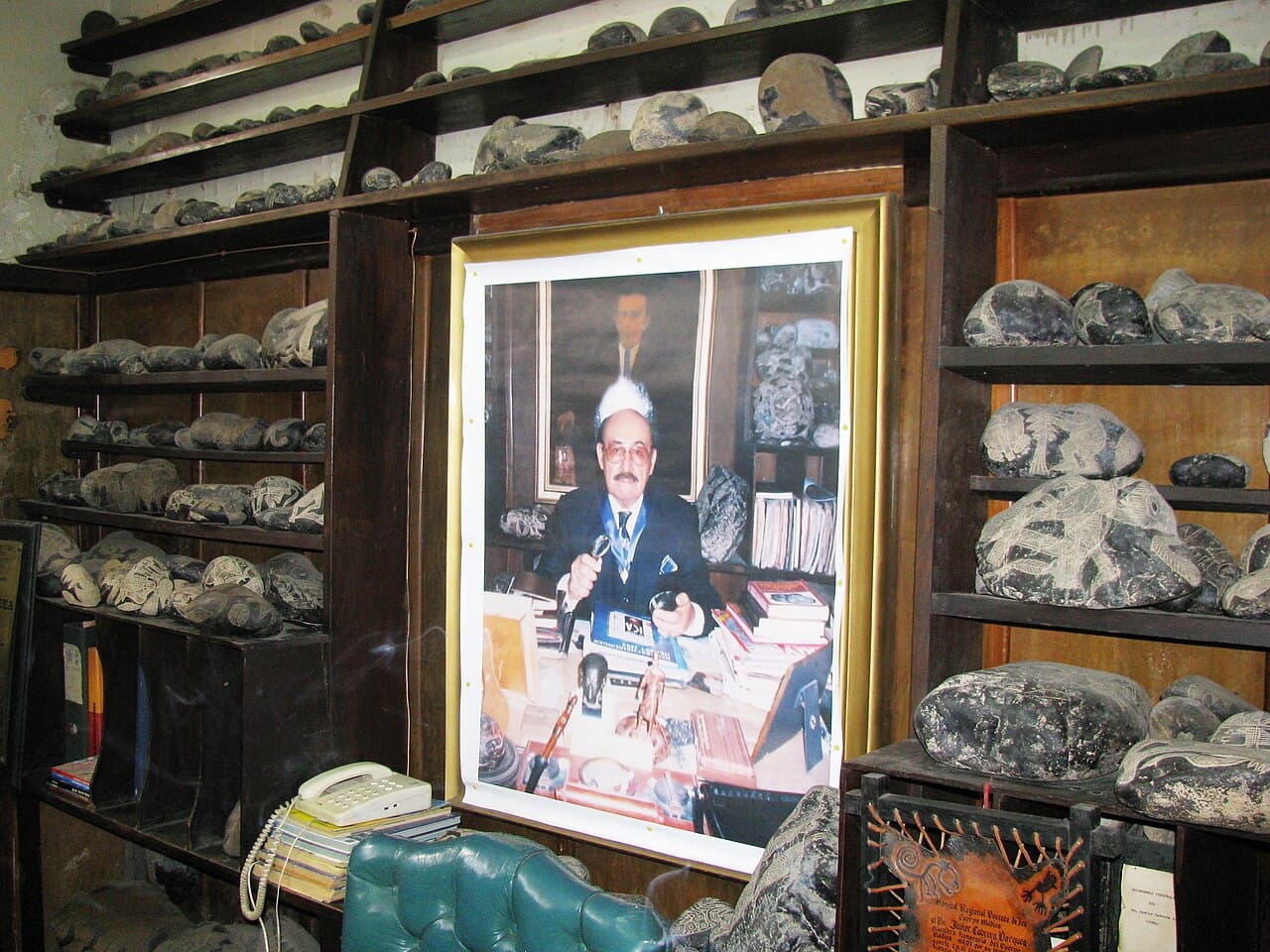
Ica stones
Dinosaurs engraved alongside humans? The engraver demonstrated his technique — dental drill and shoe polish.
- Location
- Peru · Americas
- Civilisation
- Contemporary forgery
- Period
- engraved from the 1960s onward
- Technique
- Engraved andesite, oven-patinated
- Studies
the proof of forgery is documented. A revisable snapshot of the state of research, never a judgement.
→ Show on the mapThe elements of the site
Where the site is
14.070° S, 75.730° W · satellite view
The evidence of forgery
- What science saysconsensus, dating, published excavations
Basilio Uschuya demonstrated his method on camera (1977): a dentist's drill, patina obtained by baking in manure and shoe polish — a confession he later retracted under police pressure.
The 'dinosaurs' copy illustrations from 1960s books — anatomical errors included.
No patina in the incisions, and traces of modern abrasives: material analyses (1977-2001) confirm recent engraving.
Convergent material analyses (1977-1998): the incisions on the Ica Stones show no internal patina, unlike the external surface of the blocks — a diagnostic signal of recent engraving on ancient andesite. Vicente Paris (1998, micro-photographs) additionally detects traces of synthetic paints and modern abrasives (sandpaper).
Why people believed it
Related to
Studies & sources
Show 7 more sourcesCollapse sources
Keep exploring
 No accepted answer
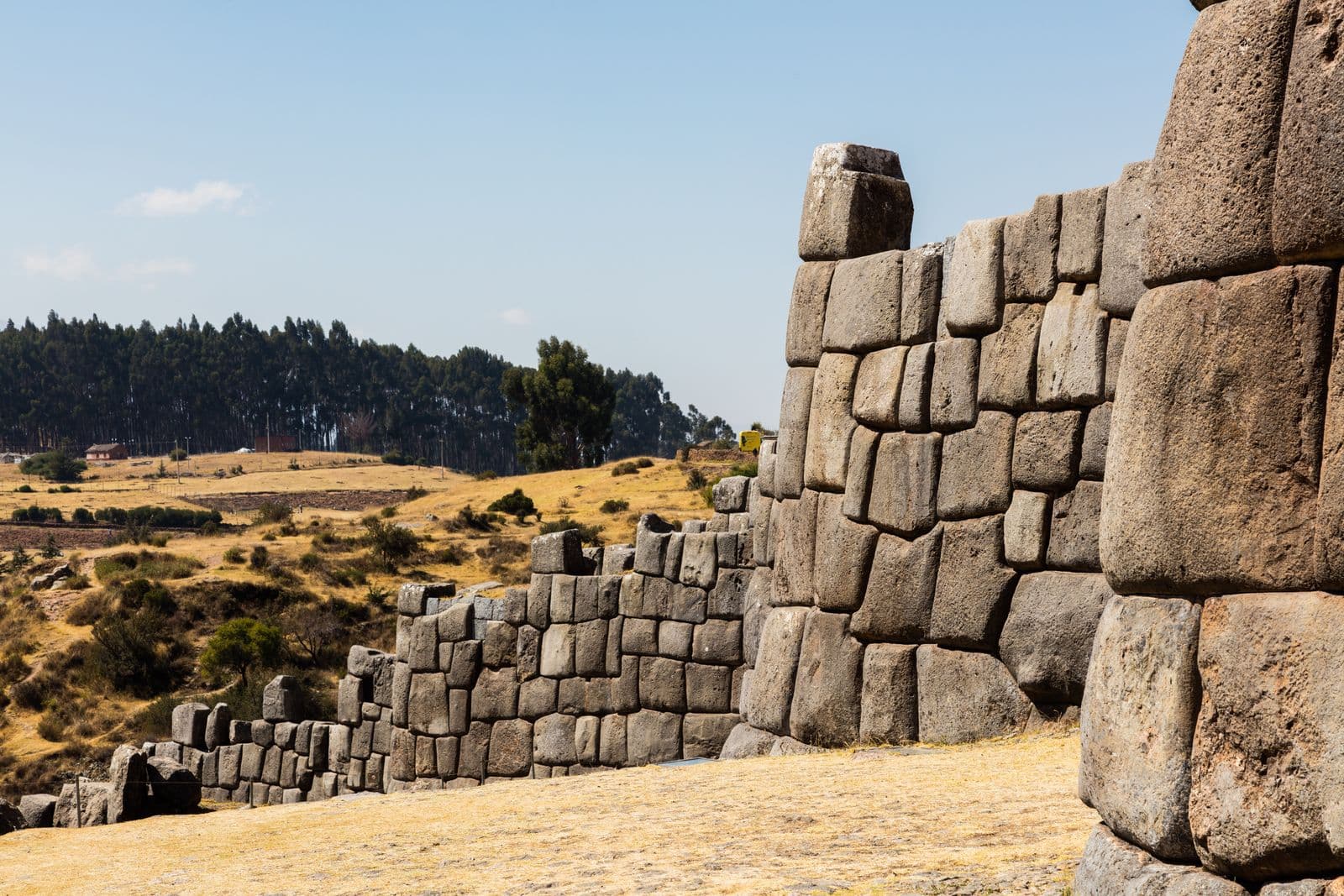
Sacsayhuamán
Blocks of 100+ tons, joints fitted to the millimeter, without mortar or iron. How?
 No accepted answer
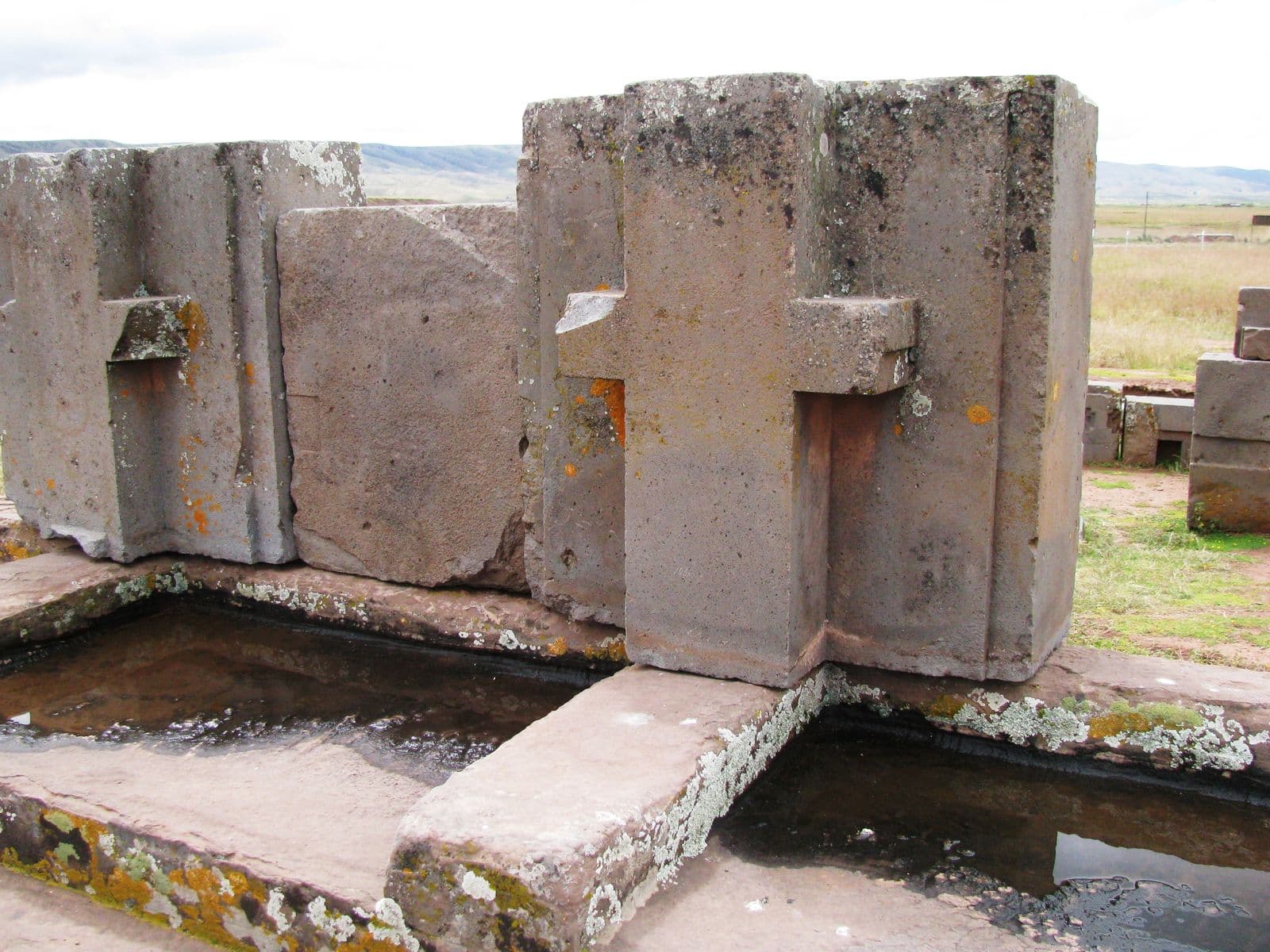
Pumapunku
Andesite H-blocks cut and standardized with remarkable precision — without iron tools, using hard-stone pounders and abrasives. The method is documented, the scale remains astonishing.
 Refuted
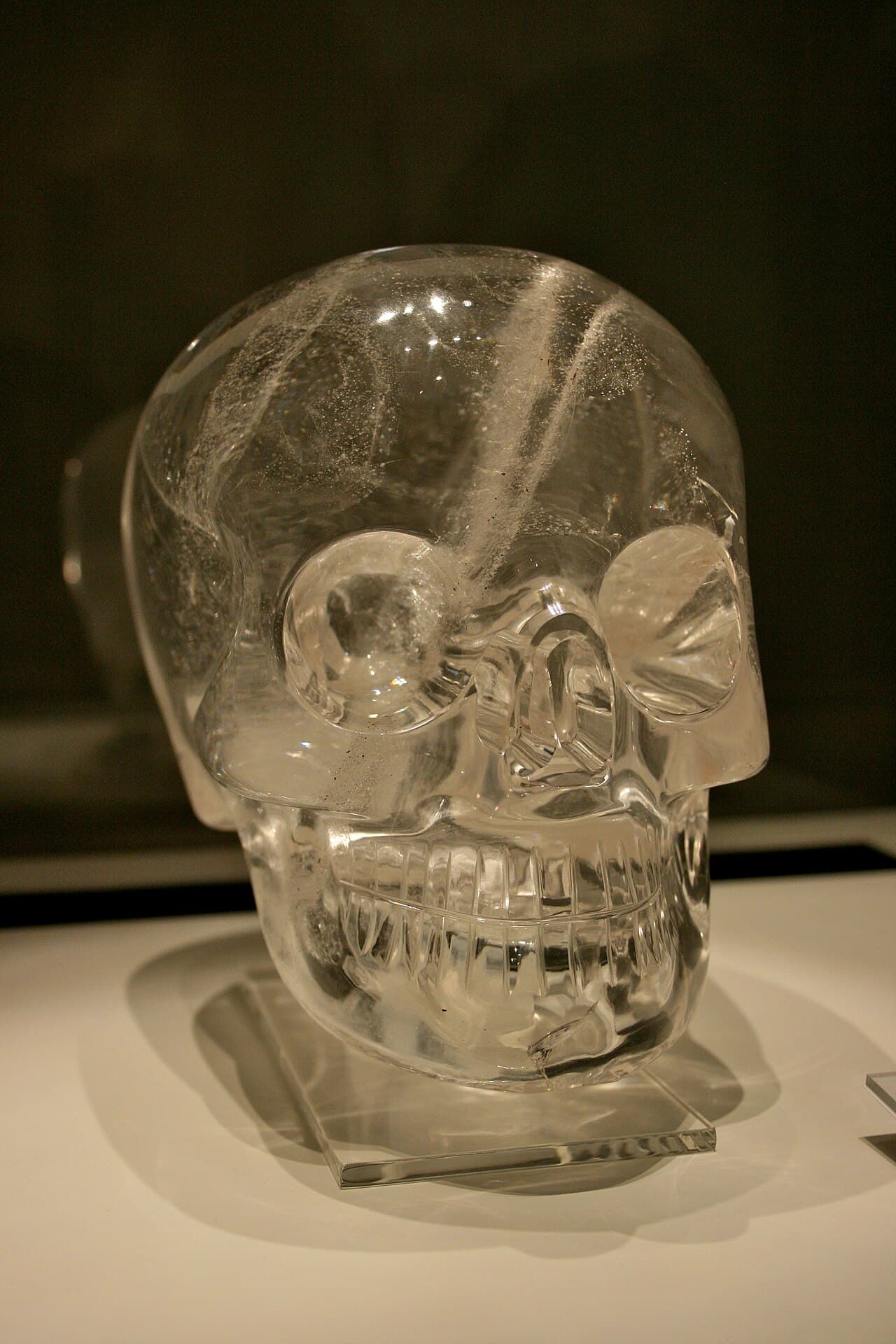
Crystal skulls
The world's most famous "pre-Columbian relics" came out of 19th–20th century workshops.