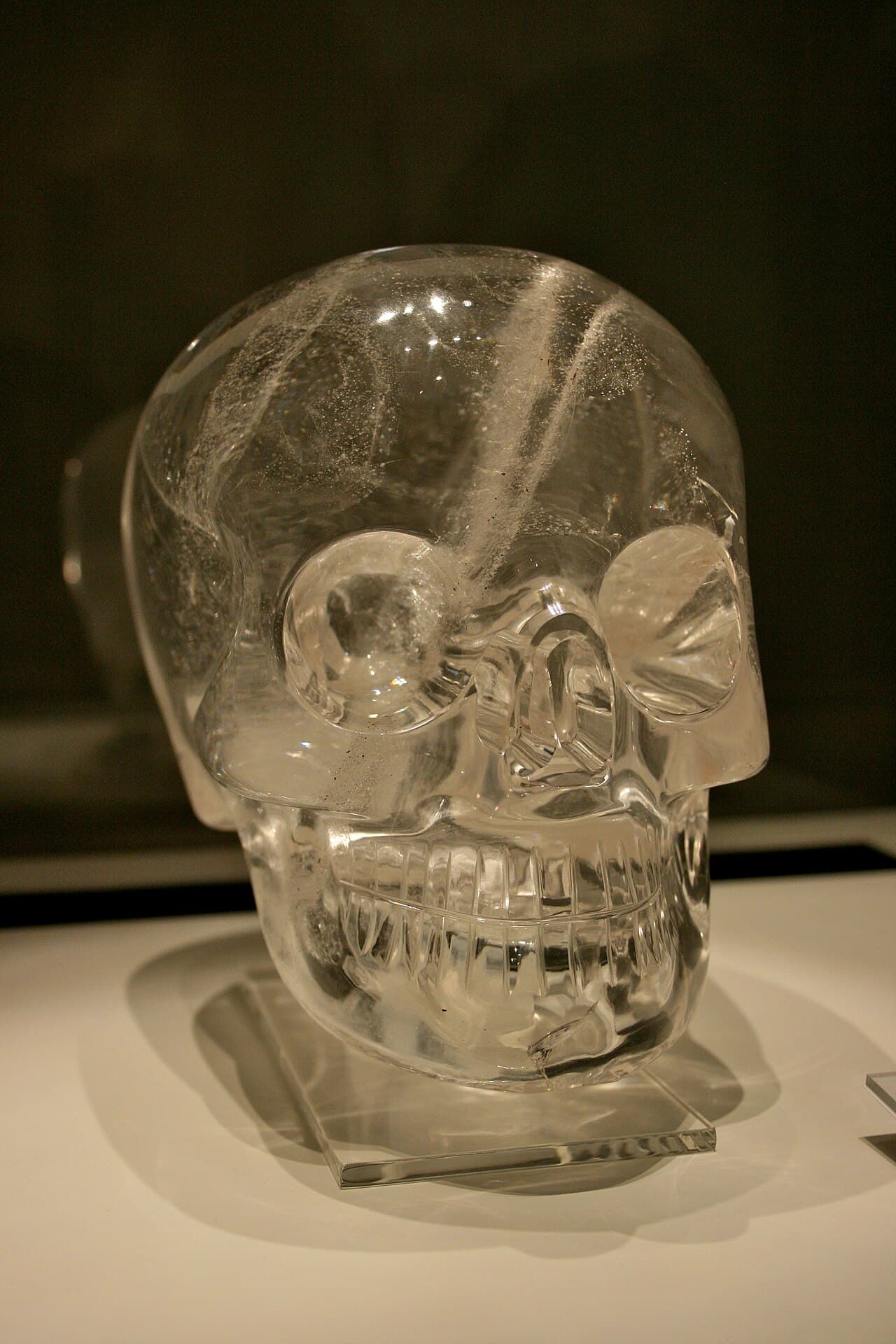
Crystal skulls
The world's most famous "pre-Columbian relics" came out of 19th–20th century workshops.
- Location
- "Mesoamerica" · Americas
- Civilisation
- 19th-century fakes
- Period
- manufactured ~1860–1890
- Technique
- Quartz carved with rotary tools
- Studies
the proof of forgery is documented. A revisable snapshot of the state of research, never a judgement.
→ Show on the mapThe elements of the site
Where the site is
19.430° N, 99.130° W · satellite view
The proof of the fake
- What science saysconsensus, dating, published excavations
Electron microscopy at the British Museum (rotary tools, 19th c.) and at the Smithsonian, including one skull bearing traces of carborundum — a synthetic abrasive invented in 1891: manufactured in the 20th century, never Mesoamerican.
No skull comes from a documented excavation — all passed through the art market, often via Eugène Boban.
The quartz probably comes from Brazil or Madagascar, not from Mesoamerica.
C2RMF (Calligaro et al. 2009, Applied Physics A): surface microtopography + ERDA (ion beam) on the Paris skull (Quai Branly, ex-Trocadéro) → modern rotary tools; ferro-magnesian chlorite → Brazilian or Malagasy quartz, not Mexican.
Smithsonian mineralogist Foshag (1952): internal note on a crystal skull — “definitely a fake, made on a lap wheel” — the first institutional scientific opinion, ignored for 56 years before peer-reviewed publication.
Why people believed it
Related to
Studies & sources
Show 7 more sourcesCollapse sources
Keep exploring
 No accepted answer
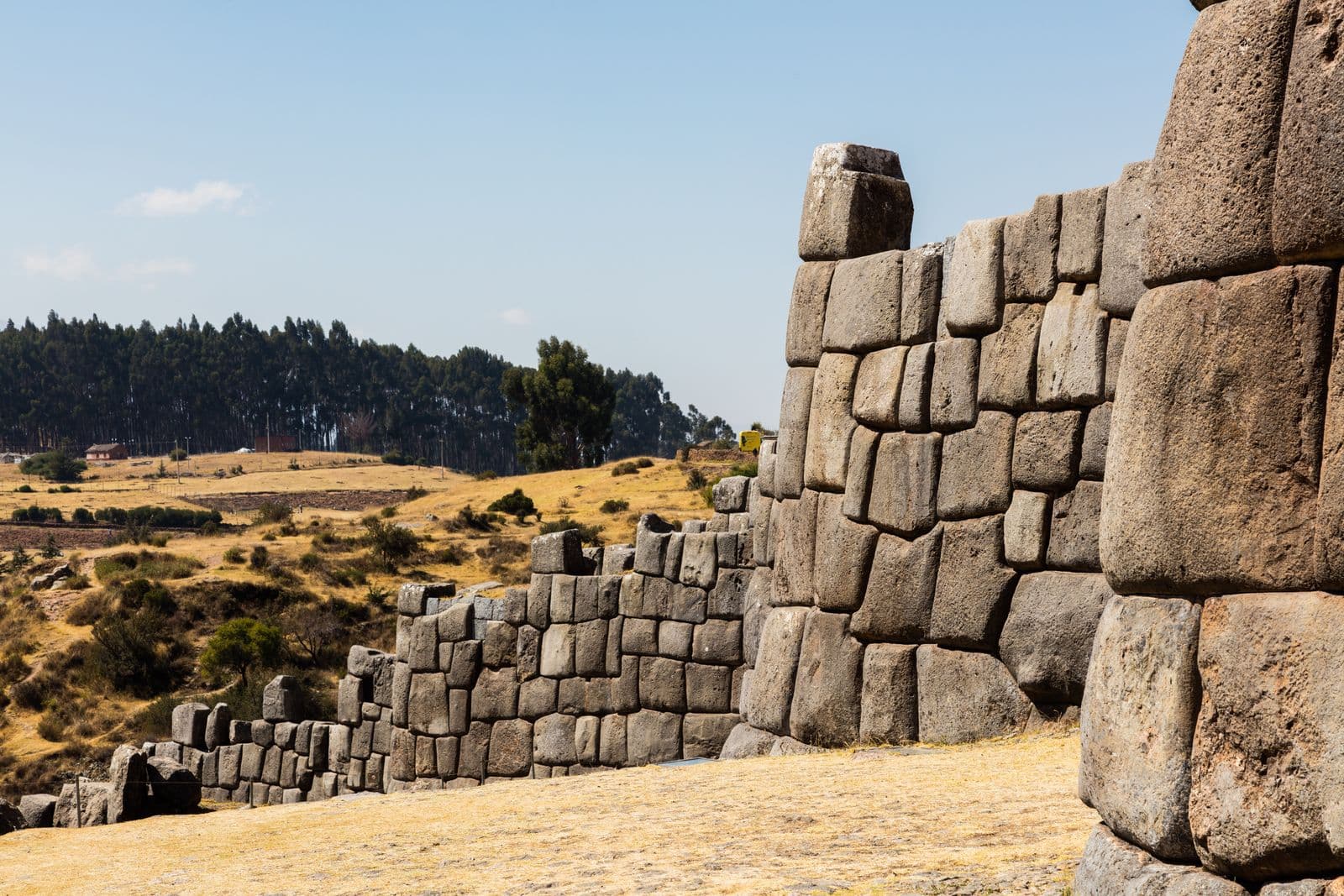
Sacsayhuamán
Blocks of 100+ tons, joints fitted to the millimeter, without mortar or iron. How?
 No accepted answer
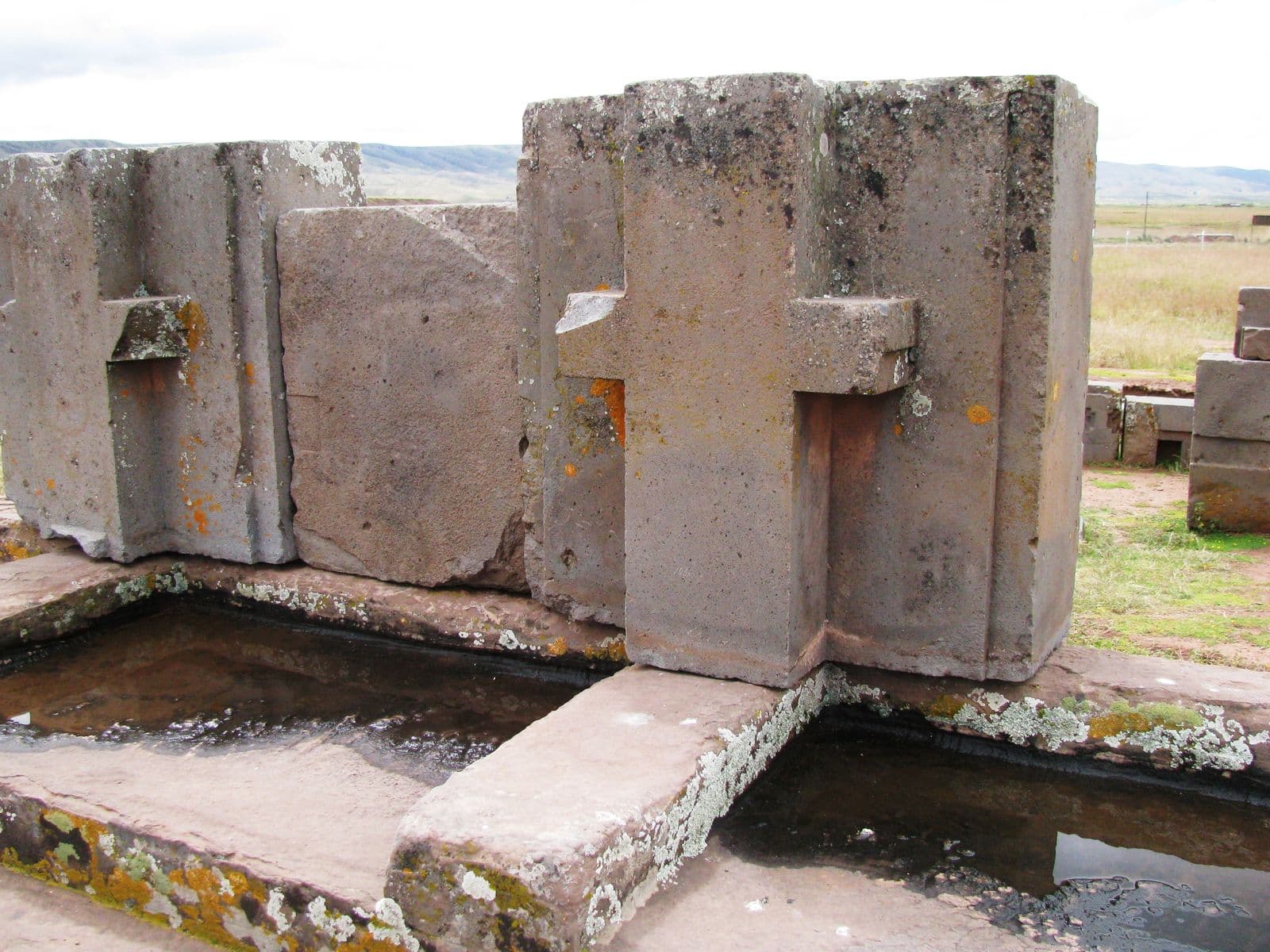
Pumapunku
Andesite H-blocks cut and standardized with remarkable precision — without iron tools, using hard-stone pounders and abrasives. The method is documented, the scale remains astonishing.
 Refuted
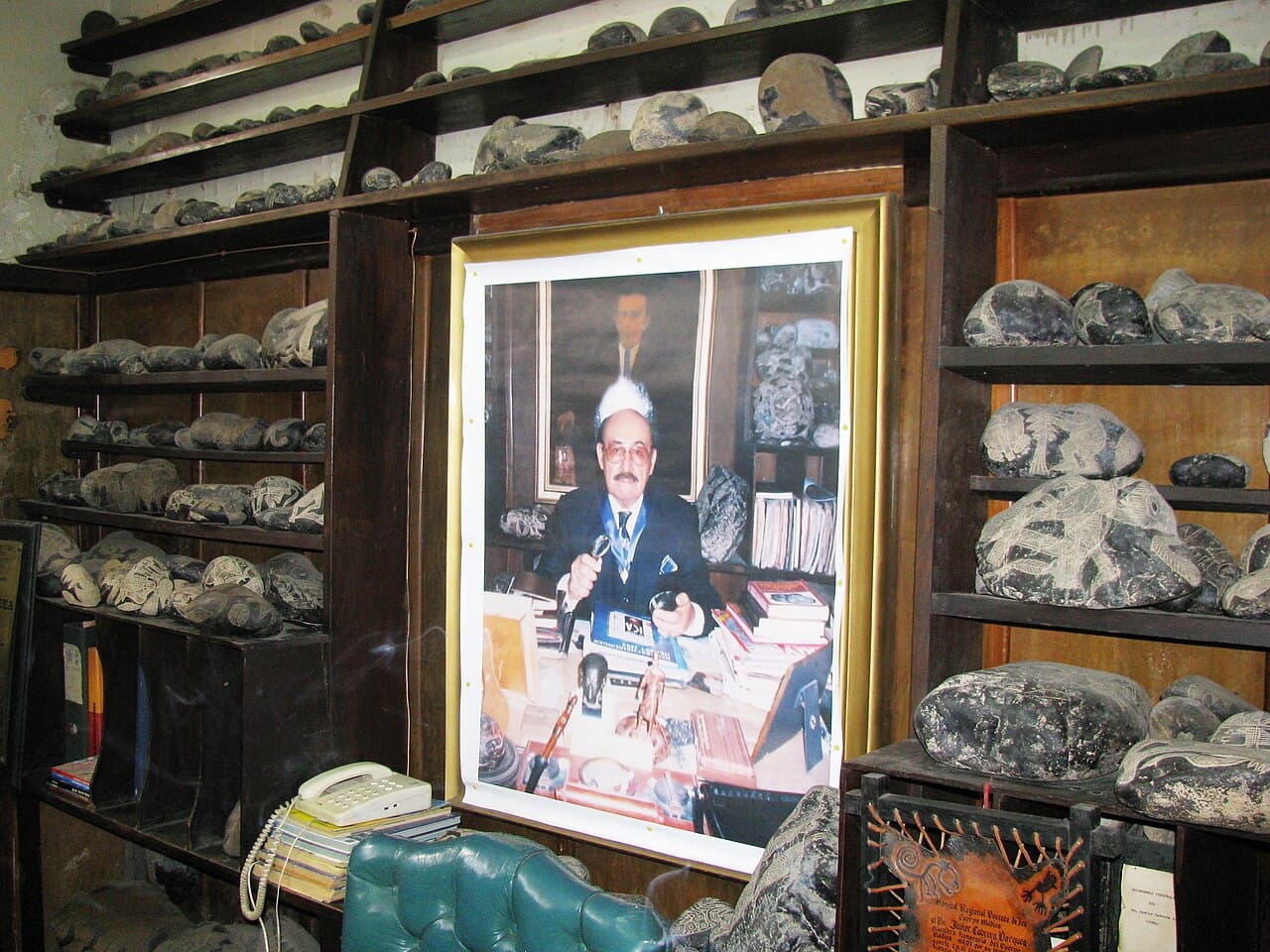
Ica stones
Dinosaurs engraved alongside humans? The engraver demonstrated his technique — dental drill and shoe polish.