
Great Pyramid of Cholula
Presented as the largest monument in the world by volume — a pyramid of 4.5 million m³ — yet mistaken for a hill, with a Spanish church planted on top. Even the Aztecs did not know who had built it.
- Location
- Mexico · Americas
- Civilisation
- Multicultural (Teotihuacan, Olmeca-Xicallanca, Toltec)
- Period
- ~1st → ~9th c. AD
- Technique
- Superposition of adobe-brick pyramids (“telescoping”)
- Studies
- Excavated by tunnels (Marquina, INAH, 1931–1971); C14 dating Plunket & Uruñuela 2005; syntheses by McCafferty.
the state of research converges — open to revision. A revisable snapshot of the state of research, never a judgement.
→ Show on the mapThe elements of the site
Where the site is
19.058° N, 98.302° W · satellite view
What science says
The largest monument in the world by volume: ~4.45 million m³ (base 450 × 450 m, height 66 m), nearly double the Great Pyramid of Giza (Guinness figure, not validated by an academic geodesic publication — to be treated as solid but not peer-reviewed).
Built by « telescoping »: each new pyramid envelops the previous one, in adobe brick and earth fill, with talud-tablero decoration and polychrome paintings. At least 4 major phases and 9 minor modifications.
Radiocarbon dating (Plunket & Uruñuela 2005): the identified phases start in the 1st–2nd century AD, not « 300 BC » as often cited (which corresponds to the site's occupation, not the pyramidal construction). A colonial church (Nuestra Señora de los Remedios) was built on top starting in 1574.
A multicultural monument over ~10 centuries (Teotihuacan influence, then Olmec-Xicallanca, then Toltec-Chichimec), interpreted as a ceremonial temple — probably dedicated to Quetzalcóatl (McCafferty 2021).
What remains unexplained
Parallels
The largest earthen mound in North America and the largest pyramid in the world by volume — both mistaken for a hill. Two cultures with no contact, the same illusion.
Proposed — to be examinedRelated to
Studies & sources
Keep exploring
 Debated
Cahokia (Monks Mound)
The largest pre-Columbian mound north of Mexico — more than 730,000 m³ of earth, a base wider than the Great Pyramid. Around 1100, Cahokia was one of the densest cities in the pre-Columbian Americas. Abandoned around 1350, with no consensus explanation.
 No accepted answer
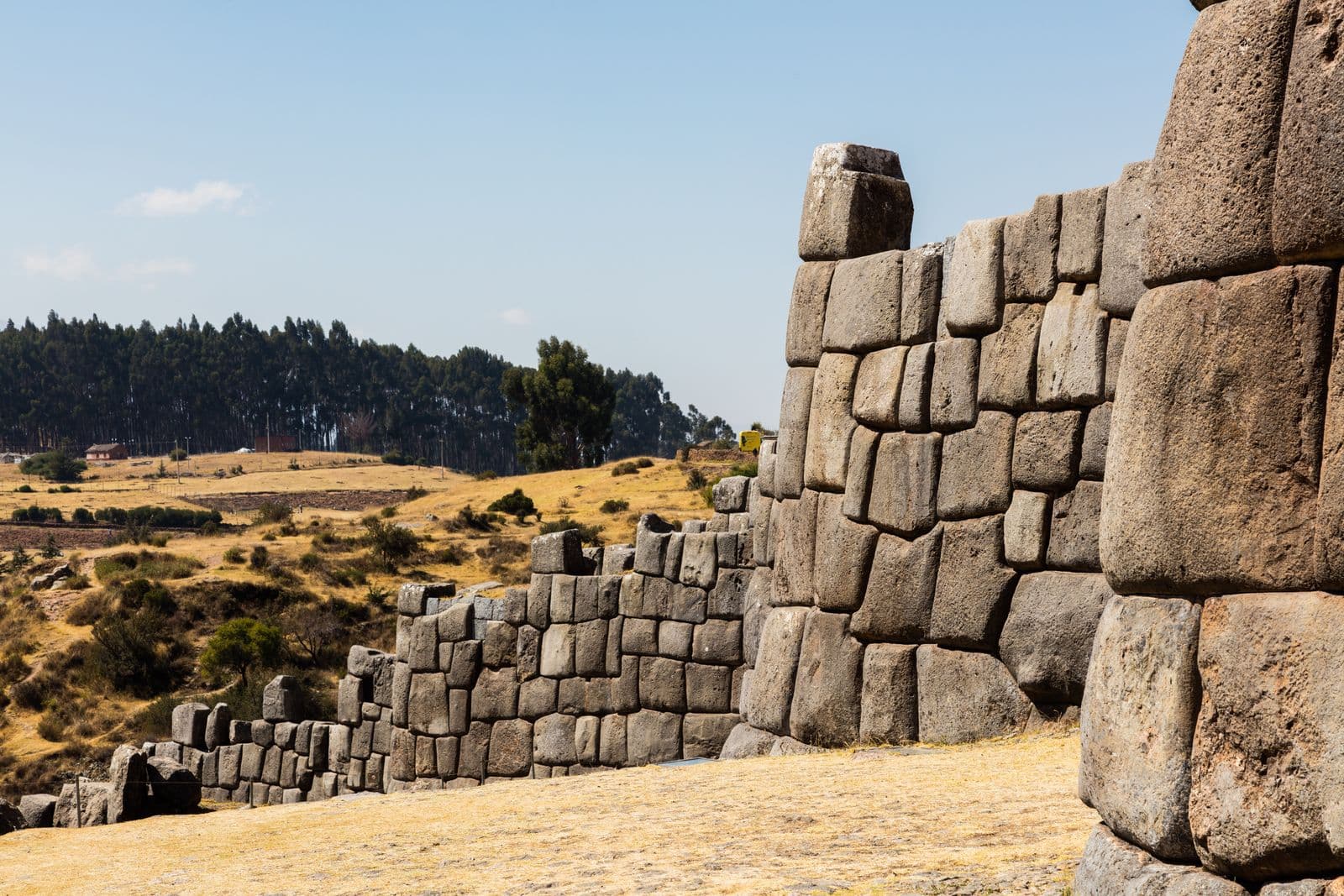
Sacsayhuamán
Blocks of 100+ tons, joints fitted to the millimeter, without mortar or iron. How?
 No accepted answer
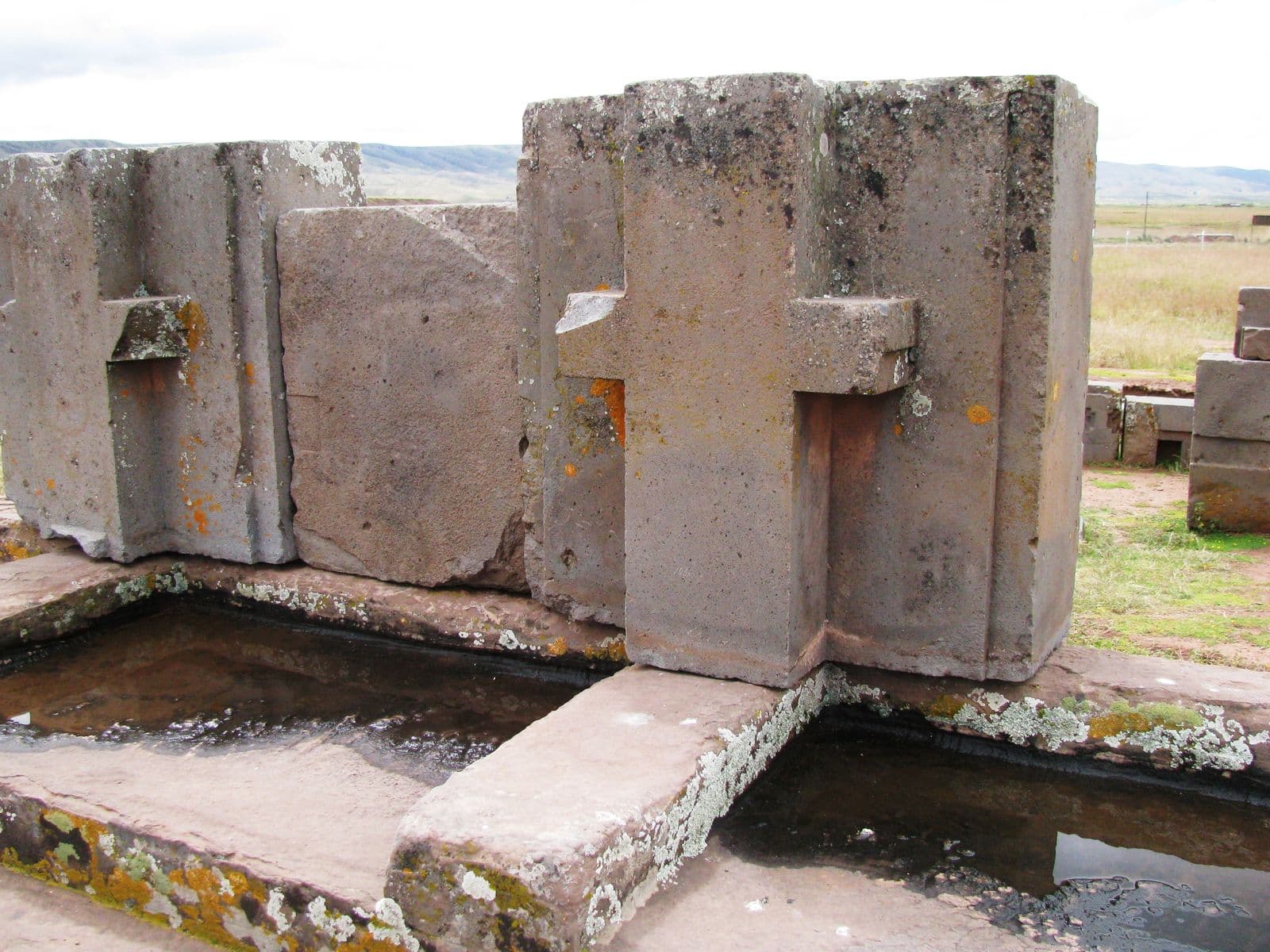
Pumapunku
Andesite H-blocks cut and standardized with remarkable precision — without iron tools, using hard-stone pounders and abrasives. The method is documented, the scale remains astonishing.