
Cahokia (Monks Mound)
The largest pre-Columbian mound north of Mexico — more than 730,000 m³ of earth, a base wider than the Great Pyramid. Around 1100, Cahokia was one of the densest cities in the pre-Columbian Americas. Abandoned around 1350, with no consensus explanation.
- Location
- United States · Americas
- Civilisation
- Mississippian culture
- Period
- ~800 → ~1400 AD
- Technique
- Compacted-earth mound, 730,000 m³, built in successive phases over 600 years
- Studies
real support, not settled. A revisable snapshot of the state of research, never a judgement.
→ Show on the mapThe elements of the site
Where the site is
38.655° N, 90.062° W · satellite view
What science says
Monks Mound: height ~30 m, base ~316 × 241 m, volume ~730,000 m³ according to Schilling (Journal of Field Archaeology 37(4), 2012, DOI 10.1179/0093469012Z.00000000027) — the figure of 623,000 m³ circulates in popular sources but is not the one in the academic reference. The largest prehistoric structure north of Mexico. Built in successive phases documented by stratigraphy between ~800 and ~1400 AD.
The city at its peak (~1050–1150 AD): estimated population 10,000–20,000 inhabitants in the urban core (~15 km²), with a total site of ~1,600 ha including ~120 mounds. Immigration documented by strontium isotope analysis (Journal of Archaeological Science, 2014, DOI 10.1016/j.jas.2014.01.022): Cahokia attracted populations from distant regions. At its peak, one of the densest urban concentrations in prehistoric Americas.
Woodhenge: five successive circles of wooden posts (red cedar), built between ~900 and 1100. Discovered by Warren Wittry in the 1960s. At least 3 posts align with sunrises at the solstices and equinoxes (precision < 0.7°). The deliberate nature of the solar alignment is accepted; the full function of the circles (calendrical, cosmological, geodetic?) remains debated.
Mound 72 (Fowler excavations 1967–1968): ~280 burials including 5 mass graves (20–50+ individuals each, mostly young women). A central burial — a high-status individual laid on 20,000+ marine shell beads arranged in a bird shape — was reinterpreted in 2021 as potentially including noble women (Southeastern Archaeology 40(1), DOI 10.1080/0734578X.2021.1873057). UNESCO status no. 198, inscribed 1982, criteria (iii) and (iv).
What remains unexplained
Parallels
The largest earthen mound in North America and the largest pyramid in the world by volume — both mistaken for a hill. Two cultures with no contact, the same illusion.
Proposed — to be examinedRelated to
Studies & sources
Keep exploring
 Consensus
Great Pyramid of Cholula
Presented as the largest monument in the world by volume — a pyramid of 4.5 million m³ — yet mistaken for a hill, with a Spanish church planted on top. Even the Aztecs did not know who had built it.
 No accepted answer
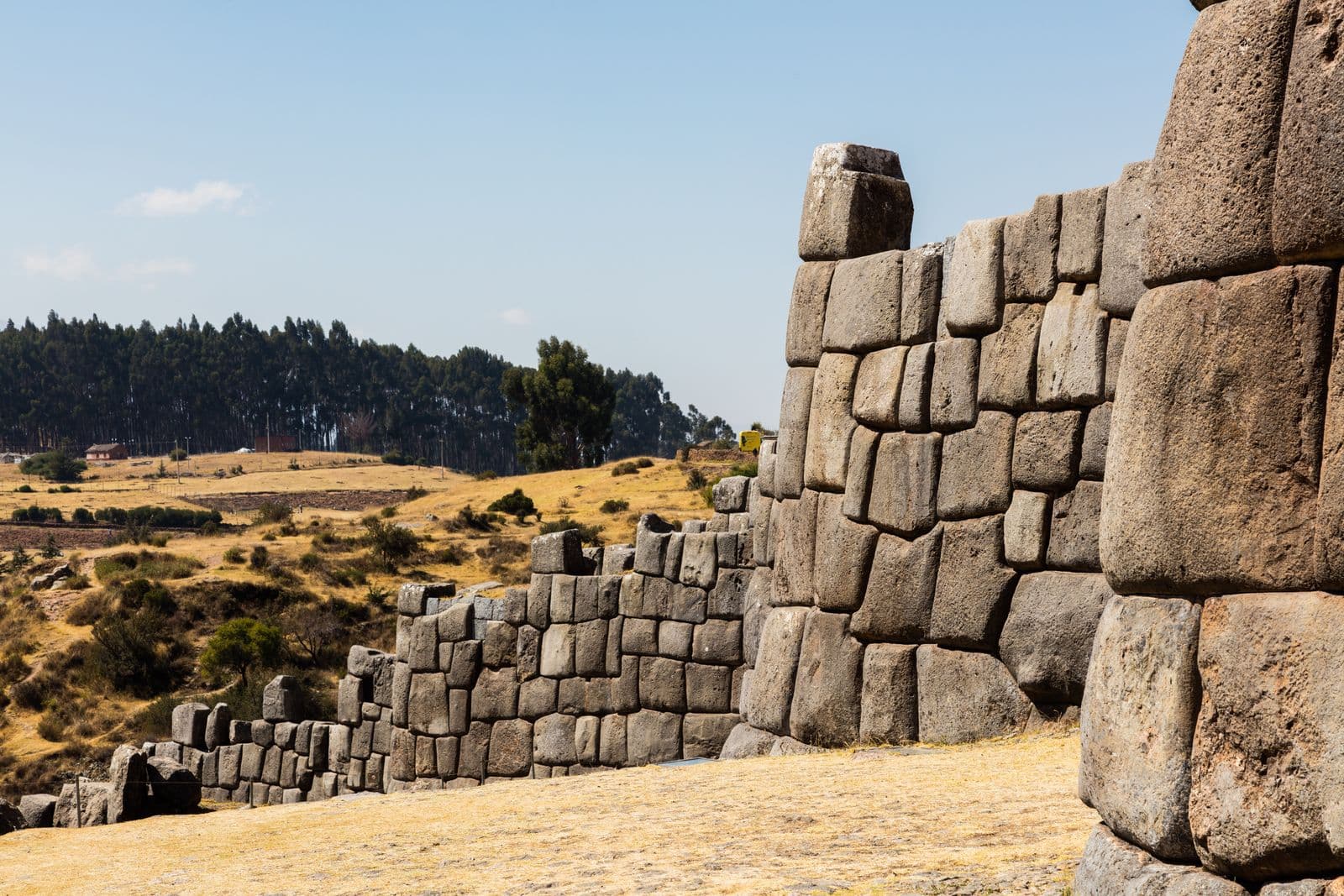
Sacsayhuamán
Blocks of 100+ tons, joints fitted to the millimeter, without mortar or iron. How?
 No accepted answer
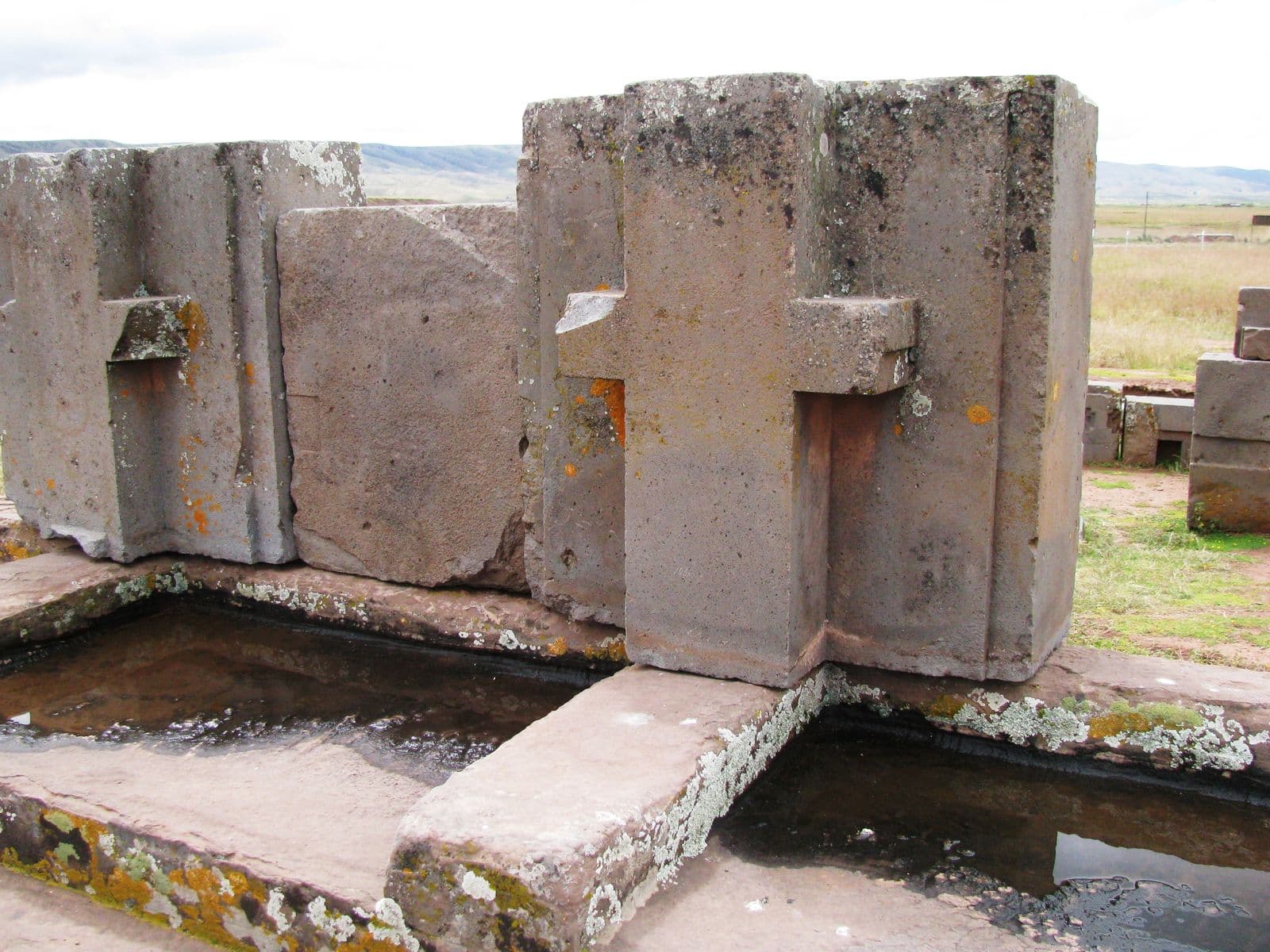
Pumapunku
Andesite H-blocks cut and standardized with remarkable precision — without iron tools, using hard-stone pounders and abrasives. The method is documented, the scale remains astonishing.