
Stelae of Tiya
Thirty-six stelae carved with swords, planted on warriors' graves in the Ethiopian highlands. Dated between the 10th and 15th centuries — but no one knows who erected them, or what their symbols mean.
- Location
- Ethiopia · Africa
- Civilisation
- Cushitic (hypothesis)
- Period
- ~1000 → ~1500 AD
- Technique
- Ignimbrite carved in relief, standing funerary stelae
- Studies
real support, not settled. A revisable snapshot of the state of research, never a judgement.
→ Show on the mapThe elements of the site
Where the site is
8.435° N, 38.612° E · satellite view
What science says
36 monuments (including 32 carved stelae) in ignimbrite, erected above graves. Recurring motifs: stylized swords (up to 19 per stele), a "Y" symbol, dots and circles; only one stele bears a schematic human figure.
Radiocarbon dating on bones and charcoal from the underlying graves → ~AD 1200-1400 (Joussaume); a broad 10th-15th c. range adopted by UNESCO. The bodies bear traces of violent death, consistent with a warrior funerary reading.
Inscribed on the UNESCO World Heritage list (no. 12, 1980), criteria (i) and (iv). Reference excavations: French CNRS mission led by Roger Joussaume (1980s-2000s).
What remains unexplained
Related to
Studies & sources
Keep exploring
 Debated
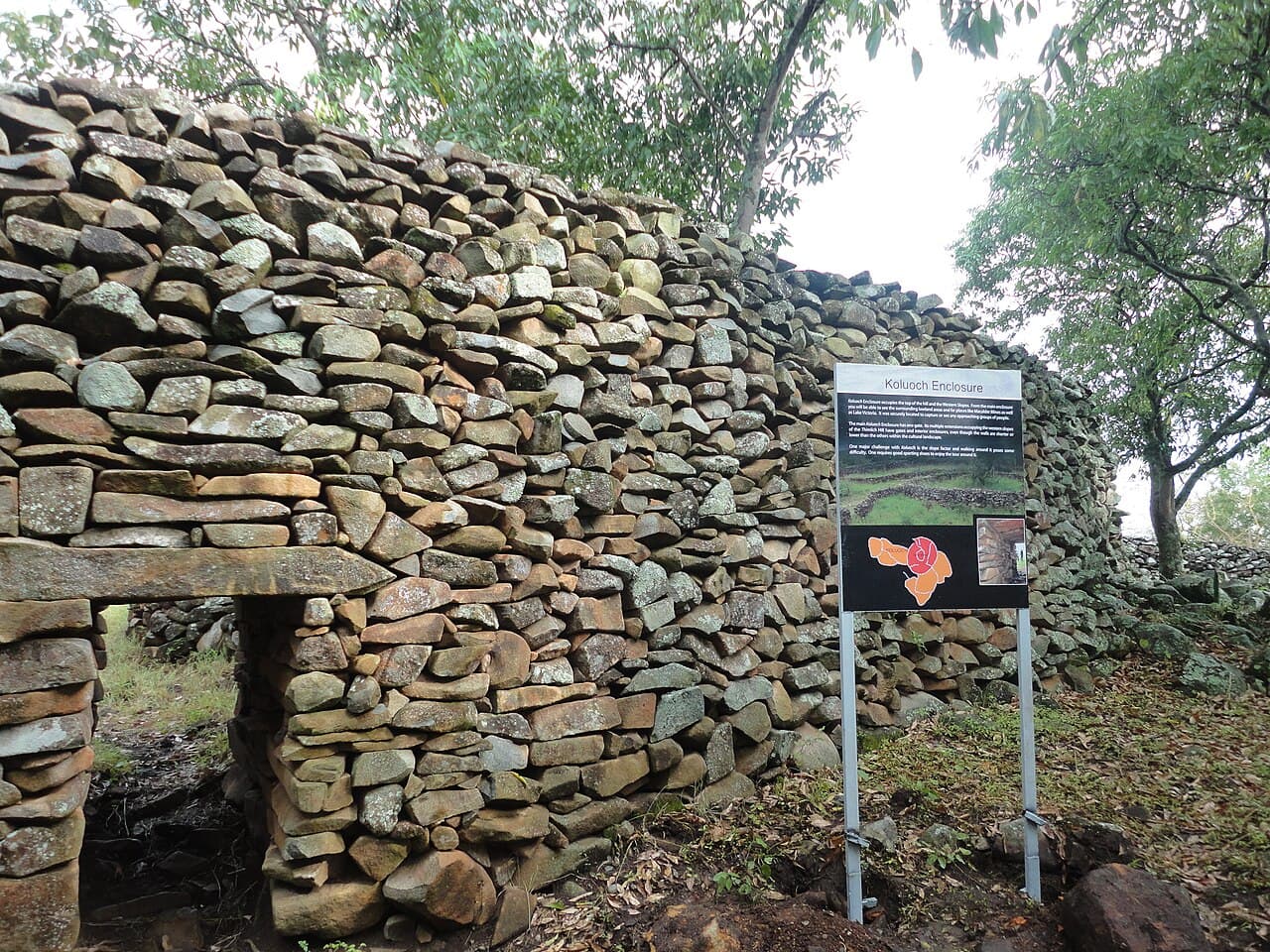
Thimlich Ohinga
Double-faced dry-stone enclosures, without mortar, near Lake Victoria. Built between the 15th and 16th centuries by Bantu communities and later the Luo. Who started them, who continued them?
 Debated
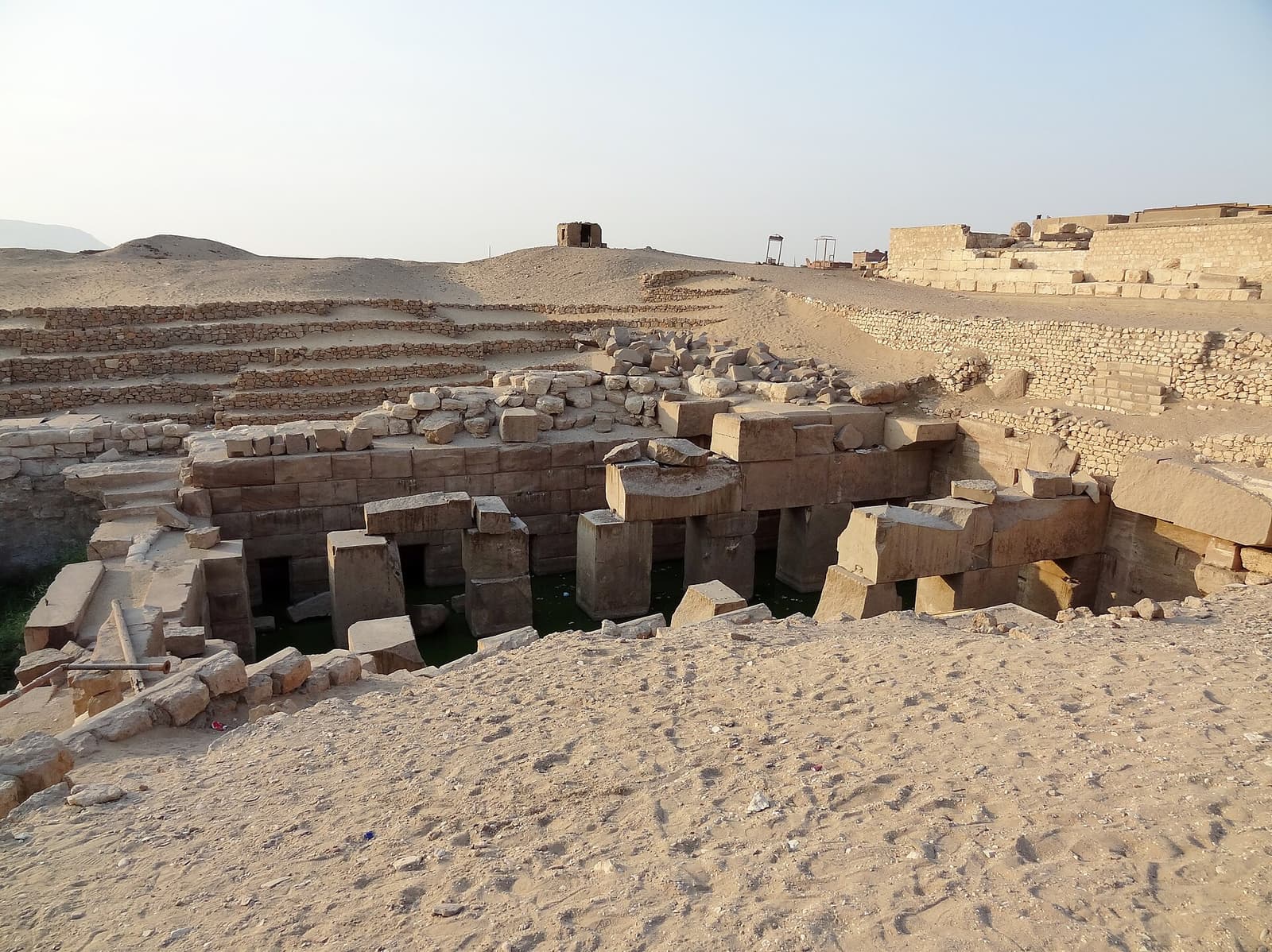
Osireion of Abydos
A massive granite structure buried 13 meters under the sand, flooded by the water table for centuries. Built by Seti I as a cenotaph of Osiris — the theory of an older site, advanced by Naville in 1914, has since been refuted but is still sometimes cited.
 Consensus
Churches of Lalibela — Biete Ghiorgis
Eleven churches carved from a single block of rock, with no masonry added. At Lalibela, construction does not add up — it subtracts. Biete Ghiorgis, the most perfect, descends into a trench 25 m to a side: a three-dimensional Greek cross cut into the tuff, with its gutters, its light shafts and its drainage channels, still in use 800 years later.