Thimlich Ohinga
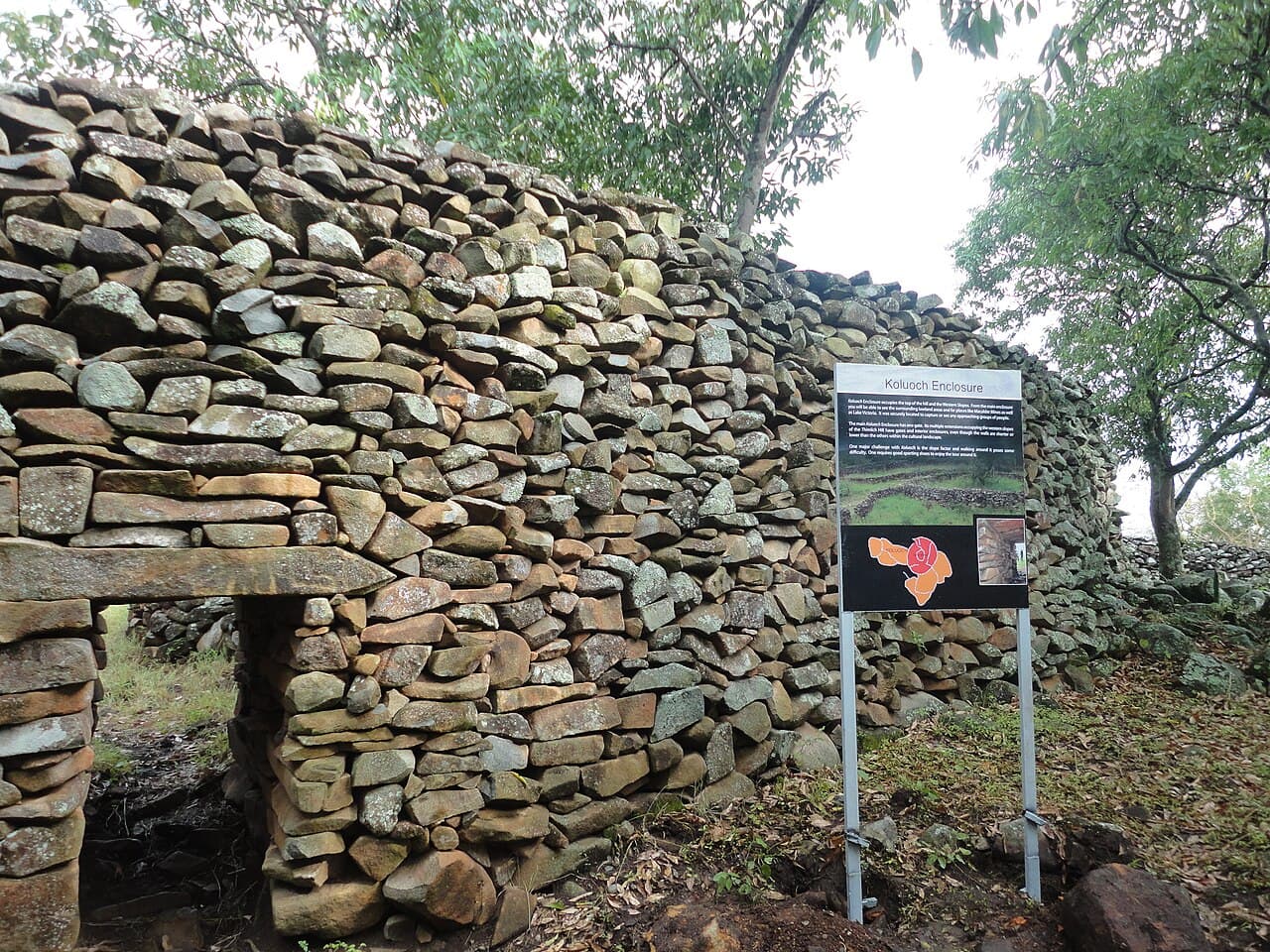
Double-faced dry-stone enclosures, without mortar, near Lake Victoria. Built between the 15th and 16th centuries by Bantu communities and later the Luo. Who started them, who continued them?
- Location
- Kenya · Africa
- Civilisation
- Lake Victoria communities (attribution disputed)
- Period
- 14th – 16th c.
- Technique
- Dry-stone enclosures, 4 m mortarless walls
- Studies
- ~12 publications
real support, not settled. A revisable snapshot of the state of research, never a judgement.
→ Show on the mapWhere the site is
0.990° S, 34.370° E · satellite view
What science says
Inscribed on the UNESCO World Heritage list in 2018 (criteria iii, iv, v; ref. 1450): communal dwelling and livestock enclosures, successive occupations by groups of diverse linguistic origins documented over four centuries (15th-19th c.).
The three-phase technique (internal and external facings + rubble infill core) is a regional innovation attested at 138 sites / 521 structures in the Lake Victoria basin, practiced from the 16th c. until the mid-20th c. — still understood by local communities.
Thimlich Ohinga's double-faced dry-stone technique is the closest documented relative of the great enclosures of Zimbabwe: the same dry interlocking principle, the same organization of central cattle enclosures. Both traditions attest to an autonomous African pastoral engineering, without outside influence.
What remains unexplained
Related to
Studies & sources
Show 8 more sourcesCollapse sources
Keep exploring
 Debated
Osireion of Abydos
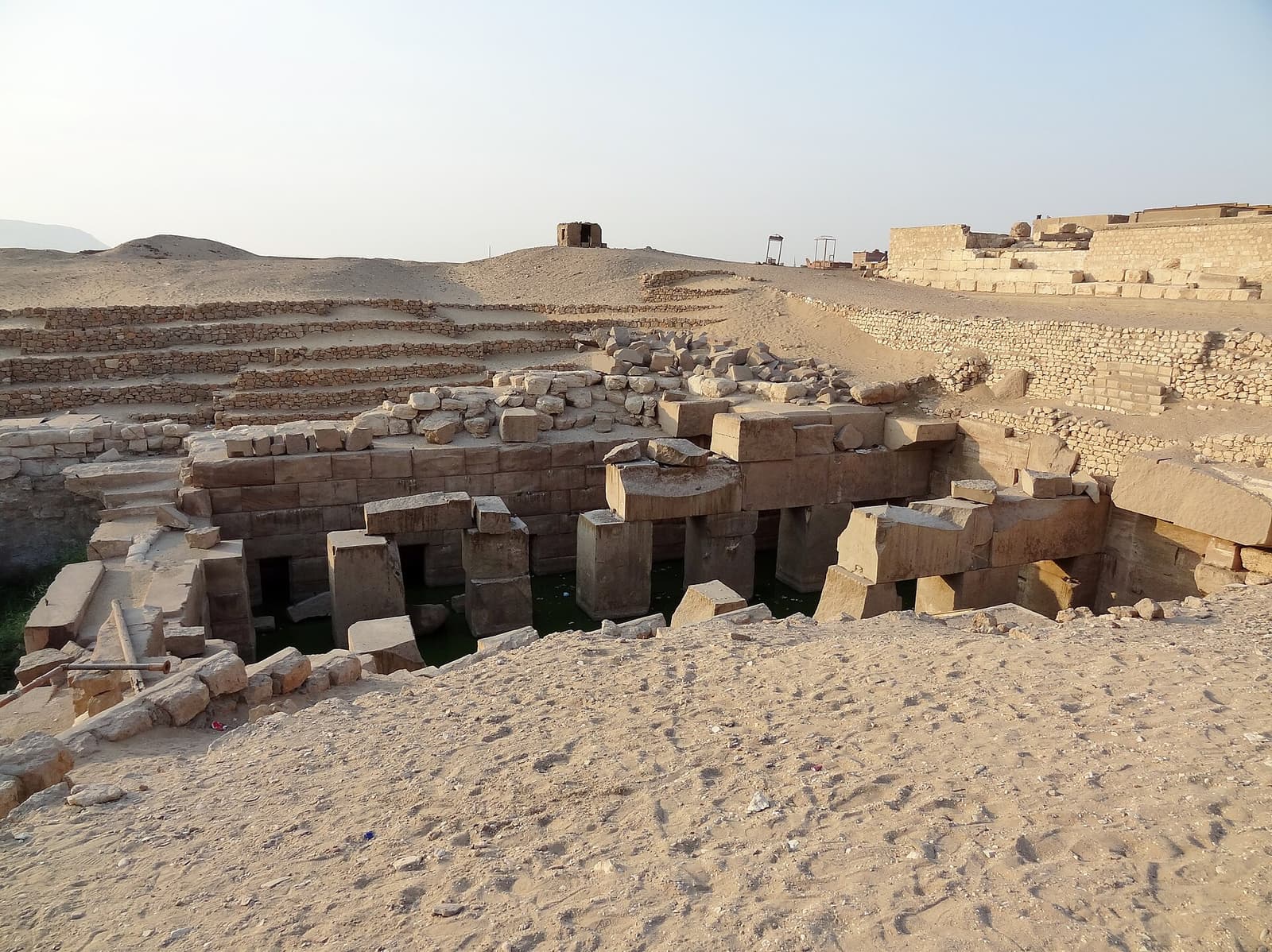
A massive granite structure buried 13 meters under the sand, flooded by the water table for centuries. Built by Seti I as a cenotaph of Osiris — the theory of an older site, advanced by Naville in 1914, has since been refuted but is still sometimes cited.
 Consensus
Churches of Lalibela — Biete Ghiorgis
Eleven churches carved from a single block of rock, with no masonry added. At Lalibela, construction does not add up — it subtracts. Biete Ghiorgis, the most perfect, descends into a trench 25 m to a side: a three-dimensional Greek cross cut into the tuff, with its gutters, its light shafts and its drainage channels, still in use 800 years later.
 Debated
Stelae of Tiya
Thirty-six stelae carved with swords, planted on warriors' graves in the Ethiopian highlands. Dated between the 10th and 15th centuries — but no one knows who erected them, or what their symbols mean.