
Tiwanaku (Tiahuanaco)
Capital of an Andean empire at 3,850 meters of altitude, built with andesite transported 90 km from Lake Titicaca. A 17,000-year date brandished for a century — refuted. Another, Bayesian, places the start at ~AD 110: the empire begins where it was once thought to be antediluvian.
- Location
- Bolivia · Americas
- Civilisation
- Tiwanaku Empire
- Period
- ~AD 110 → ~AD 1100
- Technique
- Andesite and sandstone, mortise-and-tenon joints, cast copper-arsenic cramps
- Studies
- ~200 publications
real support, not settled. A revisable snapshot of the state of research, never a judgement.
→ Show on the mapThe elements of the site
Where the site is
16.555° S, 68.673° W · satellite view
What science says
Bayesian dating (102 AMS dates, Marsh 2012, Radiocarbon): site founded around AD 110 (50-170, 1σ). The peak of monumental construction is placed between AD 500 and AD 900, the collapse narrowed to ~AD 1010-1050 (95% CI). The pre-2012 consensus (occupation from ~300 BC) is revised.
Arthur Posnansky's dating (~17,000 BP, published in Tihuanacu: The Cradle of American Man, 1943) relied on assumed astronomical alignments of a building he had himself partly reconstructed. Refuted by stratigraphy, C14 and geomorphology (the 'lake shore' identified is a river valley wall). Kolata (1993), Janusek (2004) and Stanish (2002) treat it as historically null.
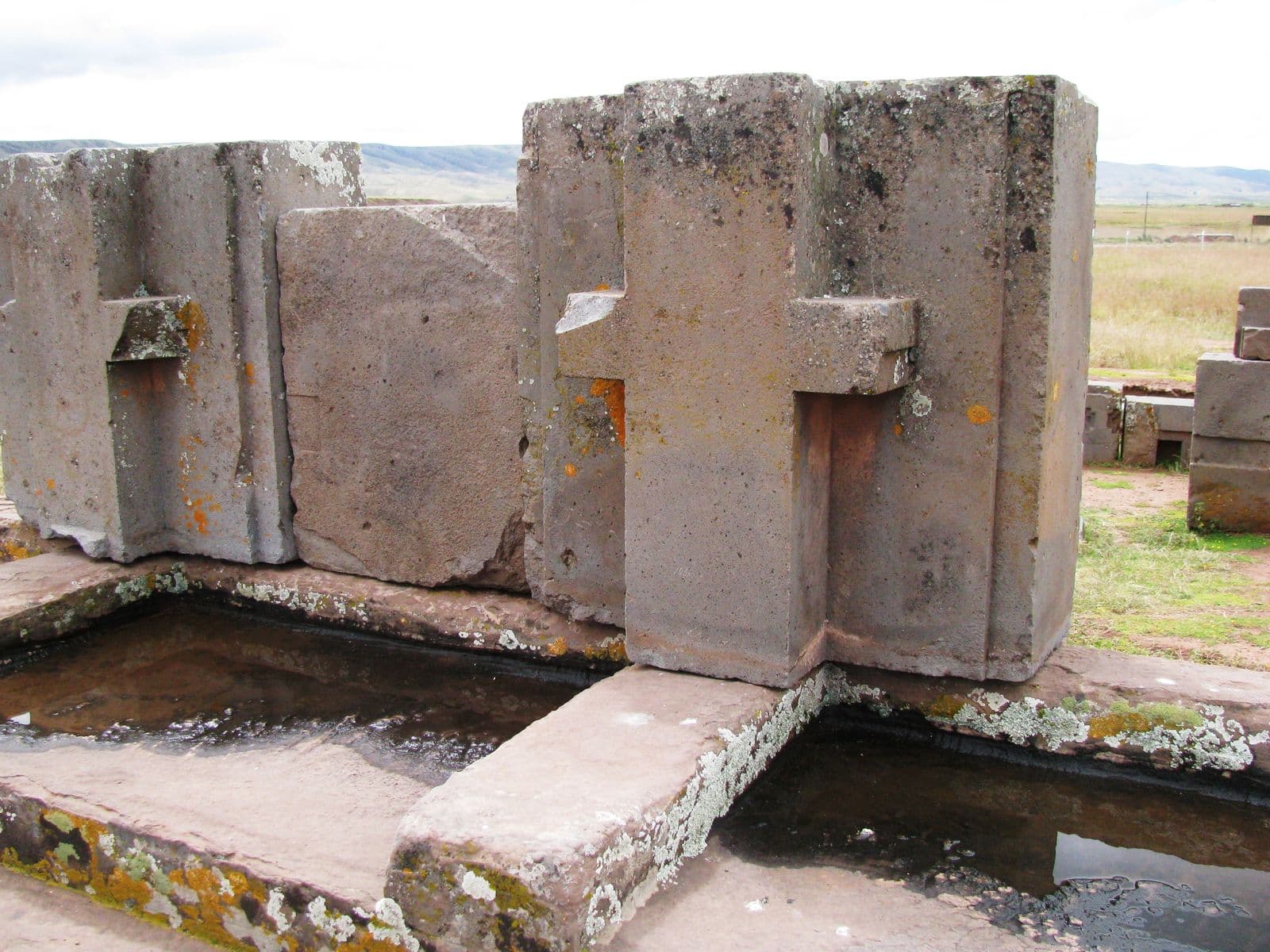
Documented materials: red sandstone (up to 131 tonnes, quarry ~10 km to the south); andesite (small blocks precisely cut, Copacabana peninsula on Lake Titicaca, ~90 km away). Protzen & Nair (1997, JSAH) document the tenon, mortise and groove system of the dry joints. Cramps of a ternary copper-arsenic-nickel alloy (Cu ~88%, Lechtman 1998) were hot-cast into channels carved into adjacent blocks.
UNESCO status: inscription no. 567, session 24, year 2000, criteria iii and iv. The site is recognized as the capital of a major Andean empire distinct from any other pre-Hispanic civilization in the Americas, attesting an exceptional political and ceremonial organization.
Estimated peak population (~AD 800): 10,000-20,000 inhabitants in the urban core (area ~4 km²) per the UNESCO consensus and World History Encyclopedia. Regional estimates reach 30,000-70,000 — a wide range, open debate.
What remains unexplained
Related to
Studies & sources
Keep exploring
 No accepted answer
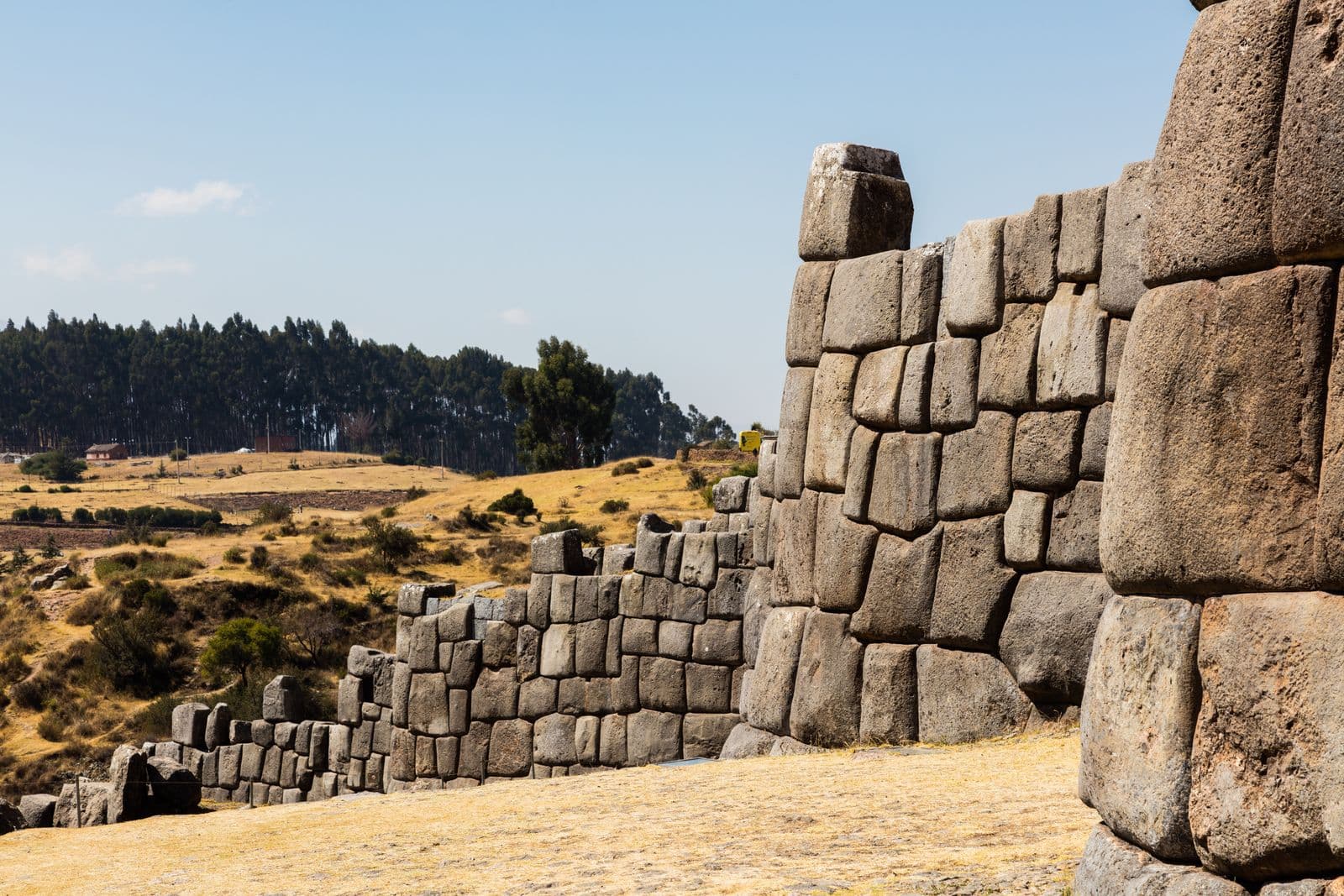
Sacsayhuamán
Blocks of 100+ tons, joints fitted to the millimeter, without mortar or iron. How?
 No accepted answer
Pumapunku
Andesite H-blocks cut and standardized with remarkable precision — without iron tools, using hard-stone pounders and abrasives. The method is documented, the scale remains astonishing.
 Refuted
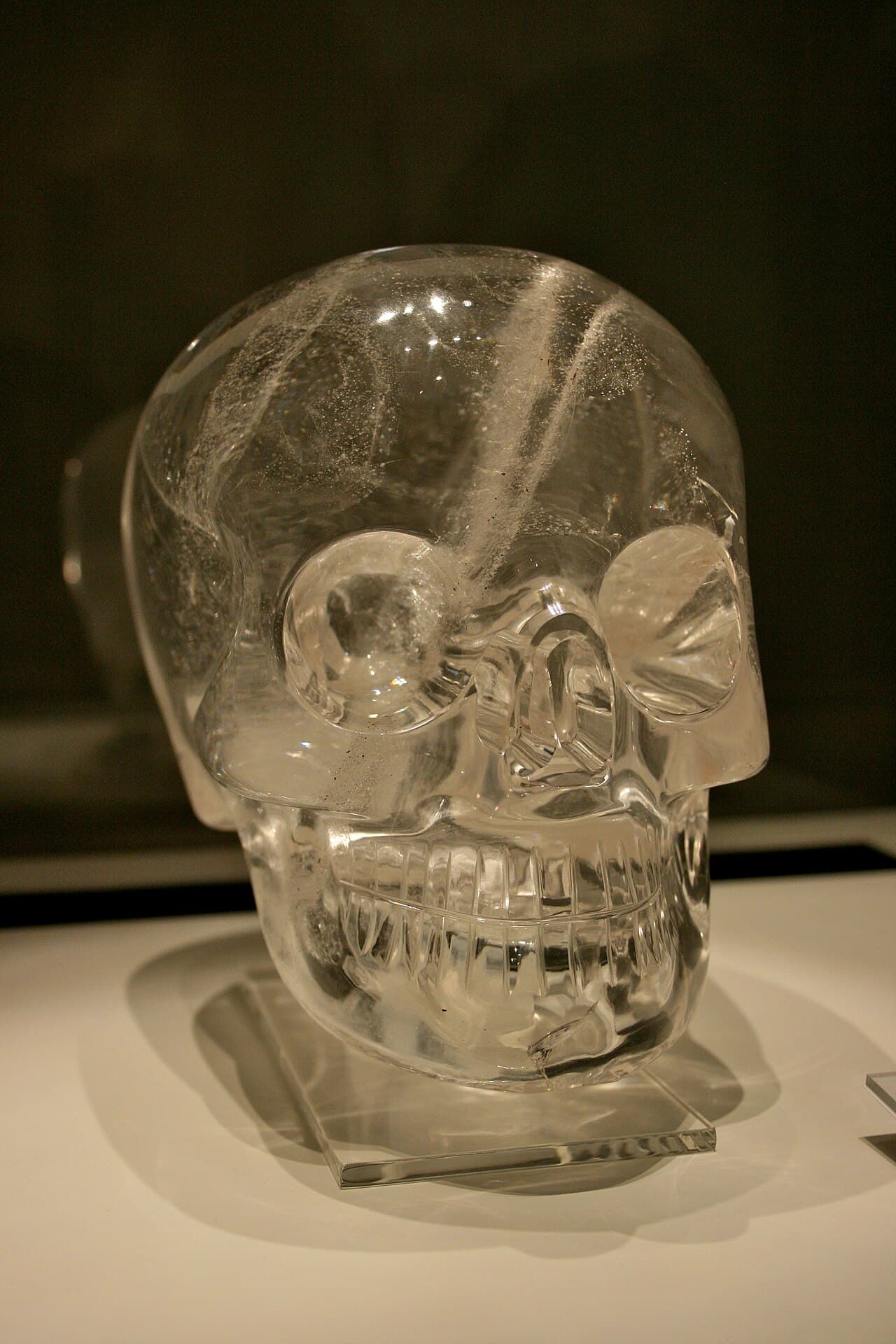
Crystal skulls
The world's most famous "pre-Columbian relics" came out of 19th–20th century workshops.