
Qorikancha (Cuzco)
The Inca Temple of the Sun in Cuzco, whose walls survived two major earthquakes (1650, 1950) that razed the Spanish convent built on top of it. The dry-stone Inca masonry — blocks that 'dance' without breaking — has been formally modeled as a seismic-resistant system.
- Location
- Peru · Americas
- Civilisation
- Inca Empire (Pachacuti, r. 1438–1471)
- Period
- ~1438 → 1533 AD (Killke site from ca. 900 AD)
- Technique
- Dry ashlar and polygonal masonry, diorite and andesite blocks, mortarless seismic-resistant construction
- Studies
- ~80 publications; site museum excavations 1992–1995; seismic studies 2022–2024
real support, not settled. A revisable snapshot of the state of research, never a judgement.
→ Show on the mapThe elements of the site
Where the site is
13.518° S, 71.977° W · satellite view
What science says
Main construction attributed to Pachacuti (r. 1438–1471 CE), but the site shows earlier occupation from the Killke period (c. 900–1200 CE): ceramics and structural remains under the imperial Inca layers (Site Museum excavations, 1992–1995). The name 'Inticancha' (enclosure of the Sun) precedes the renaming to 'Qorikancha' under Pachacuti.
Technique documented academically: (a) ashlar — rectangular blocks cut with precise dry joints — in prestige areas; (b) polygonal — irregular multi-face blocks with 3D interlocking — in structural areas. Carved with a quartzite hammer and bronze-abrasive finishing (Protzen, J. Soc. Architectural Historians 44/2, 1985, DOI 10.2307/990027). Walls inclined 3–5° inward, rounded corners, trapezoidal openings.
Seismic resistance formally modeled: the dry polygonal masonry provides dynamic flexibility — the blocks shift and return without breaking, whereas rigid colonial mortar cracks and fails. Confirmed by rigid-body modeling (Lipa et al., RILEM/Springer SAHC 2023, DOI 10.1007/978-3-031-39603-8_88) and by the seismic study of the Cuzco region (Combey et al., Quaternary International 634, 2022, DOI 10.1016/j.quaint.2022.07.003).
1650 Cuzco earthquake: the Santo Domingo church and convent are destroyed, the curved Inca wall stays intact. 1950 earthquake (Mw ~6.0, intensity VII MM): the Dominican priory collapses again, exposing the Inca walls — triggering a public debate on conservation vs. exposure of the Inca structures.
UNESCO inscription in 1983: 'City of Cuzco' (Historic Centre of Cusco), list number 273, criteria (iii) and (iv), area 142.48 ha. First Peruvian site inscribed on the World Heritage list (7th session of the Committee).
What remains unexplained
Related to
Studies & sources
Show 1 more sourcesCollapse sources
Keep exploring
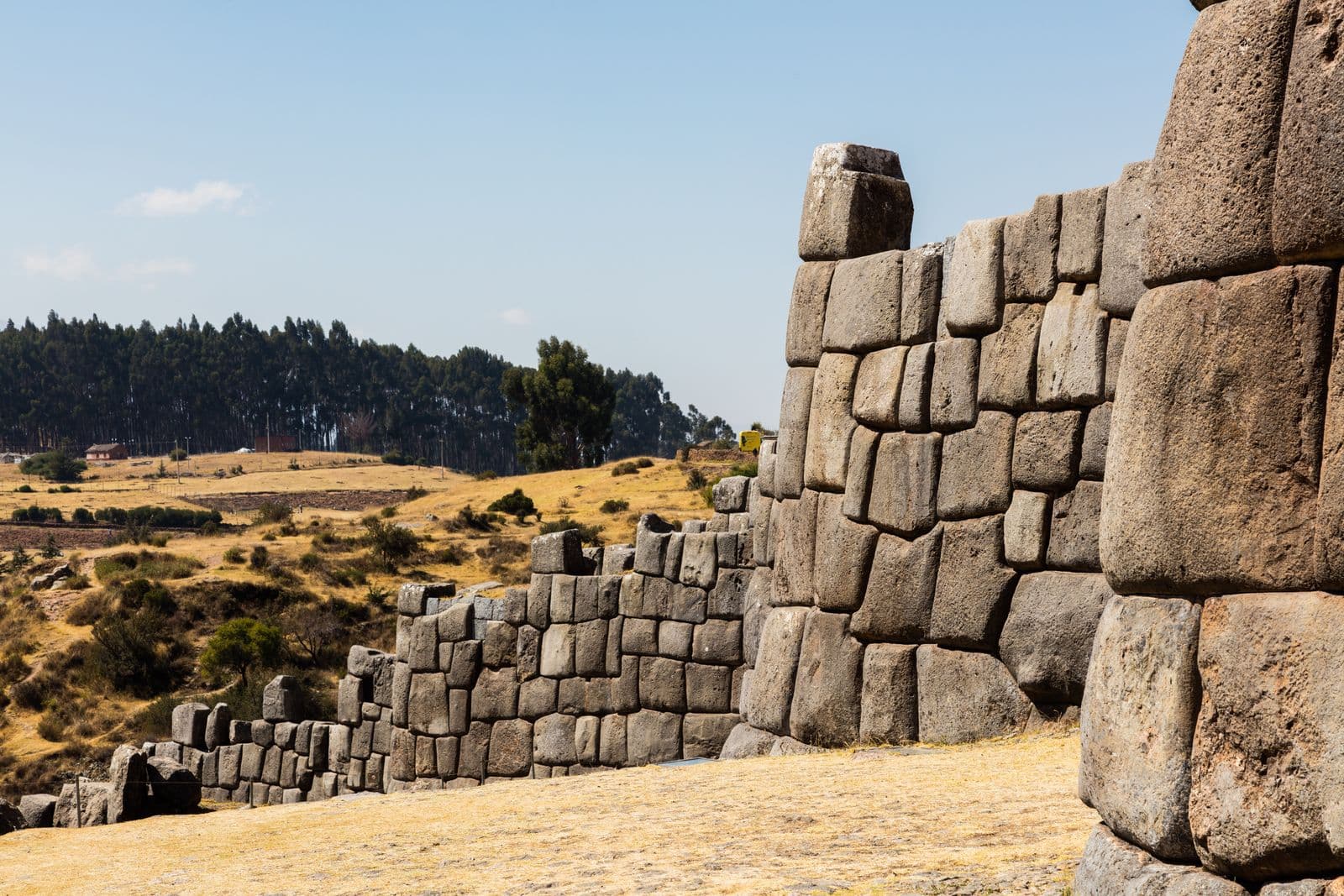 No accepted answer
Sacsayhuamán
Blocks of 100+ tons, joints fitted to the millimeter, without mortar or iron. How?
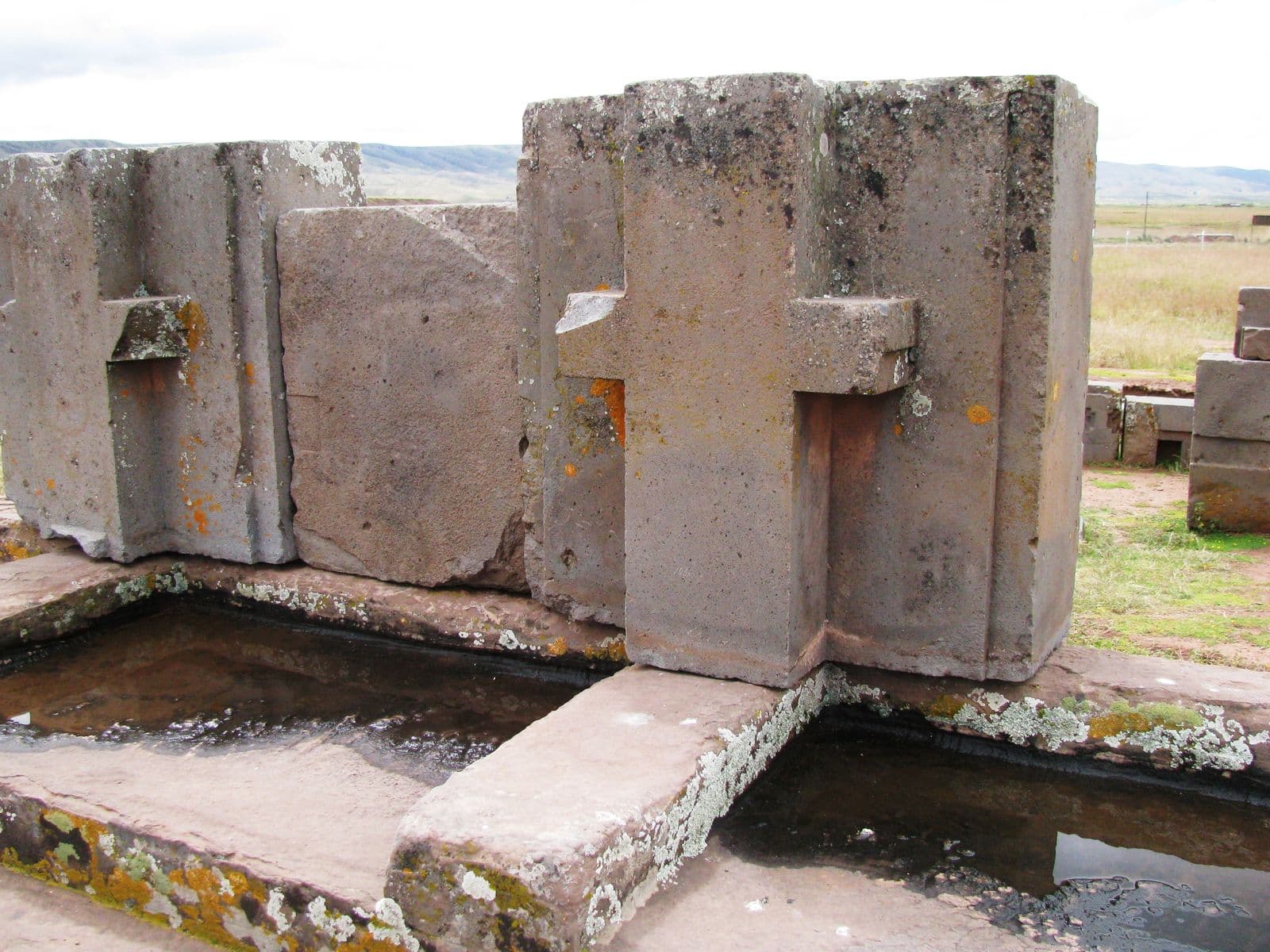 No accepted answer
Pumapunku
Andesite H-blocks cut and standardized with remarkable precision — without iron tools, using hard-stone pounders and abrasives. The method is documented, the scale remains astonishing.
 Refuted
Crystal skulls
The world's most famous "pre-Columbian relics" came out of 19th–20th century workshops.