
Newgrange
Who really slept at the heart of one of Ireland's oldest tombs?
- Location
- Ireland · Europe
- Civilisation
- Irish Neolithic
- Period
- ~3200 BC
- Technique
- Passage tomb, corbelled roof, megalithic art, astronomical alignment
- Studies
- ~350 publications
real support, not settled. A revisable snapshot of the state of research, never a judgement.
→ Show on the mapThe elements of the site
Where the site is
53.694° N, 6.476° W · satellite view
The site through time
- ~3200 BCConstruction
Construction of the mound and the passage
- 1699Discovery
Modern rediscovery
- 1962–75Excavation
Excavation and restoration by M. J. O'Kelly
- 1967Science
Rediscovery of the solstice alignment (roof-box)
- 1993Heritage
UNESCO World Heritage listing (Brú na Bóinne)
- 2020Science
Ancient DNA: NG10 born of an incestuous union (Nature)
What science says
Calibrated C14 dating: construction around 3200 BC (O'Kelly 1982; Lynch et al. 2014, Antiquity), i.e. ~600 years before the pyramids of Giza and ~1,000 years before Stonehenge.
Solstice alignment: on 21 December, a beam of light travels 19 m through the roof-box and illuminates the chamber for exactly ~17 min — an alignment rediscovered by M.J. O'Kelly on 21 December 1967 (O'Kelly 1982, Thames & Hudson).
Architecture: a 19 m passage of orthostats, a cruciform chamber, a corbelled vault 6 m high, watertight for 5,000 years without mortar or cement; water-drainage grooves carved into the roof slabs (O'Kelly 1982).
Ancient DNA (Cassidy et al. 2020, Nature 582, 384–388, DOI 10.1038/s41586-020-2378-6): individual NG10, found in the main niche, is the offspring of a first-degree incestuous union; a distant-kinship network was identified across 44 Irish genomes spanning ~2,100 years.
Megalithic art: 97 kerbstones engraved with spirals, lozenges and concentric circles before being set in place; the triple spiral in the rear chamber predates the arrival of the Celts by 2,500 years (O'Kelly 1982).
Genetic context: around 3800 BC, Ireland is colonized by descendants of Anatolian farmers via the Iberian Peninsula and the Atlantic coast, supplanting the Mesolithic hunter-gatherers (Cassidy et al. 2020).
Site listed as UNESCO World Heritage in 1993 (Brú na Bóinne complex); white quartzite and granite façade reconstructed by O'Kelly in the 1970s from stones found collapsed in front of the entrance.
What remains unexplained
Related to
Studies & sources
Show 6 more sourcesCollapse sources
Keep exploring
 Debated
Knowth and Dowth
Neighbors of Newgrange in the bend of the Boyne, Knowth and Dowth complete Ireland's largest Neolithic funerary complex. Knowth's great mound holds two opposing passages and concentrates hundreds of carved stones — about a third of all megalithic art in Western Europe. Dowth, little excavated, is oriented toward the winter solstice sunset.
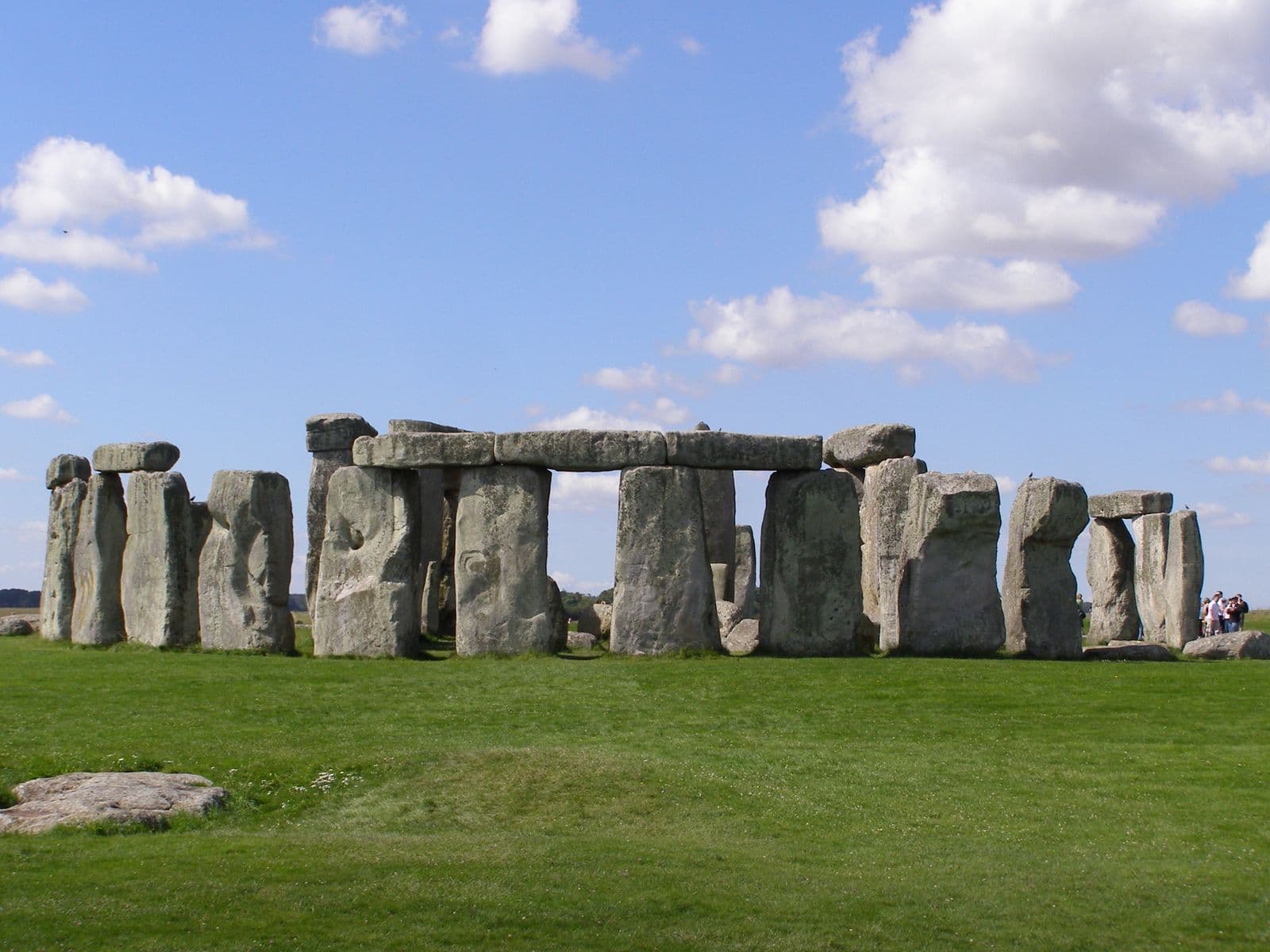 Debated
Stonehenge
The bluestones traveled 250 km from Wales. And the altar stone, from Scotland. Why those particular stones?
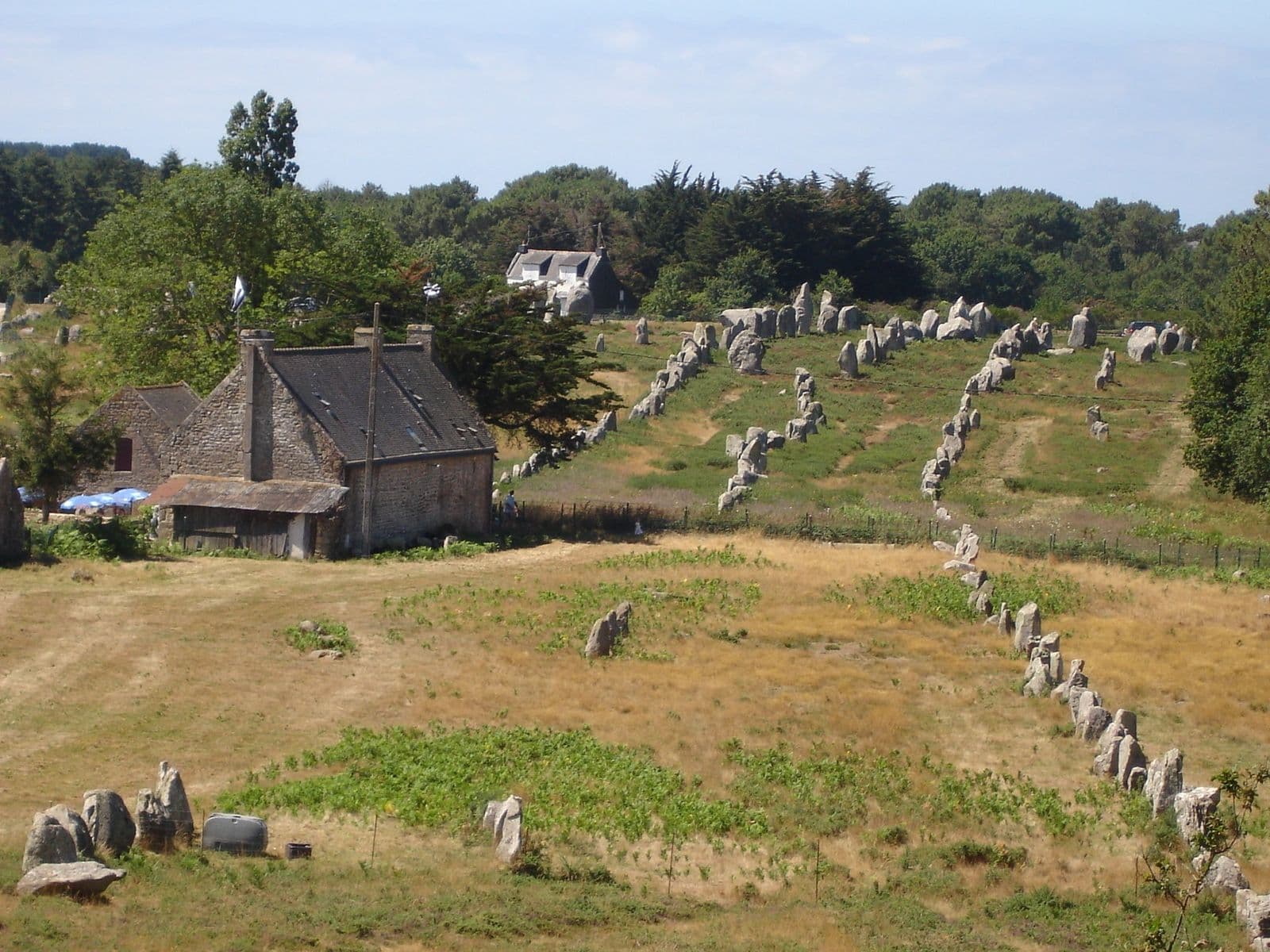 Debated
Carnac Stones
More than 3,000 standing stones in rows over ten kilometers. The largest megalithic complex in the world, dated between 4600 and 4300 BC — with no text to explain it.