
Cairn of Barnenez
Among the oldest megalithic monuments in Europe (around 4800/4200 BC), the Barnenez cairn houses 11 passage graves beneath two dry-stone masses 72 m long. Nearly demolished by a quarry in 1955, it was saved by Pierre-Roland Giot and listed as early as 1956 — André Malraux nicknamed it "the Parthenon of prehistory".
- Location
- France · Europe
- Civilisation
- Armorican Neolithic
- Period
- ~−4800 to −4200
- Technique
- Cairn with 11 passage dolmens, two adjoining dry-stone masses, corbelled vaults, two phases
- Studies
the state of research converges — open to revision. A revisable snapshot of the state of research, never a judgement.
→ Show on the mapThe elements of the site
Where the site is
48.667° N, 3.859° W · satellite view
What science says
Radiocarbon dating: primary cairn ~4850–4250 BC (chambers G to J), secondary cairn ~4450–4000 BC (chambers A to F). Barnenez ranks among the earliest megaliths in Europe (Schulz Paulsson, PNAS 2019).
Rescue excavations directed by Pierre-Roland Giot (CNRS) from 1955 to 1968: identification of the two distinct cairns, survey of the 11 chambers, reference publication Barnenez, Carn, Guennoc (1987).
Building archaeology (Laporte & Cousseau, CReAAH, 2010s): 3D surveys revealing a multi-phase history of aggregation of small independent tumuli before the final large mass.
Paintings documented in certain chambers (notably chamber H: axes, bows, U-shaped motifs) — among the oldest examples of Breton megalithic polychromy (Bueno Ramírez et al., Trabajos de Prehistoria, 2012).
What remains unexplained
Related to
Studies & sources
Show 1 more sourcesCollapse sources
Keep exploring
 Debated
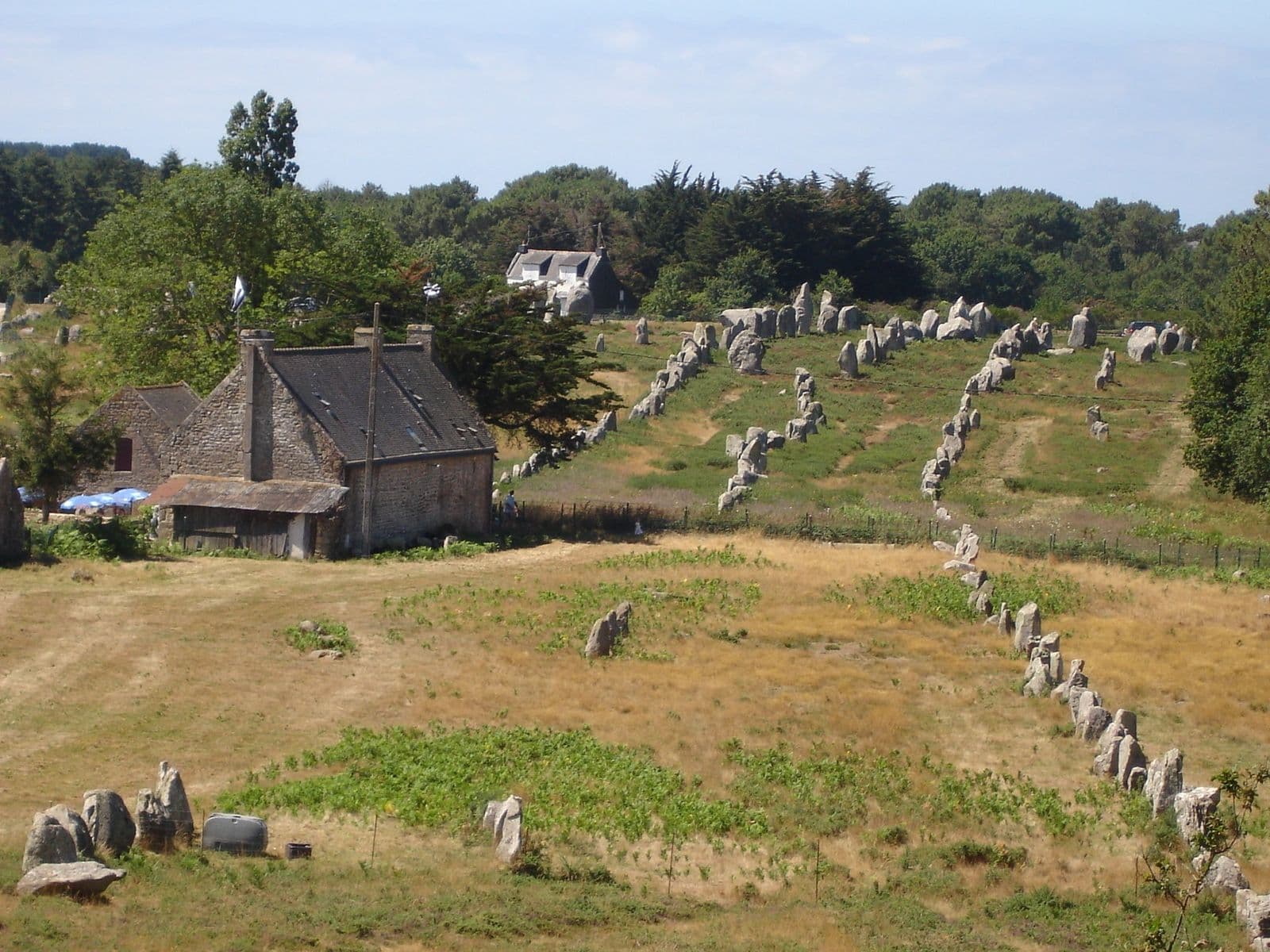
Carnac Stones
More than 3,000 standing stones in rows over ten kilometers. The largest megalithic complex in the world, dated between 4600 and 4300 BC — with no text to explain it.
 Debated
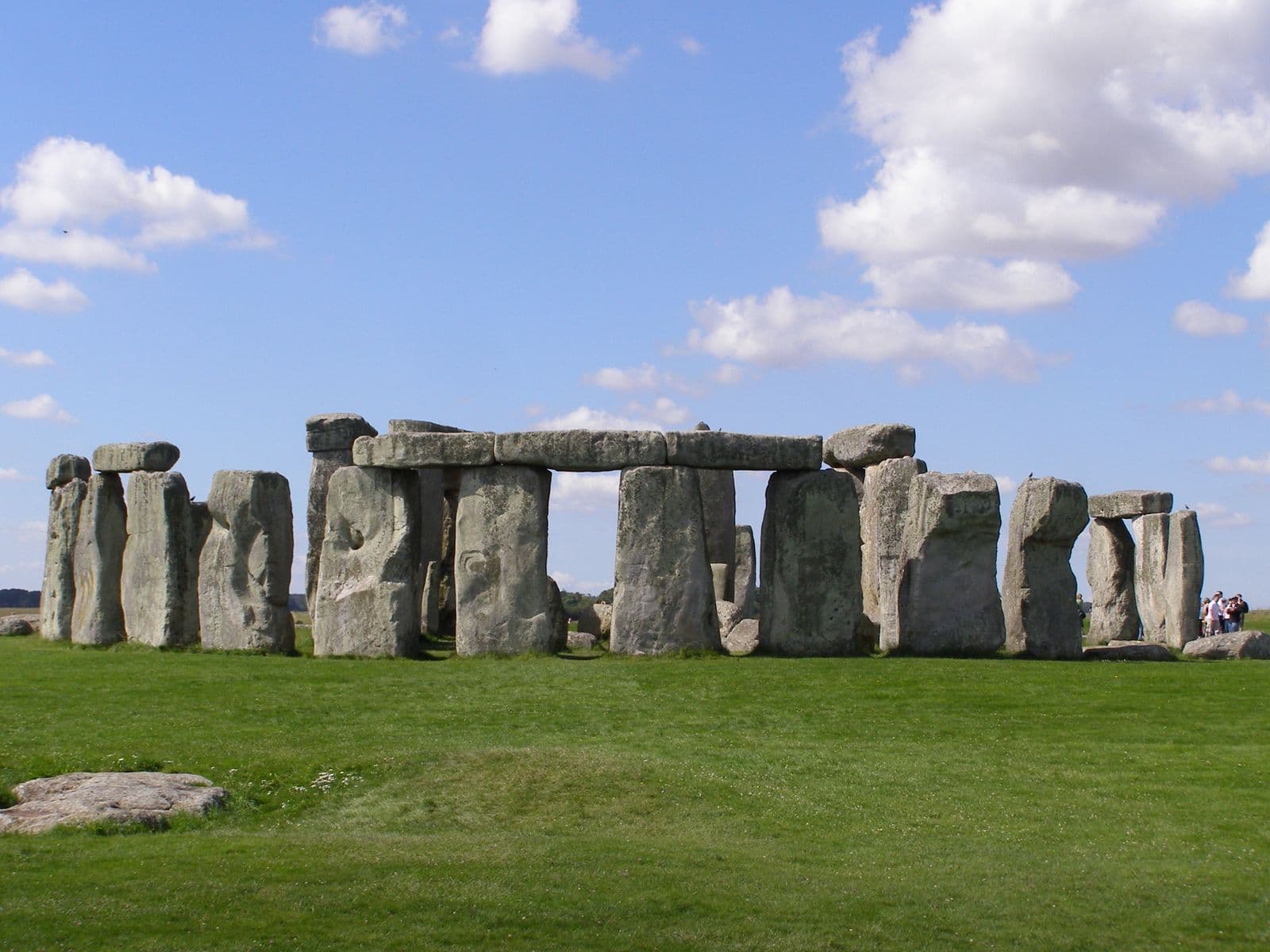
Stonehenge
The bluestones traveled 250 km from Wales. And the altar stone, from Scotland. Why those particular stones?
 Consensus
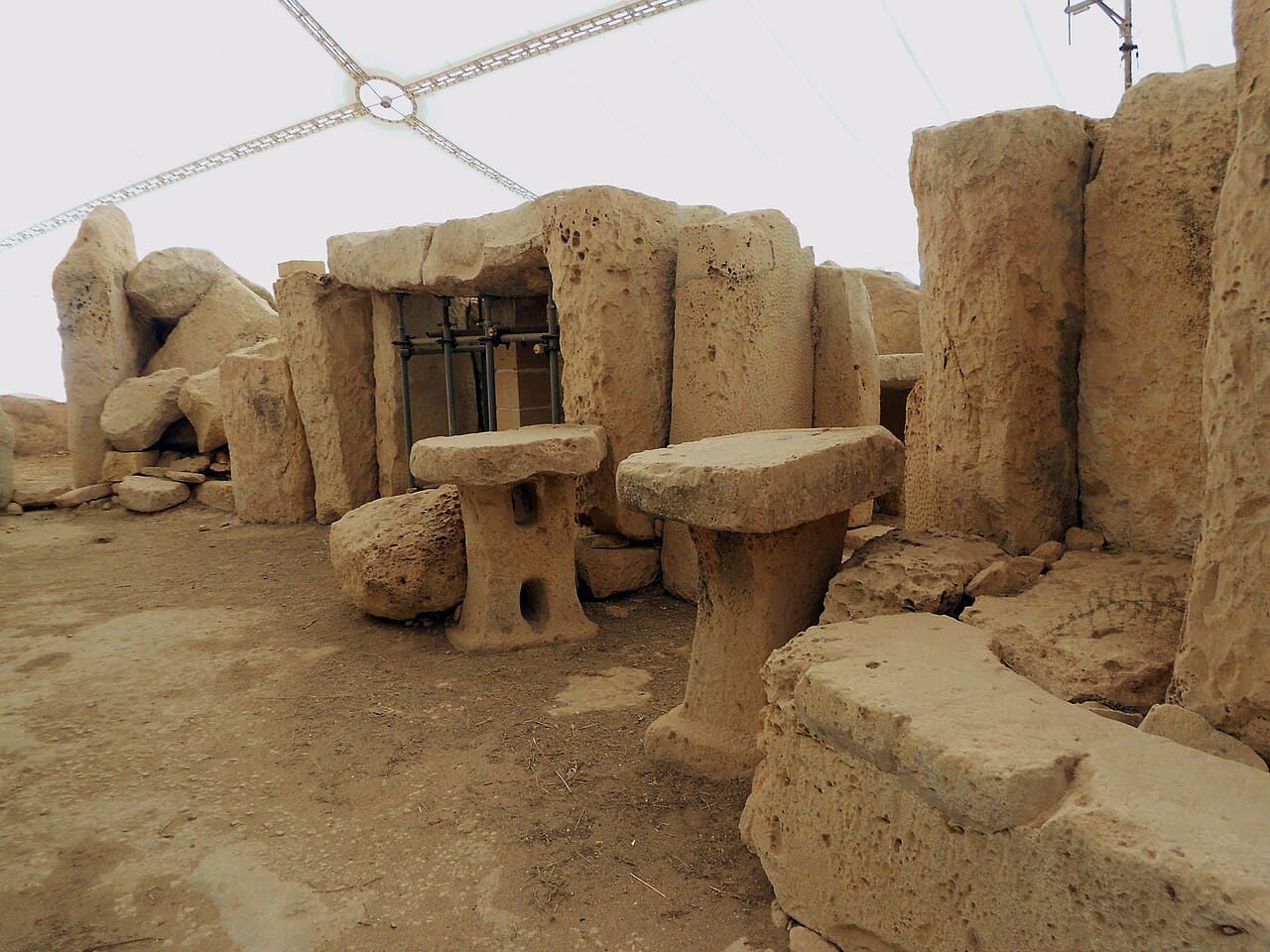
Ħaġar Qim
Temples older than Stonehenge, on an island with no rivers or forests. Two local limestones, zero metal, solar alignments at the solstice. Then the culture vanishes within two generations.