
Cairn of Gavrinis
A Breton passage tomb covered in carved spirals, aligned on the winter solstice sun. Its ceiling slab is a piece of a broken giant menhir — another fragment of which lies 3.5 km away, at the Table des Marchands.
- Location
- France · Europe
- Civilisation
- Neolithic
- Period
- ~3500 → ~3200 BC
- Technique
- Passage dolmen, engraved orthostats, reused capstone
- Studies
the state of research converges — open to revision. A revisable snapshot of the state of research, never a judgement.
→ Show on the mapThe elements of the site
Where the site is
47.573° N, 2.897° W · satellite view
What science says
Passage tomb (14 m) leading to a chamber, on an island in the Gulf of Morbihan. 23 of the 29 orthostats are entirely carved (concentric arcs, spirals, serpentiform motifs, axes), documented by 3D laser scanning (Cassen et al. 2014) — the first French megalithic site scanned this way.
Radiocarbon dating: charcoal from slab S11 gives 3360-2925 cal BC for the phase of use of the monument's interior (Cassen et al. 2014). The construction of the cairn itself may be somewhat earlier.
The passage is oriented toward sunrise at the winter solstice (azimuth ~128°); a secondary lunar alignment is also reported (Burl 1985). Inscribed on the UNESCO World Heritage list on July 12, 2025 (the 'Megaliths of Morbihan' ensemble).
What remains unexplained
Related to
Studies & sources
Keep exploring
 Consensus
Dolmen of Menga (Antequera)
An Andalusian dolmen whose capstone weighs 150 tonnes — the heaviest ever moved in Iberia. The only one in Europe to carry interior pillars, it does not target the sun like the others, but a mountain shaped like a face.
 Debated
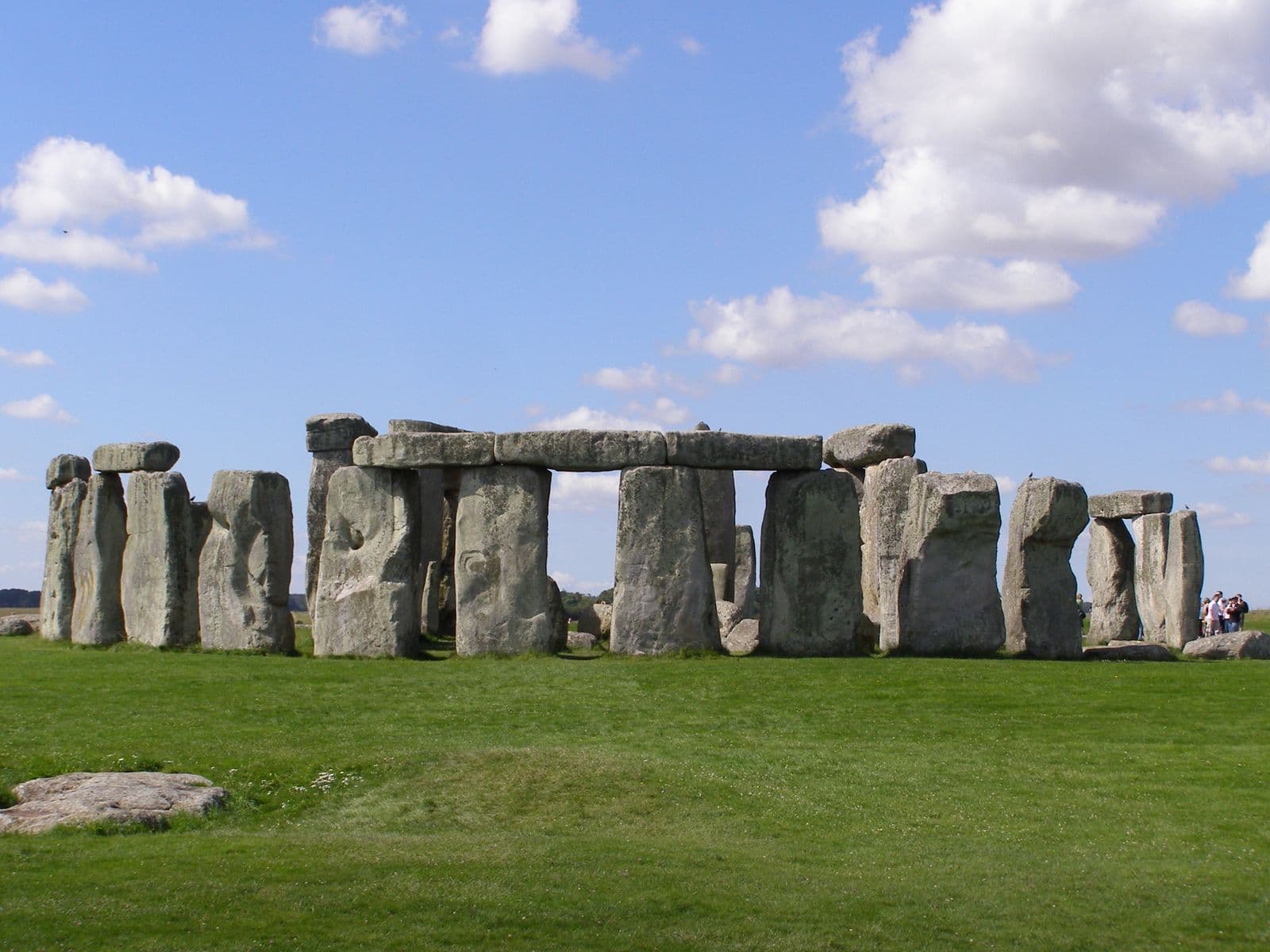
Stonehenge
The bluestones traveled 250 km from Wales. And the altar stone, from Scotland. Why those particular stones?
 Debated
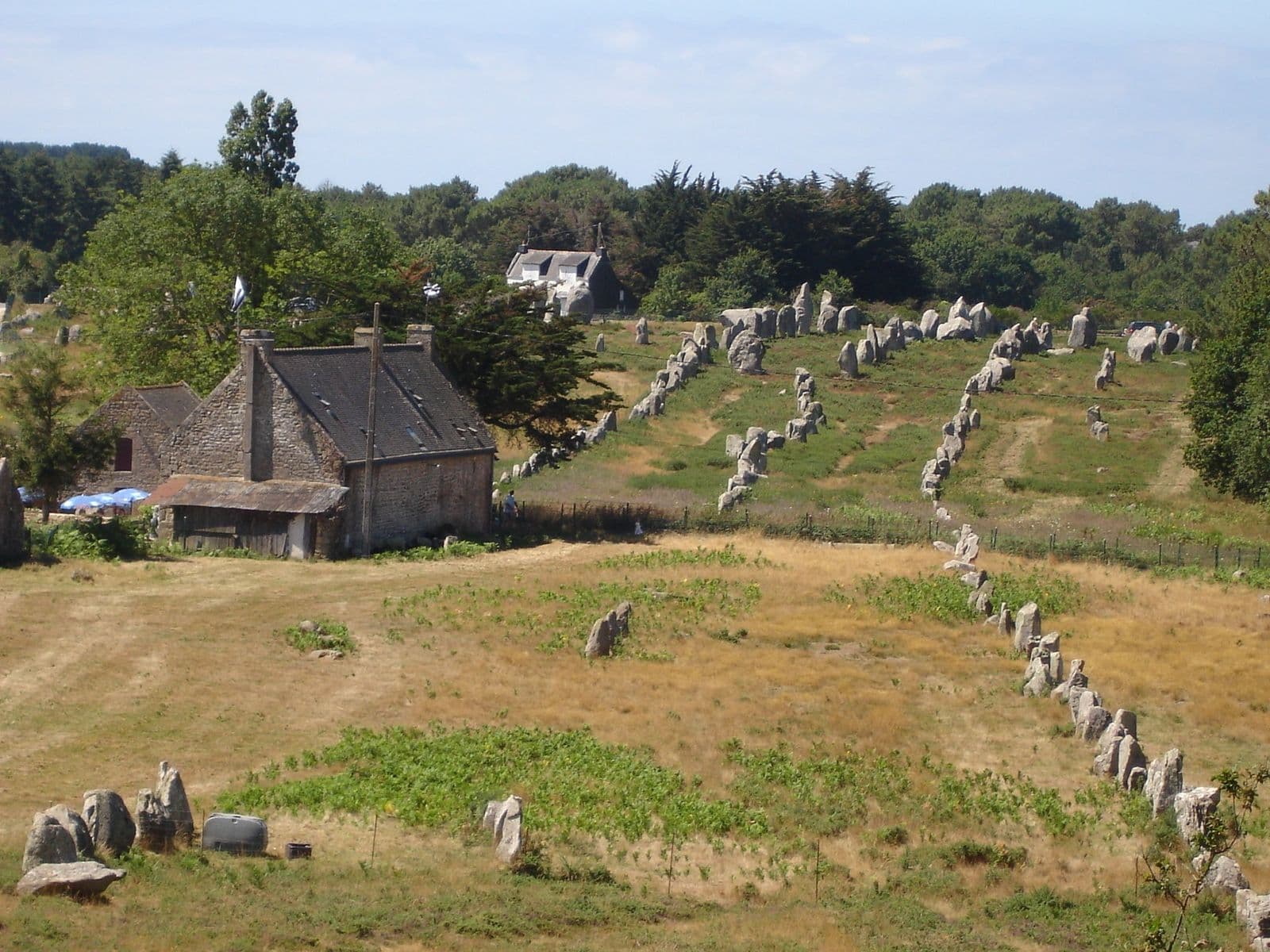
Carnac Stones
More than 3,000 standing stones in rows over ten kilometers. The largest megalithic complex in the world, dated between 4600 and 4300 BC — with no text to explain it.